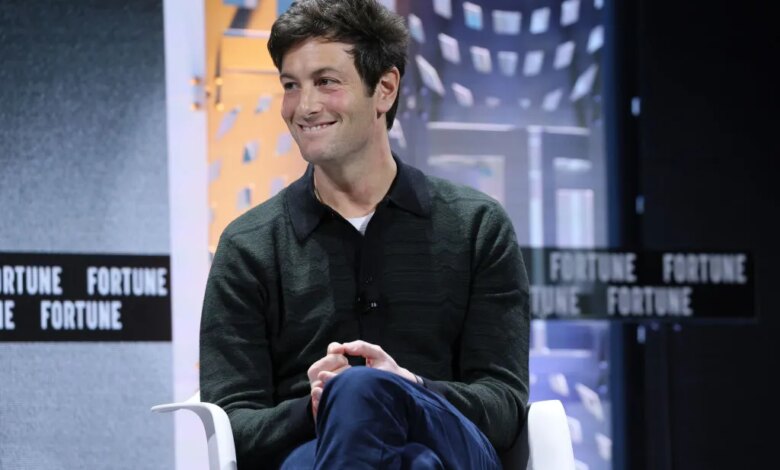
In Thrive Capital’s inaugural investor letter, founder Joshua Kushner shares intriguing insights about his venture capital competitors in Silicon Valley.
Kushner expressed significant optimism about the potential of artificial intelligence, stating, “The opportunity is immense.” However, he cautioned against allowing enthusiasm to compromise their investment discipline. He noted a tendency within Silicon Valley to overly focus on minor technological advancements rather than the ultimate implications of these technologies.
Thrive, based in New York, takes a distinct approach to investing in AI compared to its Silicon Valley counterparts. Instead of spreading investments thinly, Thrive concentrates its resources on a select few companies. Reports suggest that around 90% of Thrive’s capital is allocated to its top 15 investments in each fund.
Kushner believes this strategy promotes independent thinking within the firm. He stated, “We remain independent because markets fluctuate between fear and excitement, and neither can replace sound judgment.”
This perspective contrasts sharply with the Silicon Valley notion that venture capital thrives on “outliers.” Influencers like Marc Andreessen advocate for a strategy of making numerous investments, accepting that many will fail while a few successful ventures can yield substantial returns. This approach often pushes VCs to seek the next major breakthrough, which can lead to reductions in funding for startups not perceived as top contenders.
Kushner, however, champions the idea that an investment firm can be both opportunistic across various stages, sectors, and regions while focusing intensively on a limited number of individuals and concepts. He aims to direct Thrive’s time and resources toward ventures they truly believe in.
Moreover, he challenges the conventional Silicon Valley view that venture capitalists primarily disrupt existing industries.
“Contrary to many of our peers, we believe that transformation can occur from both outside and within these sectors,” he asserted regarding AI’s influence.
Thrive has adhered to this belief through its partnership with OpenAI, one of its most notable investments. The firm not only backed the AI company but also saw a reverse investment in December 2025, when OpenAI purchased a stake in Thrive Holdings, a spinout of the venture capital firm. Thrive Holdings aims to enhance businesses through AI, collaborating with OpenAI’s workforce on this initiative.
Since its inception, Thrive Holdings has acquired over 70 firms, supported by a team of 35 engineers. Kushner highlighted that their accounting platform generates tax returns 30% faster with 98% precision, and agents at their IT services firm address half of all help desk queries independently.
Thrive’s strategy has proven effective partly due to its investments in some of the tech industry’s most successful startups. For example, their $516 million early-stage fund launched in 2022 included early positions in OpenAI, Anduril, and SpaceX, which collectively surged to a valuation exceeding $3.7 billion by June. Over 15 years, Thrive has increased its investment in these firms and held a valuable stake in Cursor, recently sold to SpaceX.
Additionally, Thrive has backed other prominent names like Wiz, Ramp, and Stripe and has led seed investments in new labs, such as Essential AI, founded by notable tech researcher Ashish Vaswani.
Kushner revealed that Thrive manages around $60 billion in assets, reporting notable profits with a gross internal rate of return (IRR) of 41% and a net IRR of 33%. Over the past year alone, Thrive has returned more than $1 billion in liquidity to its investors.
He hinted at the potential for billions more in liquidity in upcoming quarters but did not specify which companies might be approaching their exits. The initial public offering of SpaceX has set a precedent, and OpenAI also aims for a public offering soon.
Both Kushner’s and Andreessen’s investment strategies have yielded financial success. Andreessen Horowitz, for instance, reportedly returned $25 billion to its investors from 2009 to 2025.
Kushner’s strategy of concentrating investments may be challenging for smaller funds, especially those without the extensive resources and connections enjoyed by someone with his background.
Nonetheless, Kushner’s critique of the inflated AI investment landscape in Silicon Valley rings true. As he succinctly puts it, “Not every rapidly growing business is exceptional, and not every exceptional company makes for a great investment at any price. Our duty is to recognize these differences.”