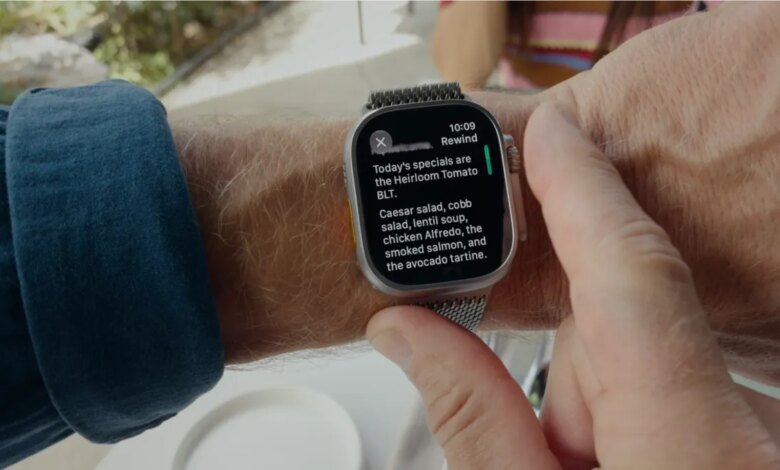
Apple is encouraging users to embrace a reality where their devices are always listening.
During its recent Surprise and Shine event, the tech giant showcased its new hardware, revealing a notable shift: its smartwatches will now have the ability to process live audio and provide transcriptions.
Does this imply that conversations are being recorded if someone is wearing an Apple Watch? Not precisely, but it might still unsettle certain individuals.
This development brings to light whether users are genuinely interested in such technology, or if Apple is simply preemptively innovating due to competition from other firms, like OpenAI.
Various startups are currently betting on AI-driven transcription as a prime consumer application. Typically, this technology is utilized for transcribing meetings or documenting lectures and interviews. Innovations like the AI-powered Friend pendant and Amazon’s Bee have explored other niches, offering AI companions that help remember events through passive note-taking.
Apple, however, is taking a different approach. The new features of its smartwatches—“Audio Intelligence,” “Live Rewind,” and “Siri Recap”—navigate the delicate balance between enhancing accessibility and crossing the line into potentially intrusive technology.
Audio Intelligence is particularly beneficial for individuals who are deaf or hard of hearing, providing alerts for crucial sounds like alarms, doorbells, and crying babies via on-device AI, even in the absence of an iPhone. In certain situations, this could be lifesaving, such as responding to a smoke alarm. Few would dispute the merit of this feature.
In contrast, Live Rewind and Siri Recap venture into more ambiguous territory.
While Apple’s commitment to data protection might make these features less alarming, normalizing continuous listening technology may not align with the preferences of privacy-aware consumers, especially given the growing backlash against surveillance mechanisms like camera networks and AI data collection.
The Live Rewind feature allows users to rewind 15 seconds and transcribe recent dialogue with a double press of the Digital Crown, making these transcriptions available in Apple’s new Siri app for future reference.
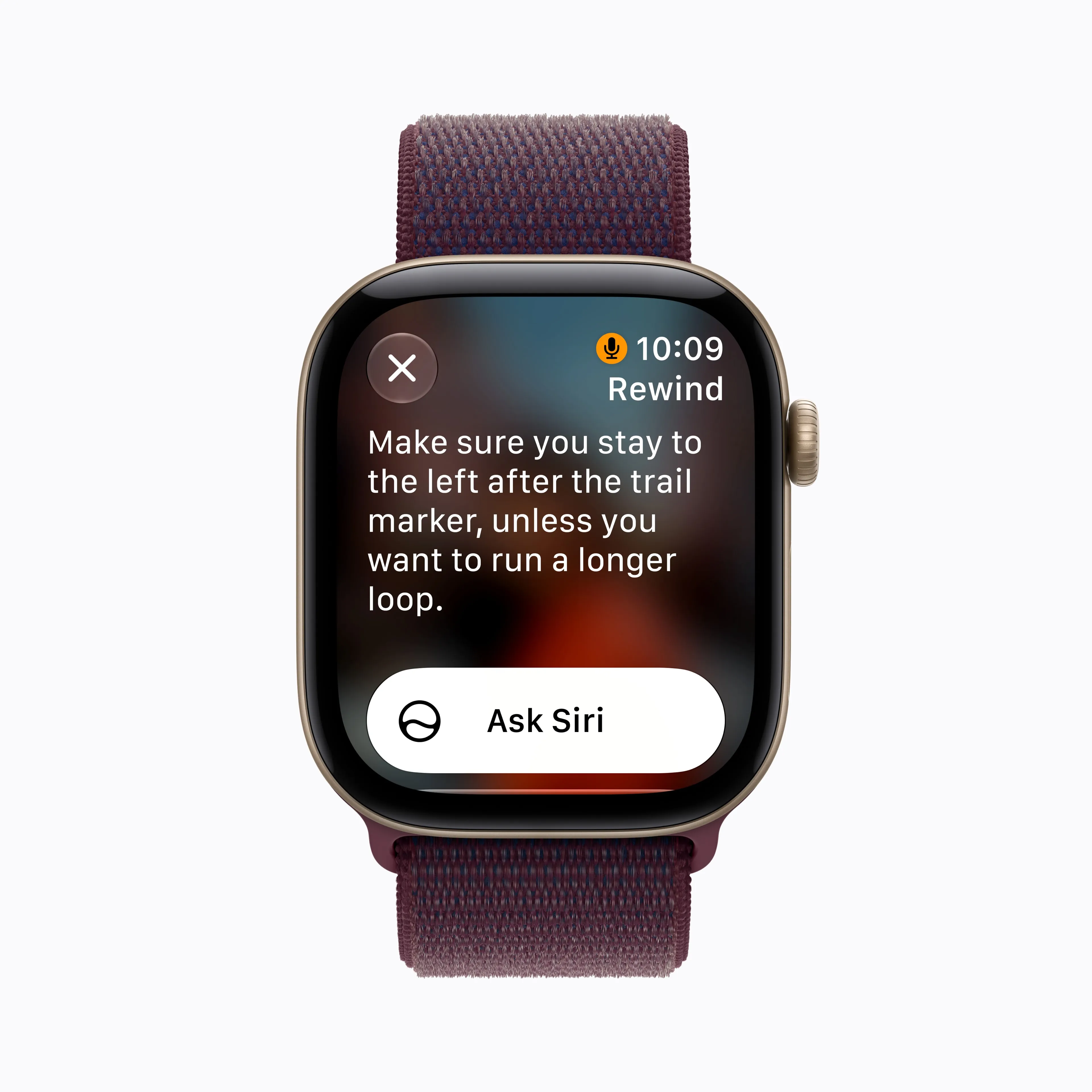
This feature could be used to note down a book recommendation or an insightful comment, but it also raises concerns regarding the potential to capture unintended statements.
There are ethical and legal implications surrounding consent when it comes to recording conversations. For instance, makers of AI devices like Plaud recommend obtaining consent before recording, while Amazon’s terms remind users of their responsibilities to comply with privacy laws relating to minors.
Since Apple doesn’t retain audio, it remains uncertain how legal systems will treat these text-only transcripts. While they might be used as evidence in court, their lack of audio could pose challenges for authentication. Moreover, regulations governing their use may vary significantly across different jurisdictions.
Beyond legalities, the ability to record conversations from a wristwatch introduces broader cultural consequences.
Research indicates that the presence of recording devices impacts social interactions, much like social media and the pervasive culture of data surveillance. The possibility of being recorded can inhibit genuine engagement and self-expression.
Unlike recording a video or taking a photo—which requires a clear action, such as pointing a phone—capturing audio for transcriptions through a simple press of a watch button is less conspicuous, although Apple insists the action will trigger an audible chime and visual indication.
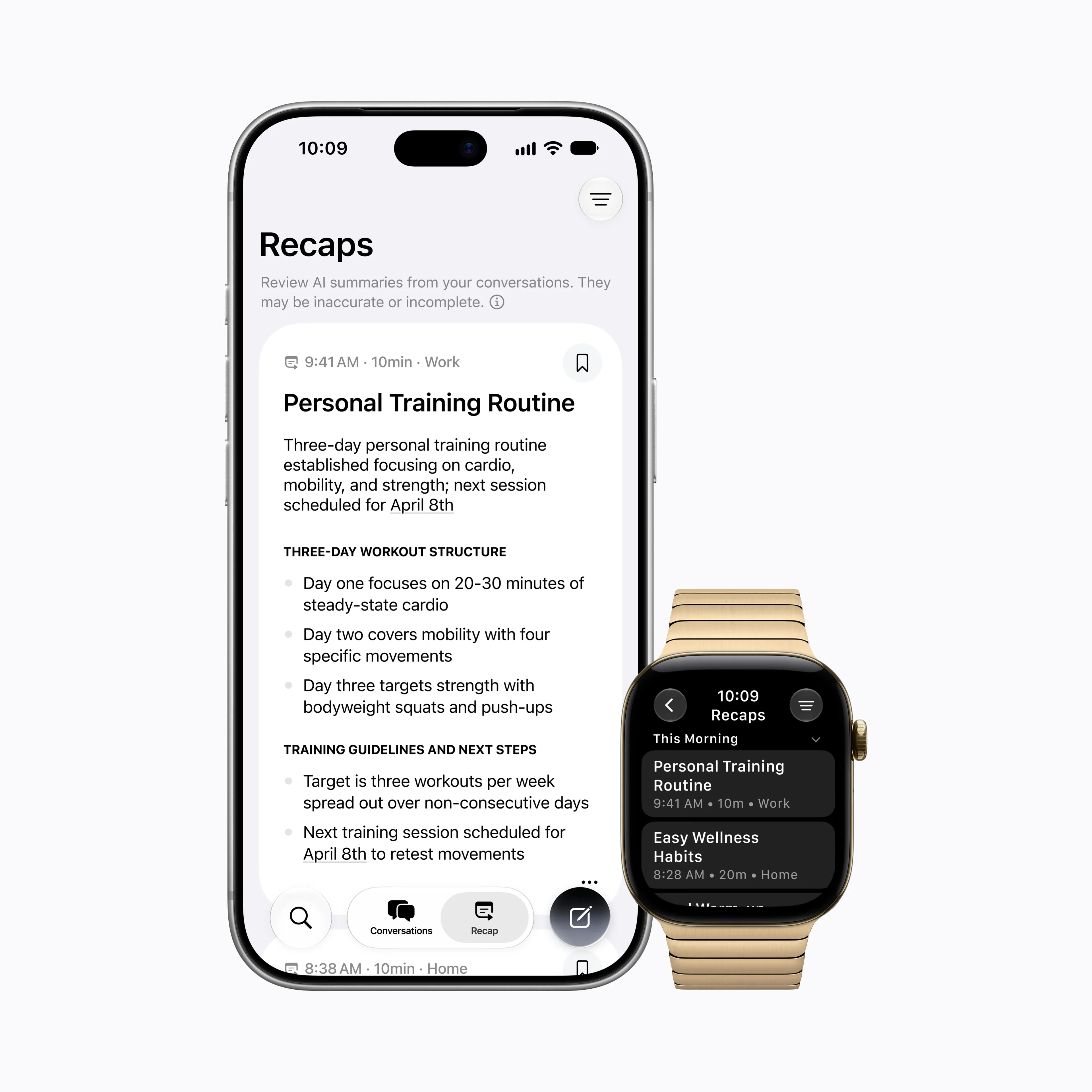
Another feature, “Siri Recap,” utilizes ambient listening to generate high-level notes from conversations, which can be accessed in the Siri iOS app. These notes provide a title, summary, and main points derived from the recorded content but are not verbatim transcripts.
Apple proposes that this feature is useful for retaining meeting insights or important information from discussions like parent-teacher meetings.
Throughout, Apple asserts that it has prioritized user privacy in developing these listening features.
Siri Recap does not operate in a continuous listening mode like some other AI devices. Instead, users can control when it is active, enabling it only during specific periods such as work hours or day-time. The feature can be easily toggled on and off via the Control Center.
Moreover, Apple emphasizes that it does not record or store audio, and the raw sound remains inaccessible even to the company. Additionally, it does not track or identify speakers, and transcripts generated are encrypted end-to-end.
Ultimately, whether these measures alleviate concerns about privacy remains to be seen. Apple may have struck the right balance between functionality and privacy, or it could face backlash from users.