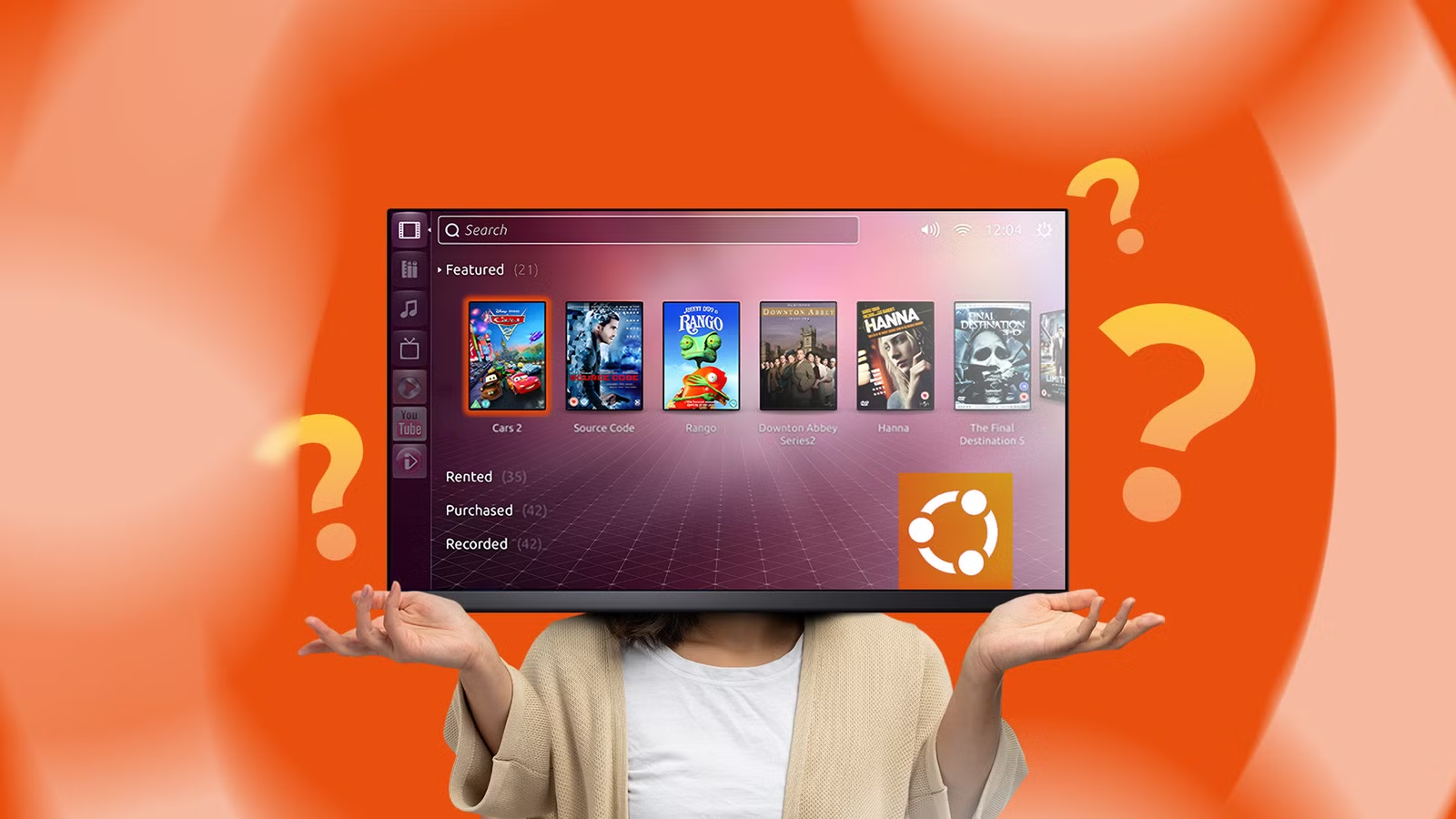
Many enthusiasts have envisioned the idea of integrating Linux into various devices, including televisions. Back in 2012, Ubuntu TV emerged as a groundbreaking initiative promising to transform this vision into reality. However, the journey has been tumultuous, leaving potential Linux TV users wondering about the outcome.
The Expansion of Ubuntu Beyond Traditional Devices
What drove their ambitions?
The year 2012 marked a significant chapter for Canonical. Ubuntu had established itself as the leading desktop Linux distribution, and the company aimed to broaden its reach to various devices such as netbooks, tablets, smartphones, and, importantly, televisions.
To achieve this, Canonical recognized the need for a fresh approach rather than simply adapting existing Linux applications. This led to the development of the Unity interface.
Initially showcased in the Ubuntu Netbook Remix of 2010, Unity became the standard desktop experience for Ubuntu in 2011, culminating in its debut in the long-term support release of Ubuntu 12.04 in 2012, which was supported until 2017.
Canonical envisioned Unity as a versatile interface capable of adjusting to different screen sizes, ensuring a similar user experience across computers, phones, and TVs, with applications seamlessly adapting to various displays.
The TV Experience That Didn’t Come to Be
Revealing a Concept
At CES 2012, Canonical unveiled Ubuntu TV, promising a unified multimedia experience where users could access various shows without switching between multiple applications. The aim was to allow users to browse, stream, and purchase content seamlessly within the Unity environment.
The demonstration at CES resembled the desktop interface already familiar to Ubuntu users. However, the software necessary to bring Ubuntu TV to fruition was still under development, leaving much of the showcased version as merely a concept.
Canonical representatives indicated discussions with television manufacturers to gauge interest in Ubuntu TV. However, the lack of subsequent product releases suggested limited interest within the industry.
The Demise of Ubuntu TV
The Ambitious Drive for Unification
Canonical’s aspirations faced significant challenges, especially with the existing version of Unity, which was primarily designed for computers. The company aimed to create a completely new software suite capable of operating across multiple device types, an undertaking it soon found to be enormous.
In addition to reimagining Unity, Canonical initiated the development of a new display server and launched its own software distribution format, known as snap.
Despite the enthusiasm surrounding the Ubuntu Phone project, which raised considerable funds on crowdfunding platforms, the Ubuntu TV initiative received far less attention, reflecting dwindling interest. Canonical faced criticism for its solitary approach in a community built on collaboration, leading to challenges in securing investment and support.
Ultimately, the anticipated software for Ubuntu TV fell by the wayside. In 2017, Mark Shuttleworth, the founder of Ubuntu, announced the end of Unity’s development in a blog post, quietly signaling the demise of the Ubuntu TV project. The interest had faded, with online discussions questioning the project’s fate as early as 2013.
Linux in Smart TVs Today
It’s Linux, Not Ubuntu
Although the dream of Ubuntu TV did not materialize, Linux remains a dominant force in the smart TV market.
WebOS
WebOS has had a dynamic history, originating in 2009 as a Linux-based operating system for the Palm Pre. After HP acquired Palm, it struggled to manage webOS effectively.
In 2013, LG acquired webOS, repurposing it for use in its smart TVs, where it continues to serve both smart TVs and gaming monitors. Despite appearing somewhat restricted, LG offers an open-source version of webOS for developers.
Tizen
Tizen began as a unique project merging elements from multiple operating systems, including Intel’s Moblin and Nokia’s Maemo. Primarily driven by Samsung, Tizen has predominantly been featured in TVs and wearables. Since 2015, Samsung TVs have run Tizen, and a significant update in 2024 aimed for visual consistency with Galaxy devices.
Though much of Tizen’s code remains open source, its user interface is relatively locked down.
Don’t Overlook Android-Based TVs
Most televisions that aren’t overtly labeled as running Linux typically operate on Android-based systems. Devices running Google TV or Android TV utilize the underlying Linux kernel. Notably, Amazon’s Fire OS is also Linux-based, and plans are underway for Amazon to shift to its own Linux-based Vega OS.
Does It Count as Linux If It Doesn’t Feel Like It?
The vision for Ubuntu TV was not just about having Linux under the hood. It was about empowering users with the same level of control over TVs as they have over Ubuntu PCs. Unfortunately, despite Linux’s growing presence in smart TVs, many still lack the open-source freedom users seek.