Luxury SUVs have traditionally been associated with prestigious German brands, offering high-end interiors and a premium ownership experience often at a high cost. However, an increasing number of consumers are discovering that the most renowned badge isn’t always the wisest investment.
With rising prices and escalating ownership costs, factors such as depreciation, reliability, warranty terms, and resale value have become more influential in consumers’ purchasing decisions. This evolution is steering buyers toward SUVs that provide genuine comfort and robust performance while maintaining their value better than conventional luxury options.
Among these vehicles is an SUV that may seem paradoxical. It boasts true luxury comfort, impressive engineering, and advanced technology—all supported by a brand acclaimed for reliability and resale value—yet it comes at a more approachable price than its competitors.
The SUV that combines Toyota reliability with Range Rover comfort
The Lexus LX delivers the comfort and sophistication of a Range Rover, paired with Toyota’s renowned reliability, making it a top choice for a stress-free full-size SUV experience.
The Toyota Land Cruiser surpasses German competitors where it matters
More torque than the BMW X5 40i, with less effort
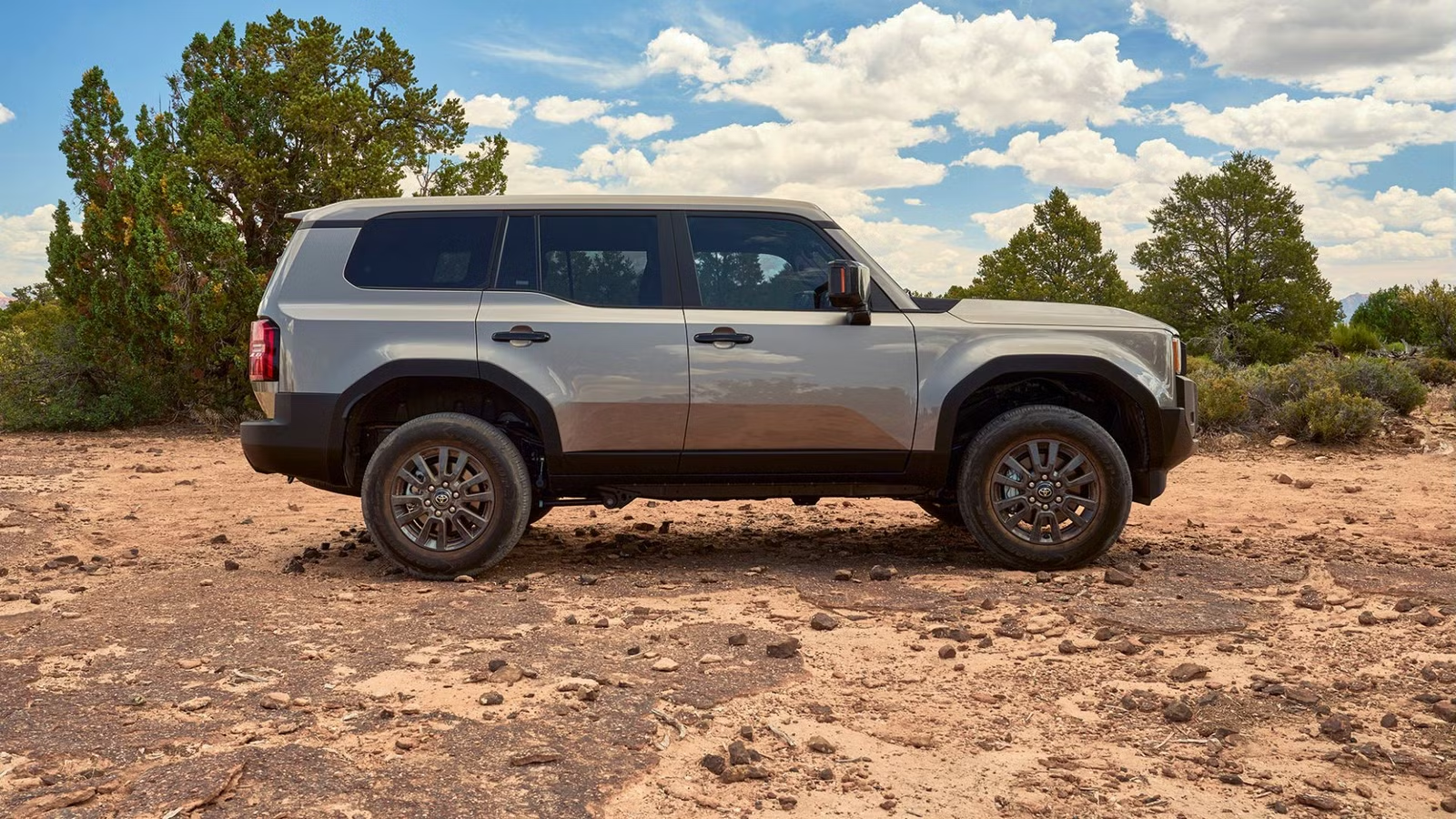
The 2026 Toyota Land Cruiser boldly competes in the luxury SUV market, minus the luxurious badge. While the Toyota name helps keep the cost down, the Land Cruiser consistently exceeds expectations.
It features a 2.4-liter turbocharged four-cylinder engine combined with two electric motors, delivering 326 horsepower and 465 pound-feet of torque. This impressive output commands attention from competitors.
Power is transmitted through an eight-speed automatic transmission to all four wheels, with four-wheel drive as standard. In comparison to the BMW X5 xDrive40i, the Land Cruiser delivers an additional 67 pound-feet of torque, noticeably enhancing performance during towing, climbing hills, or accelerating.
Standard features establish the Land Cruiser as a value powerhouse
Toyota initially designed the Land Cruiser as a capable off-road vehicle before elevating it into the near-luxury section while retaining its rugged roots. As a result, features like full-time four-wheel drive, skid plates, a full-size spare, locking differentials, and crawl control are included as standard—add-ons that German counterparts often charge extra for.
Instead of gradually boosting costs with each added option, the Land Cruiser feels exceptionally equipped from its base model, starting at $57,600, whereas the 2026 BMW X5 begins at $69,750, before adding the essential xDrive feature.
Depreciation highlights the real cost savings
It retains value better than the BMW X5 over time
When deciding between a Toyota and a BMW, the BMW might initially attract more attention. However, taking into account the five-year total ownership experience flips the narrative significantly.
Toyota consistently excels in low-depreciation rankings, while BMW—and also Audi and Mercedes-Benz—struggles to compete; Porsche remains an exception. This trend persists throughout the luxury market.
The substantial difference between the Land Cruiser and the X5 lies not just in their sticker prices but in their long-term value retention. The Land Cruiser retains approximately 60.05% of its value after five years, compared to only 43.89% for the X5, indicating about $14,548 less lost to depreciation.
Toyota’s warranty and reputation enhance ownership confidence
When it comes to warranty, Toyota offers longer powertrain coverage for the Land Cruiser compared to what BMW provides for the X5. Toyota covers it for five years or 60,000 miles, while BMW only offers four years or 50,000 miles of coverage.
This distinction is significant for long-term ownership, as the X5 may exit the warranty period by the five-year mark. Additionally, Toyota provides a hybrid warranty lasting 10 years or 150,000 miles, far exceeding industry standards.
Maintenance costs also reflect a similar story. The Land Cruiser costs an average of $843 per year for upkeep, while the X5’s maintenance expenses average $1,166. Fuel efficiency further favors the Land Cruiser, which offers 22/25 mpg compared to the X5’s 17/22 mpg.
German SUVs maintain some crucial advantages
The BMW X5 remains more refined in driving experience
BMW has a reputation for producing vehicles that offer exceptional driving dynamics—a characteristic embedded in their brand DNA. Their 3.0-liter inline-six engine is renowned for its smooth operation, matched perfectly with a ZF eight-speed automatic transmission that delivers a stellar performance.
This combination makes the X5 feel solid and planted, offering a genuinely enjoyable driving experience. While the Land Cruiser also delivers comfort for daily driving, it doesn’t quite match the X5’s smoothness and refinement, as it leans more toward off-road capabilities.
Interior quality and luxury still favor German brands
When it comes to interior luxury, advanced technology, and that polished touch expected in high-end vehicles, German brands typically take the lead. It’s understandable that a Toyota SUV may not be the first car that comes to mind for such experiences.
Though the Land Cruiser is comfortable, modern, and well-built, it may not match the level of material quality or technological sophistication found in higher-tiered models from Mercedes-Benz, Porsche, Audi, or BMW.
The market is shifting towards value-oriented Japanese SUVs
Sales data for Lexus and Toyota reflect consumer preferences
In 2025, the Lexus RX outsold the BMW X5 by nearly 40,000 units (113,256 compared to 76,246), indicating a clear consumer shift towards value-focused Japanese luxury vehicles. Buyers are increasingly prioritizing factors like customer support, depreciation, and long-term operating costs over brand prestige.
Given that the Land Cruiser is priced below the X5 yet carries a mainstream Toyota badge, its appeal becomes even more evident. For many shoppers, selecting Toyota and Lexus makes more financial sense than opting for traditional German luxury vehicles.
Consumers no longer require a German badge to feel premium
Contemporary luxury SUV buyers have more choices than ever, and many are realizing that true luxury transcends the badge on the front grille. Attributes such as comfort, technology, refinement, capability, and overall satisfaction are increasingly found in vehicles that also provide enhanced reliability and improved value retention.
Although German SUVs retain distinctions in several key areas, the gap is closing, and ownership costs are becoming harder to overlook. For those desiring an upscale feel every day without compromising long-term value, the most intelligent option may not hail from Germany anymore.