With the demand for space launches increasing, the infrastructure needed to support these missions is struggling to keep pace. As it becomes clear that SpaceX cannot fulfill all of the requirements, other companies are stepping up and securing financial backing.
One such company is The Exploration Company (TEC), based in Europe, which recently secured $450 million in what it claims to be the largest Series C funding round for a European space firm. Meanwhile, U.S.-based competitor Stoke Space is in the process of raising a $1 billion Series E round, highlighting that interest is global.
Despite the competition, these funding rounds indicate that investors in both Europe and the U.S. are keen to support businesses focused on developing reusable spacecraft. While SpaceX has led the way in this area, both public and private sectors now believe that others should also contribute to the growing strategic importance of space.
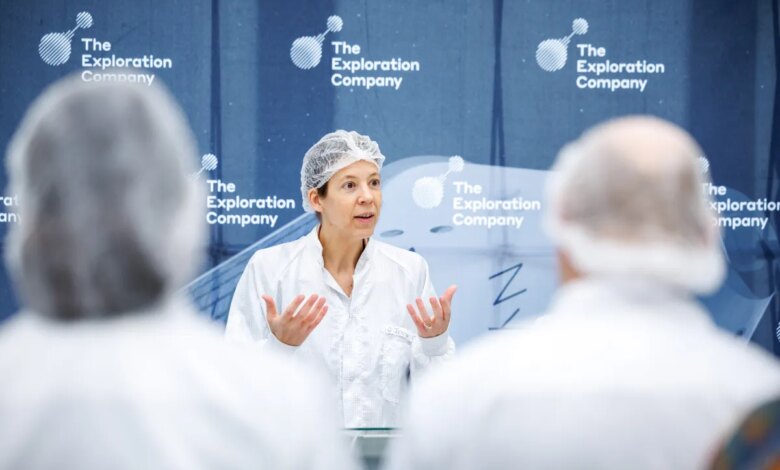
Concerns about sovereignty are particularly beneficial for a EU-based firm like TEC. Under the leadership of Hélène Huby, a former Airbus and ArianeGroup executive, TEC aims to leverage its funding to establish a new European heavy-lift launcher that provides an economical alternative to SpaceX.
SpaceX might find itself needing to reduce its emerging dominance in low-earth-orbit launches to prioritize its own missions, as reports indicate that its Falcon rockets are increasingly being allocated for Starlink satellites. This raises questions about how things will change once these satellites are decommissioned in favor of the Starship.
This demand presents a challenge for TEC, which acknowledges that it won’t meet the requirements for several years, even considering its ambitious schedule. According to Atomico, the company has “10 Nyx missions booked,” translating to over $2 billion in commitments.
Some of these commitments come from significant partners, including the European Space Agency and NASA. The Series C funding round was a joint effort, led by Atomico and the Scaleup Europe Fund, with Bessemer Venture Partners also participating. Alex Ferrara from Bessemer will join TEC’s board as part of this deal.
This funding round strengthens TEC’s position as a firm primarily supported by private capital, reflecting its strategic planning. In a recent press briefing, Huby expressed her desire for Europe to pursue human spaceflight, but she noted the challenges in convincing venture capitalists to invest $4 billion in a crew capsule that may take ten years to develop.
As a result, TEC’s timeline is practical, albeit ambitious. The company’s immediate goal is the Nyx, a reusable capsule similar to SpaceX’s Dragon, designed to carry both cargo and crew. TEC plans to have Nyx successfully dock with the International Space Station and return to Earth by November 2028.
Huby stated that the Series C funding will also support Storm, a rocket engine initiative that lays the groundwork for future projects. “We need additional funds to construct a launch pad and develop the rocket itself,” she told journalists.
TEC is not the first European commercial space venture to send a rocket into the sky; German startup Isar Aerospace achieved that milestone recently from Norway. Huby lauded this accomplishment as a positive development for the entire sector, but emphasized that TEC intends to create a significantly larger rocket than Isar’s Spectrum vehicle.
Isar also has plans for a larger launch vehicle, a move echoed by TEC’s strategy. Huby explained this necessity, stating, “In the next five to ten years, a substantial portion of our broadband communications could originate from space, necessitating substantial rockets and frequent launches.”
The success of frequent launches will hinge on reusability, a goal TEC aims to achieve through technology akin to that of SpaceX and Stoke. “It is the most challenging yet efficient engine cycle globally, making it the first time a European firm has developed such a rocket engine,” Huby noted.
TEC’s strides have garnered attention in Europe, receiving accolades from French President Macron and Ursula von der Leyen, President of the European Commission, following the announcement of its Series C funding. The timing of this announcement coincided with the International Space Summit in Paris, where Huby hinted at further developments on the horizon.