Tesla, Uber, and Waymo Secured Approval to Launch Extensive Robotaxi Operations in Nevada

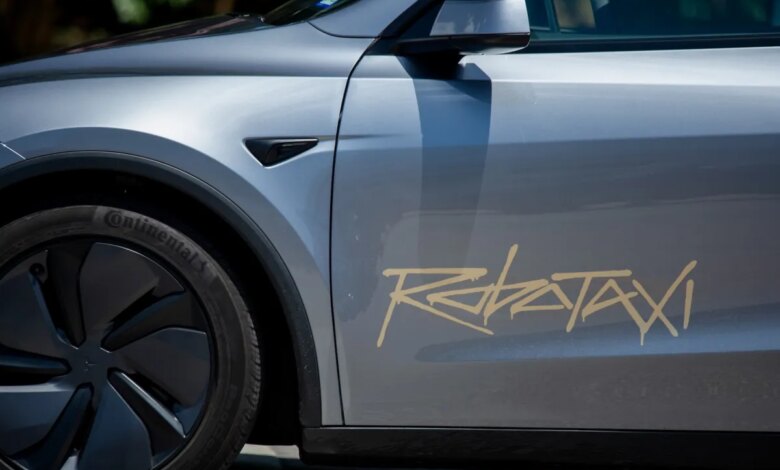
Nevada is preparing for the arrival of robotaxis.
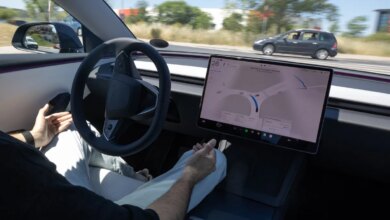
The Nevada Transportation Authority has granted three permits that enable Tesla, Uber, and Waymo to launch commercial robotaxi services in Clark County, which includes Las Vegas. Collectively, these permits could see the deployment of up to 8,000 robotaxis in the region over the forthcoming year.
Tesla’s permit permits it to roll out as many as 5,000 robotaxis, while Waymo is limited to 1,000 autonomous vehicles during the same period. Uber has also been approved for 1,000 robotaxis through collaborations with Motional, a Hyundai subsidiary, and Zoox. Notably, Zoox already has a permit that allows it to operate 100 robotaxis within its autonomous vehicle network.
However, there are uncertainties regarding whether these companies can deploy the proposed number of robotaxis. Insights from representatives of Tesla and other firms suggest that reaching those targets may be challenging.
“The 5,000 has always been our maximum,” stated Eric Early, Tesla’s chief engineer for Cybercab, during the meeting. “I doubt we will have the capacity to deploy 5,000 vehicles by this time next year, but it’s not due to technological limitations. … I believe we would be quite pleased if we could reach around 2,500, perhaps a little more, in the upcoming year.”
Even if these major players only manage to launch half of their projected fleets, Clark County — particularly Las Vegas — is poised to become a crucial arena for robotaxi operations, with Tesla, Uber (via its partnerships with Motional and Zoox), and Waymo vying for the same market of riders.
Such rapid, large-scale deployment of robotaxis is expected to transform the city and its labor landscape. Depending on differing perspectives, these companies may either create a new sector of jobs focused on the upkeep, recharging, and cleaning of these vehicles or may eliminate entire categories of jobs for human taxi and gig economy drivers.
Opposition to the permits has emerged from local taxi operators and the Livery Operators Association, who contend that the approvals are advancing too quickly.
“These applications pose two significant worries,” commented Kimberly Maxson-Rushton, a lawyer for the Livery Operators Association, during the hearing. “One relates to the oversaturation in the commercial transportation sector in Nevada, and the other concerns the potential congestion on the roads, specifically in the Golden Triangle.”
The Golden Triangle is the region between the airport and Las Vegas Boulevard, where most autonomous vehicle testing has taken place thus far. Motional is also conducting trials in the downtown area and in a shopping district called Town Square.
In this context, Uber has sought to position itself as the balanced option, promoting a hybrid model that includes both human drivers and robotaxis in the ride-hailing ecosystem. The company has advocated for regulations that would require robotaxis to operate alongside human drivers, a strategy designed to protect its own interests against the ambitions of competitors like Tesla and Waymo.
During the NTA meeting, Uber reiterated that this hybrid approach would allow cities to gradually integrate autonomous vehicles to meet demand without overwhelming the market.