Welcome to TechCrunch Mobility — your go-to source for updates and analysis on the future of transportation. To receive these updates via email, sign up here for free — just click TechCrunch Mobility!
Waymo continues to capture attention with its rapid growth, and rightly so; it appears the company’s robotaxis are making their debut in new cities with impressive frequency or are expanding existing services.
For some time now, we’ve been aware of Waymo’s sixth-generation self-driving technology, first introduced with its latest Ojai robotaxi, as a key factor in its growth strategy. Recent developments, however, have shed light on its significance.
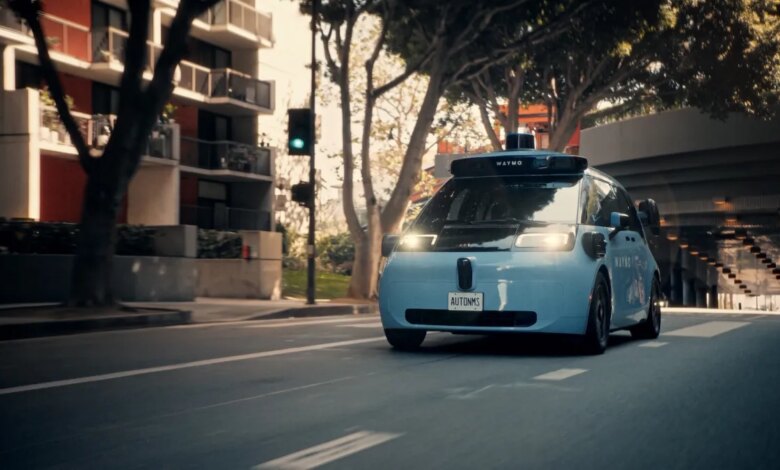
Waymo has just made its Ojai robotaxi accessible to all riders in Los Angeles, Phoenix, and San Francisco. The company claims this next-generation vehicle is more economical to manufacture, operate, and maintain — essential attributes if Waymo hopes to achieve profitability in the future.
Until this week, there was less clarity about Waymo’s level of active involvement and integration in pursuing these goals.
This week, the company revealed that it developed a specialized silicon chip — a 5 nm ASIC chip — to efficiently process vast amounts of data before it reaches the core of the self-driving technology. To illustrate the scale of this data, consider that the Waymo Ojai is equipped with 13 high-resolution cameras. Waymo states this chip provides over 1,000 TOPS (trillions of operations per second) of computational power, positioning it similarly to Nvidia’s latest DRIVE AGX Thor processor, which is specialized for automated driving applications.
According to Waymo, this chip contributes to a system exhibiting extraordinary efficiency and performance. The implication is that this technology is vital for responding swiftly and safely in intricate urban environments.
It’s important to note that Waymo is not navigating the computing landscape alone. The company has identified several partners in this arena, some of which have not been previously disclosed, such as AMD, Micron, Nvidia, Samsung, Sandisk, Socionext, and TSMC.
A little bird
Insiders provided intriguing information to Sean O’Kane, a senior reporter focusing on special projects. They discussed an investigation being conducted by the Idaho National Laboratory.
Reports indicate that the lab is examining whether Chinese lidar sensors could present security threats if they gain widespread adoption in U.S. vehicles. While this concern is significant on its own, what caught our attention is the fact that the research is being funded by certain stakeholders within the electric and autonomous vehicle sectors.
O’Kane reached out to multiple companies, including Rivian, General Motors, Ford, Kodiak, Lucid Motors, Nuro, and Uber, all of which claimed they were not aware of the ongoing review. Companies like Aurora, Nvidia, and Zoox did not respond to inquiries.
Deals!

Also, an emerging startup from Rivian, has successfully raised another $150 million as part of a Series D funding round led by Prysm Capital, with contributions from previous investors Eclipse, Greenoaks, and MVP Ventures. Overall, Also has secured $455 million since its independent launch in March 2025.
This funding milestone is significant, particularly considering Also’s rapid advancement to a Series D round less than a year since its inception. The evolution of the company’s mission clarifies its need for continued capital.
When it first launched in spring 2025, Also was primarily identified as a micromobility company focused on electric pedal-assisted bicycles and cargo quads. However, it has shifted to become “a technology company from Palo Alto specializing in creating highly capable driven and autonomous small electric vehicles.”
The autonomous driving aspect emerged this year when Also secured a $200 million funding round and announced a multi-year partnership with DoorDash aimed at developing autonomous delivery vehicles.
Furthermore, sidewalk delivery robot company Serve Robotics recently concluded a noteworthy deal. This comes on the heels of Serve’s announcement that its partnership with Uber will end next year, following a report of reduced usage of its delivery robots within the Uber app.
Before these changes occurred, Serve had been finalizing several other agreements. It has struck a deal with Grubhub to deploy its sidewalk robots in cities like Chicago, Los Angeles, and Alexandria, Virginia. Additionally, the partnership with DoorDash has been expanded to cover New San Jose and Washington, D.C.
Uber’s withdrawal from Serve serves as a reminder for companies aiming to grow: diversification is key. Fortunately, Serve appears to have achieved that successfully.
Other noteworthy deals include …
Einride, a Swedish firm specializing in electric and autonomous trucking, has reached an agreement with Tesla to acquire 500 Tesla Semis, which will be made available to its clientele, including Amazon. The Semis are expected to be integrated into Einride’s fleet over the next two years, starting from September. Note: Tesla is striving to scale its production but recently dialed back expectations for achieving substantial volume in 2026.
Grounded, a startup based in Detroit focused on customizing electric and gas vans, has secured a $5 million seed round from repeat investors including Also Capital and The 81 Collection, among others.
Uber has announced a partnership with drone delivery enterprise Zipline. While the investment amount was undisclosed, both companies set an ambitious goal of achieving 1 million drone deliveries per day by the end of 2029.
Vessev, a New Zealand startup developing electric hydrofoil vessels, raised $19 million in Series A funding, led by Blackbird Ventures, with participation from new investors GD1 and Rypples as well as other existing backers.
Notable news and tidbits

Amazon aims to extend its drone delivery service to nearly 500 cities across the United States by the conclusion of 2026, multiplying its current operational area six times.
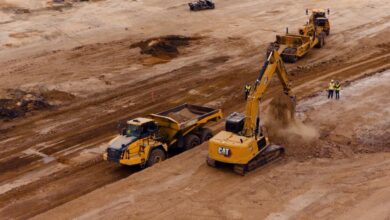
Bedrock Robotics, a technology startup specializing in autonomous vehicle systems founded by former Waymo and Segment veterans, has begun full autonomous operations of excavators at three major project sites in Nevada and Texas.
Hyundai’s luxury division, Genesis, has launched a seven-seater electric SUV, the GV90, set to compete against large electric vehicles such as the Cadillac Escalade IQ and Rivian R1S.
Tesla is among 11 automotive manufacturers in China recalling millions of vehicles due to issues with hidden emergency door releases, which may entrap occupants during emergencies.
Tesla, Uber, and Waymo have received permissions from Nevada authorities to operate commercial robotaxi services in Clark County, which encompasses Las Vegas. Combined, these permits may allow the deployment of up to 8,000 robotaxis over the coming year. While it’s unlikely that all will launch in Las Vegas this year, even a fraction of them will have an impact on the city.
Uber was fined €825 million ($966 million) by the Dutch Data Protection Authority for failing to properly notify drivers when deactivating or suspending their accounts, a violation of EU data protection rules.
In a week filled with announcements related to autonomous vehicles, Uber is also testing an early rider program in London with partner Wayve; launching a robotaxi service in Zagreb, Croatia, alongside Pony.ai and Verne; and offering driverless rides in Dubai with Baidu.
Waymo has answered inquiries from the National Highway Traffic Safety Administration as part of an investigation concerning a robotaxi involved in an incident with a child at low speed. However, the available details in the released responses have been heavily redacted.