Welcome to TechCrunch Mobility, your go-to source for advancements in transportation technology, particularly the role of AI. To subscribe for free, click here for TechCrunch Mobility!
After returning from a break, I discovered I had quite a bit to catch up on, including the ending of the Uber-Waymo collaboration in Phoenix. While they still have partnerships for robotaxi services in Atlanta and Austin, the real question looms: when will these deals conclude? However, my primary intrigue lies in how these two companies will interact post-partnerships.
Tensions are already apparent, with Uber executives making subtle jabs at Waymo. I anticipate that direct challenges will emerge as soon as their existing partnerships reach an end. A key focus will likely be policy decisions, particularly in markets where autonomous vehicle companies seek entry.
In recent developments on the federal level, National Highway Traffic Safety Administration administrator Jonathan Morrison issued a notice to autonomous vehicle manufacturers, emphasizing that failure to give way to first responders or law enforcement is unacceptable.
He stated, “The inability to detect and manage such scenarios shows a deficiency in functionality. Emergency situations aren’t rare instances. Hence, the NHTSA is urging all AV developers to prioritize resolving this critical issue.”
Morrison’s communication didn’t single out any specific company, applying broadly to all developers under the Department of Transportation’s guidelines. Yet, there seems to be an implicit focus on Waymo.
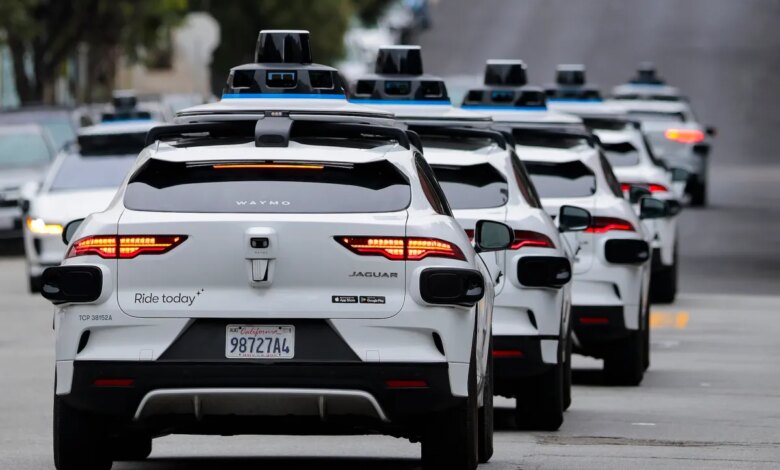
Previous investigations highlighted that Waymo, which leads the U.S. with its extensive robotaxi fleet in cities like Los Angeles, Phoenix, and San Francisco, has faced multiple encounters with emergency services. Recently, San Francisco Supervisor Bilal Mahmood expressed intentions to probe into how autonomous vehicles impact public transportation and emergency services, particularly after a July 4 event created significant traffic chaos. Reports indicated that numerous Waymo vehicles were towed after running out of battery during the congestion.
Morrison’s message carries weight, but whether it will lead to impactful repercussions for AV makers remains uncertain. The NHTSA has requested that companies submit their proposed solutions by the month’s end.
Additionally, the updated 2026 Regulatory Plan and Unified Agenda showcases a series of proposed alterations to the Federal Motor Vehicle Safety Standards (FMVSS), which regulate vehicle design and equipment. These changes might facilitate companies like Tesla and Zoox, which are pioneering vehicles lacking traditional steering wheels, pedals, and other components typical in human-operated cars.
A little bird
If you have any tips for us, you can reach out via email or Signal.
Deals!

This week, I want to highlight Rivian, which has announced the sale of 86.25 million Class A common shares priced at $15.50 each, including an extra 11.25 million shares purchased by underwriters.
Overall, Rivian anticipates raising $1.32 billion in new funding. This comes at a significant time as the company began delivering its new R2 SUV last month and recently increased its sales projections for 2026. Now expecting to deliver between 65,000 and 70,000 vehicles, the company has exceeded its own expectations due to growth in their models EDV and R1 as well as the launch of R2 deliveries.
While the reason for this funding round isn’t specified, it’s worth noting that Rivian has yet to achieve profitability, and scaling production of the R2 — or any vehicle, for that matter — is costly!
Other noteworthy deals include:
Bidbus, a startup based in Los Angeles that has created a digital platform for car auctions among dealers, secured $15 million in a Series A funding round led by Ibex Investors, with participation from Mucker Capital, FJ Labs, and others.
Lyft has decided to acquire Serveo’s bike-share operation in Spain, expecting to complete the transaction this year with undisclosed terms.
TaiSan, a battery startup from the UK, raised £4.65 million in a seed funding round co-led by Eos Advisory and the Midlands Engine Investment Fund II, with support from various investors including InnoEnergy and others.
Noteworthy articles and insights

AssuranceAmerica, a U.S. insurance firm, confirmed a data breach affecting personal details and driver’s license numbers of 6.9 million individuals — the largest leak of its kind this year.
Beta Technologies, known for its electric aircraft that take off and land vertically, successfully completed operational flights under a pilot program with the U.S. Department of Transportation and FAA, covering about 275 nautical miles across Virginia and Maryland.
Longtime Tesla observers will recall when Elon Musk faced off against numerous short sellers. Musk continues to be a polarizing figure, and an ETF creator is now capitalizing on this sentiment with two new anti-Elon exchange-traded funds.
GM’s Chevrolet has developed an all-American electric truck, yet, as reported by senior reporter Tim De Chant, sales have been underwhelming.
Manna Aero, an autonomous drone delivery startup based in Ireland, is expanding into the U.S. with a manufacturing and operations facility in Tulsa, Oklahoma, intending to create 1,000 jobs in the coming years.
Slate Auto has partnered with Crayola to provide its EV truck and SUV customers with vehicle wraps in five different crayon colors. The base Slate EV is not painted but instead comes in a gray composite material that can be adorned with a wrap of one’s choosing from a wide selection.
One last note …
The latest season of the TechCrunch podcast Build Mode has just premiered, hosted by Isabelle Johannessen, who leads TechCrunch’s Startup Battlefield program. Unlike the podcast I co-host, Build Mode is tailored to assist early-stage entrepreneurs.
The new season kicks off with an interview featuring Charles Hudson, founder and managing partner of Precursor Ventures, who shares crucial insights for early-stage founders preparing for their first round of institutional funding.
Don’t miss it: Explore the new guidelines for early-stage fundraising with Charles Hudson.
Purchases made through links in our articles may earn us a small commission, which does not influence our editorial independence.