Welcome to TechCrunch Mobility, your source for insights on the evolving transportation landscape and the influential role of AI. Subscribe for free updates by clicking TechCrunch Mobility!
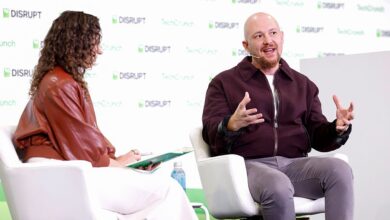
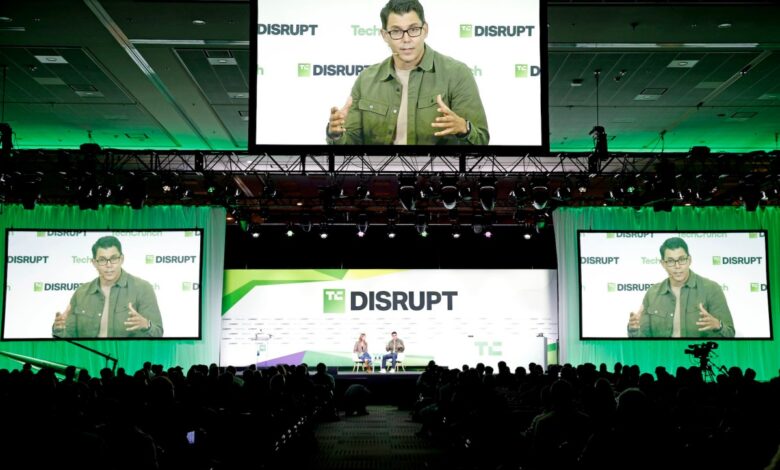
During my interview with Rivian’s CEO RJ Scaringe at TechCrunch Disrupt, I found myself returning to a key question: What does Scaringe envision for Rivian’s future? Recent developments suggest that Scaringe aims for Rivian to evolve beyond a mere electric vehicle manufacturer, while still maintaining a connection to its core mission.
Rivian has made significant strides in vertical integration over the past couple of years. The company has created its own AI models to enhance its in-vehicle assistant and is establishing a comprehensive automated driving platform for its cars and future robotaxis, in collaboration with Uber. Additionally, Rivian is developing custom silicon, including a 5 nm processor in partnership with Arm and TSMC. Moreover, the company is engaged in a $5.8 billion collaboration with VW Group that focuses on electric architecture and software advancements.
Scaringe’s ambitions also venture beyond Rivian, although they remain interconnected. He initiated a micromobility project that has emerged into a separate entity called Also. Furthermore, he founded an industrial robotics startup named Mind Robotics, which Rivian now partially owns and sees as a potential client. Scaringe also announced the appointment of Doug Field, a former executive from Ford, Apple, and Tesla, as president of Mind Robotics during the interview.
As Scaringe spoke about possibly expanding the VW joint venture to include AI and autonomy, he hinted at plans to license Rivian’s technology to various other brands.
What does Rivian’s landscape look like as we approach 2030? It’s evident that the company aims to be more than just a manufacturer of electric trucks and SUVs; the term “technology supplier” kept coming to mind.
Consider this: Rivian is positioning itself to license its electric architecture, software solutions, and AI models, as well as its autonomy systems. Meanwhile, Mind Robotics creates industrial robots intended for use in Rivian’s own facilities and for sale to other companies. Additionally, a successful entry into the robotaxi sector with Uber could pave the way for further partnerships.
Scaringe is already envisioning how autonomous technology could transform Rivian’s own fleet.
“As we think about future models, envisioning autonomous vehicles allows for innovative design possibilities that can enhance user experiences,” he reflected in an interview with TechCrunch. “I am incredibly enthusiastic about the possibilities ahead in transportation over the next decade, as it enables us to reimagine what is possible.”
Recent Deals
Bedrock Robotics, a startup focused on autonomous technology for construction vehicles, is reportedly raising $600 million.
Dot Ai has successfully acquired the electric vehicle car-sharing company Envoy Technologies for $65 million in stock.
Evos, which specializes in developing AI agents for automating tasks in industrial sectors such as freight brokerage, has raised $9 million in a pre-seed funding round led by Uncork Capital and Field Ventures.
Mana Battery, based in Colorado and specializing in anode-free sodium batteries, has received $10.15 million in funding led by Voyager Ventures.
PlusAI, a developer of autonomous trucking solutions, is making moves towards going public in partnership with Texas Ventures Acquisition III.
Volvo is enhancing its automated driving capabilities through an expanded partnership with Nvidia, utilizing several of Nvidia’s products to enable hands-free driving on highways and city streets.
Waabi, which is pioneering self-driving truck technology, has struck a commercial deal with Warrior Logistics to transport freight between Dallas and Houston.
Important Updates and Insights

Sales of electric vehicles in the U.S. are showing positive trends.
Laplace Intelligence, one of 20 startups that participated in TechCrunch’s Startup Battlefield 200, is focused on creating automated red-teaming for testing robots and self-driving vehicles.
The startup LNK Energies from MIT claims to have developed a method for converting existing diesel trucks to hydrogen power, reducing harmful emissions and costs while protecting operators from volatile fuel prices.
The Paris Auto Show is showcasing prominence among Chinese automobile manufacturers.
Tesla revealed its SpaceX-enhanced Roadster with an eye-catching stunt utilizing high-powered fans and thrusters, aiming for a market debut by 2028, though the legality of such feats on public roads remains in question.
Waymo is making its move into Canada by launching its automated vehicle pilot program in Toronto, while also expanding its robotaxi services to include broader accessibility in San Antonio, San Diego, and Tampa.
A Final Thought
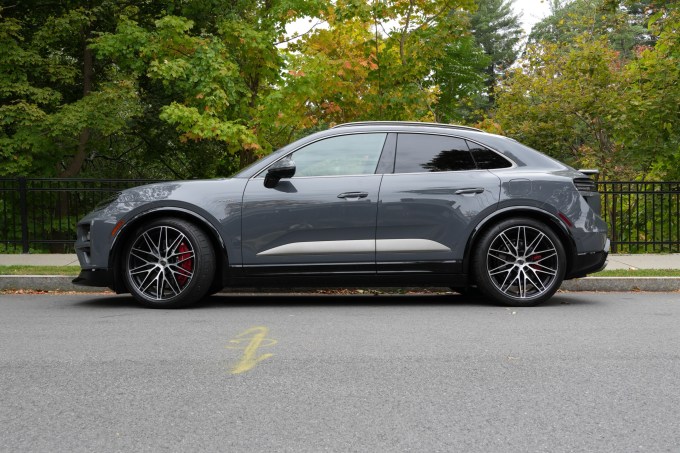
TechCrunch’s Tim De Chant recently had the opportunity to test drive the 2026 Porsche Macan Turbo EV. His experience has prompted him to reconsider the traditional definitions of a sports car.
Purchasing through links embedded in our articles may result in a small commission for us, though this does not influence our editorial objectivity.