Welcome to TechCrunch Mobility, your go-to source for advancements in transportation, particularly the increasing impact of AI in this sector. To receive updates directly in your inbox, sign up for free — just click on TechCrunch Mobility!
Autonomous vehicle technology has not yet become a common sight for everyone. While some might argue it’s everywhere, I assure you that it’s still developing, especially outside of tech-centric areas like the San Francisco Bay Area.
However, this technology is moving from testing to commercial use, prompting discussions about scalability. A few notable strategies are beginning to take shape.
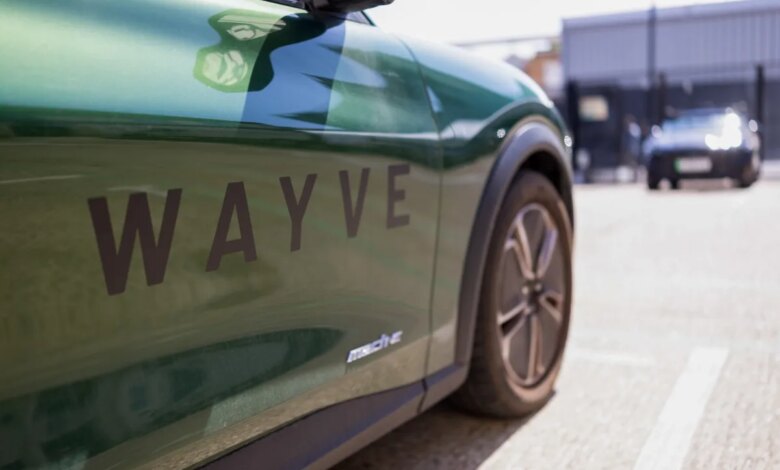
Collaborative Scaling. Recent announcements illustrate this approach. Wayve has secured a commercial partnership with Mercedes-Benz to incorporate the startup’s automated driving technology into at least one vehicle model projected for release in the next two years. Although classified as a Level 2 product—which manages certain driving tasks but still requires active participation from the driver—it expands Wayve’s presence, building on similar agreements with Nissan and Stellantis. These collaborations have also paved the way for their fully autonomous offerings. Earlier this year, Wayve teamed up with Nissan and Uber to initiate a robotaxi service in Tokyo.
Expansive Yet Focused. As discussed this week, Waymo is rapidly expanding its commercial robotaxi service, both in terms of geographic spread and user engagement. However, when analyzing the data, one can observe that these robotaxis are predominantly deployed in just two states. Approximately 80% of Waymo’s fleet of about 4,000 vehicles is based in California and Texas, with a recent surge of over 49% growth in Texas alone within three weeks.
Waymo is also diversifying its user base, expanding to younger passengers—specifically teenagers.
Placing Aurora, a company focused on self-driving trucks, somewhere between these models, it’s clear that while Aurora is targeting Texas, it’s also forming various partnerships. CEO Chris Urmson expressed optimism regarding the company’s growth over the next four years, declaring that Aurora has “emerged from the building stage.” The company aims to have over 30,000 autonomous trucks in operation by 2030, with more than 200 expected by the end of this year.
Updates from the Industry
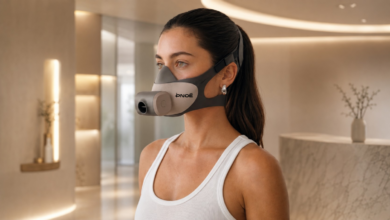
Our updates cover small but significant insights from the transportation industry. Occasionally, these tips lead to more substantial stories. An example arose recently when Zoox employees informed senior reporter Sean O’Kane about issues with the company’s test fleet in Atlanta. Staff members were experiencing health problems, suspected to be linked to the test vehicles, specifically Toyota Highlander SUVs with Zoox’s self-driving technology.
In summary, Zoox has temporarily halted its autonomous vehicle testing in Atlanta after concerns about possible exposure to harmful gases, including carbon monoxide, carbon dioxide, or hydrogen sulfide. Although only CO2 was identified in their findings, the frequency of these incidents led an employee to report the situation to the Occupational Safety and Health Administration, prompting an investigation.
Feel free to reach out with tips for us via email.
Recent Deals

While investors on Wall Street are eager to see whether leading AI companies will go public in 2026, other sectors, including transportation, also see IPO activity. Notably, many of these companies are based outside the United States.
For example, Carro, a used car marketplace backed by SoftBank, is contemplating a dual listing on the Nasdaq and the Singapore Exchange. Two companies from India—used car marketplace Spinny and electric bus manufacturer PMI Electro Mobility Solutions—have both confidentially filed for IPOs. Additionally, EcoCeres, a renewable fuels producer from Hong Kong, is reportedly aiming to raise about $1 billion through an initial public offering.
Last week, May Mobility, a U.S.-based autonomous vehicle firm, announced its plans to go public through a merger with a blank-check entity.
Additional Noteworthy Deals:
Ultraviolette, an Indian electric motorcycle manufacturer, has raised $85 million and onboarded Intel CEO Lip-Bu Tan as an adviser.
Interesting Reads and Updates

Comma, the startup initiated by hacker George Hotz, is currently under federal investigation following five reported accidents involving its aftermarket hands-free driver-assistance technology, two resulting in fatalities.
Einride, a Swedish firm specializing in electric and autonomous trucking, announced its plans to leverage Nvidia’s Hyperion platform for the next generation of its self-driving technologies.
In Canada, San Francisco’s PitPro Automation has launched a robot capable of changing tires at local service shops.
The Boring Company is focused on developing a “simplified precursor to Hyperloop” between Austin and San Antonio, aiming to cut travel time between these cities to under 30 minutes, as mentioned by founder Elon Musk.
Tesla has started delivering its first all-electric Semi trucks to clients. Although CEO Elon Musk is known for extending timelines, the initial reveal back in 2017 made delivery seem imminent. An insider noted that customers can accept delivery when they are ready, but charging infrastructure continues to pose challenges.
Is there a need for a learner’s permit for AI? MIT researcher Bryan Reimer shares his insights.
Volkswagen is reportedly delaying the launch of its ID Buzz in the U.S. However, its subsidiary MOIA America has teamed up with Beep to initiate passenger services using self-driving ID Buzz models fitted with Mobileye technology in Lake Nona, Orlando, with a human operator still present.
One Last Note
In just a couple of weeks, Disrupt 2026, TechCrunch’s annual tech conference in San Francisco, will take place. I will be interviewing Rivian CEO RJ Scaringe on stage October 13, covering topics like Rivian’s ambitious plans for its R2 model, robotaxi service, and self-driving technology, along with his other projects, Like Also and Mind Robotics.
If you plan to be in San Francisco during Disrupt, consider joining us. I’m offering a 30% discount using the code mobility30. Besides Scaringe, several engaging discussions and a multitude of startups will be featured. Check out the agenda, which includes talks with individuals from Bedrock Robotics, GM, and self-driving trucks company Waabi, along with Les Karpas, head of AI at Nvidia, and Mark Wahlberg among many others.
Purchases made through links in our articles might earn us a small commission, but this does not influence our editorial integrity.