Seven Years Ago, These Laptops Were Essentially Outlawed—And No Compromise Has Come Close Since

The dynamic between the United States and China has continually captured attention due to their stark political contrasts, while economically, both nations rely heavily on each other for trade and commerce.
If you look around your home, it’s likely that many of the electronic devices or manufactured goods were produced in China. While these items might have been envisioned and patented in the U.S., the manufacturing operations that can produce them affordably are found overseas. Though these products are essential, they can sometimes pose security concerns.
A sudden ban halted a rising competitor in the tech industry
Just as it was gaining momentum
When a product is created by a Chinese company, there is a worry that the Chinese government may incorporate surveillance technologies or other intrusive capabilities into these devices. In China, the divide between state and private enterprise is hardly clear-cut. Given Huawei’s significant role in telecommunications, it has always faced scrutiny, ultimately leading to its being placed on the U.S. Entities List in 2019, which drastically limited its ability to engage with American firms.
This didn’t require current Huawei device owners to dispose of their products, nor did it necessitate the removal of existing stock from stores, yet it effectively ended future collaborations. As a result, companies like Google could no longer partner with Huawei, meaning certain software services could not be included with Huawei devices globally.
Huawei unintentionally discovered the ideal laptop design
Simplistic yet effective design
Huawei entered the laptop market as a telecom company primarily known for its Android devices, diverging from the established paths of brands like Dell, Apple, HP, and Lenovo.
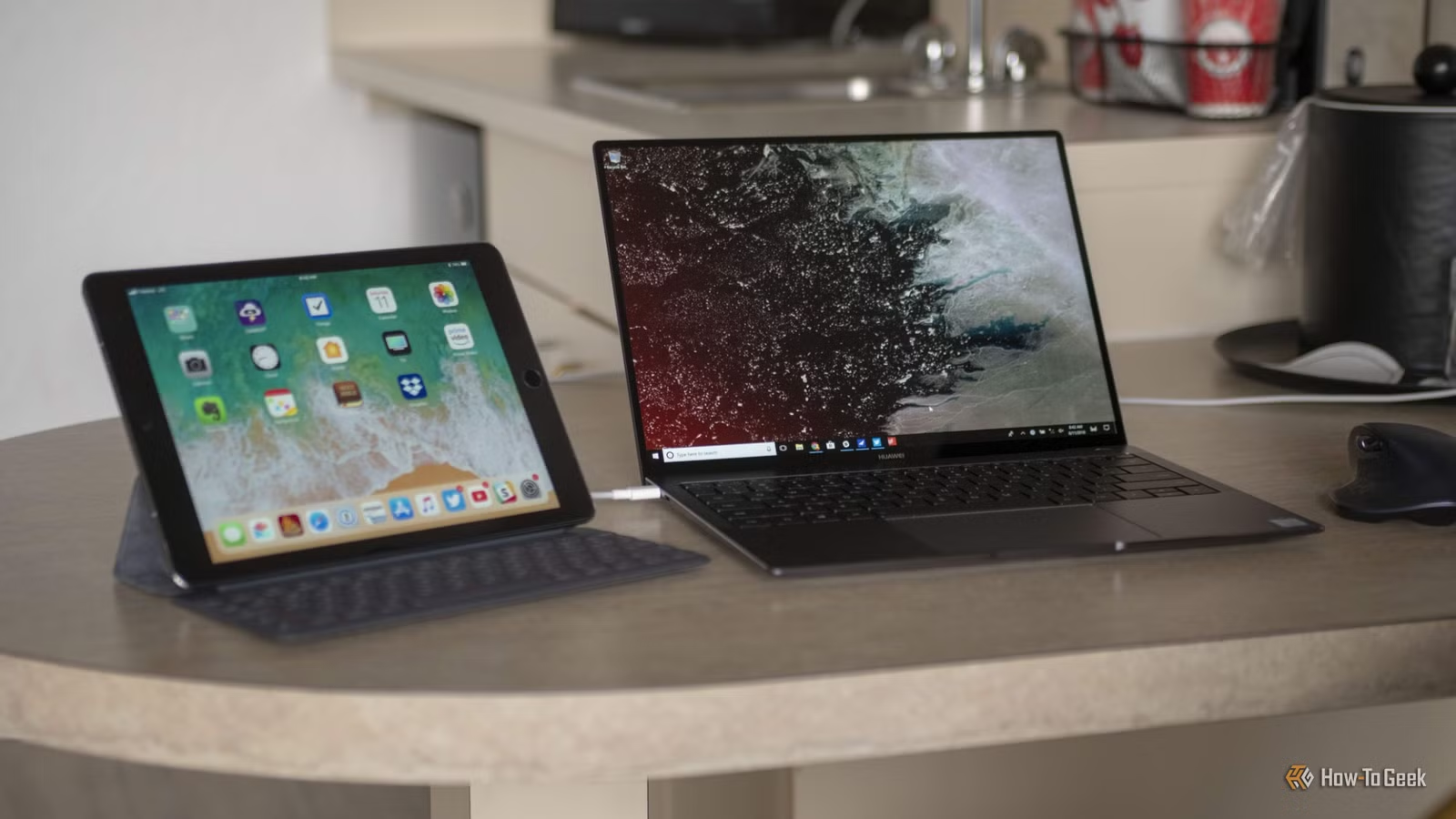
The MateBook series showcased high-end features at a more accessible price point, steering clear of mere imitation of Apple’s MacBook design. Instead, Huawei introduced innovative engineering and aesthetic elements that set it apart. The premium models featured an aluminum body, barely-there display borders, a large 3:2 touchscreen, and an expansive glass trackpad. The display resolution of 3,000 × 2,000 pixels was exceptional for a typical Windows laptop back then, providing a remarkable amount of vertical real estate compared to the standard options.
This approach departed significantly from the common 16:10 MacBook clones that many Windows manufacturers were promoting, and the price of the MateBook X Pro was competitive with Apple’s MacBook Air, especially before the advent of Apple Silicon. The MateBook X Pro also included a discrete GPU and Intel’s Core i7 processor, ensuring it wasn’t just an economical choice but also a solid performer. Reviews were overwhelmingly positive, and customers were pleased. However, the U.S. government’s intervention soon diminished Huawei’s footprint in the American market.
No competitor has matched the offering since
There’s little incentive to improve
As the computer component market continues its price fluctuations, one might question the concept of “value.” In the interim between Huawei’s exit and the price surge, no other Windows laptop brand has managed to present a comparable mixture of quality and price.
A budget of around $1,000 for a laptop focused on outstanding build quality, impressive sound and visuals, along with a great keyboard and trackpad would usually lead one to consider only a MacBook. In contrast, typical Windows laptops tend to falter in at least one area, falling short of those standards.
Recently, Apple introduced the MacBook Neo priced at $600, which sparked competitive energy among Windows makers, prompting them to elevate their offerings for the same budget. Yet, they still grapple with a perception of inferiority that the MateBooks managed to overcome despite being more affordable.
Huawei advanced the Windows laptop market
Unfortunately, not sufficiently
Nevertheless, Huawei deserves recognition for its role in transforming the Windows laptop landscape. The introduction of the MateBook in the late 2010s provided a legitimate alternative to MacBooks, influencing shifts within the Windows sector. While Apple’s innovations also played a part, Huawei demonstrated that features like sleek bezels, quality keyboards, and precise trackpads need not only belong to Apple’s pricing structure.
If Huawei had been permitted to continue competing in the U.S. market, it could have significantly improved consumer options for those not inclined to switch to macOS.
Huawei remains strong in international markets
Despite being barred from the U.S. market, Huawei continues to thrive overseas. The exclusion has affected its strategic choices. Notably, Huawei has rolled out laptops equipped with Arm-based technology running on HarmonyOS, an operating system developed in-house that has a proprietary kernel along with open-source elements.
The latest offerings include features such as flexible OLED displays, along with reasonably priced traditional laptops that exude a premium feel. The key distinction remains: these products are unavailable for purchase within the U.S.