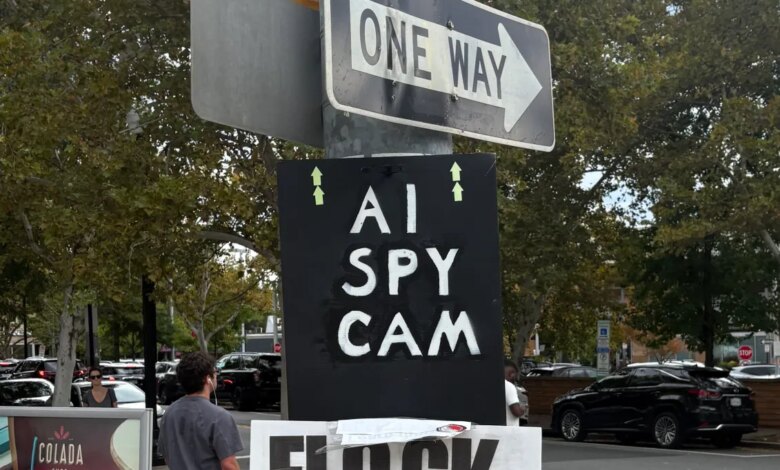
Flock, a company that employs cameras to scan license plates nationwide, faces increasing public backlash, prompting Senator Bernie Sanders to push for a total ban on such technology by the federal government.
On Friday, Sanders (D-Vermont) proposed the Ban Flock Act, aimed at prohibiting federal agencies from utilizing automatic license plate readers (ALPRs) or accessing data gathered by local police and private entities operating these systems. Although the bill’s name has sparked debate, it broadly addresses all ALPR mechanisms rather than specifically targeting Flock.
The legislation stipulates few exceptions: it would permit toll collection and uses authorized by future Congressional measures, with a strict limitation on data retention to no longer than 48 hours.
If passed, the bill would impose financial penalties on state and local governments that fail to comply. Starting in the fiscal year following enactment, these governments could lose funding from five federal departments, including Justice and Homeland Security, unless they prohibit the technology’s use.
The proposed measure would also empower American citizens to file lawsuits against the federal government for any breaches, alongside allowing state attorneys general to enforce the law.
According to Sanders, Flock stands as the leading ALPR provider in the United States, boasting over 120,000 cameras. The company revealed in a February blog post that its infrastructure processes upwards of 20 billion vehicle scans monthly.
Amid intensifying scrutiny and backlash from communities opposed to its operations—which have led to the suspension of use and a growing number of contract cancellations—Flock has made adjustments to its policies. In August, CEO Garrett Langley announced a reduction in the default data retention period from 30 days to seven days, reversing earlier positions that placed the responsibility for camera usage on local agencies.
Additionally, customers are now required to utilize an audit feature that temporarily restricts officers from performing searches that trigger alerts until they undergo review. A notable incident involved a former officer in Milwaukee who pleaded guilty to misconduct after conducting 179 unauthorized searches concerning his former partner and her ex-partner, citing “investigation” as the reason. During a recent podcast, investor Jason Calacanis proposed a “double-key” approach, requiring two approvals for searches, a concept Langley acknowledged is under consideration.
The Bill has garnered support from Representative Alexandria Ocasio-Cortez (D-N.Y.) and Senator Jeff Merkley (D-Ore.) as co-sponsors.
Langley is scheduled to participate in our upcoming Disrupt event from October 13-15 in downtown San Francisco.