Runable Secures $21M to Transform AI Agents from Business Builders to Growth Catalysts

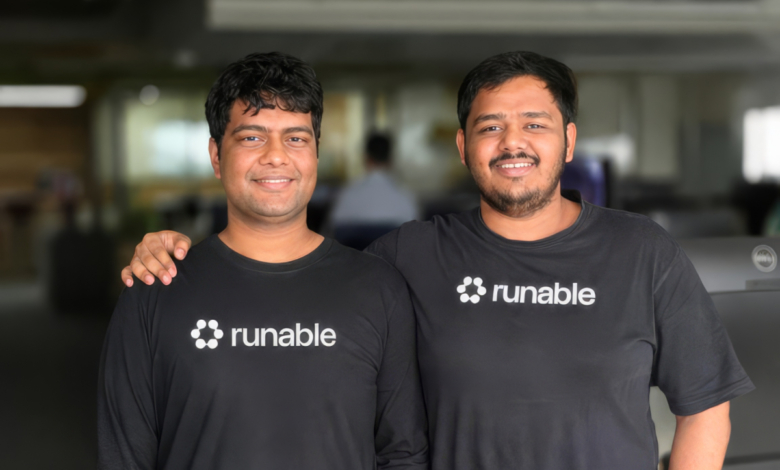
As artificial intelligence simplifies the creation of websites and applications, the Indian startup Runable believes the real opportunity lies ahead: connecting with customers and fostering business growth. To pursue this goal, the startup has successfully secured $21 million in funding.
The Series A funding round was jointly led by Susquehanna Venture Capital and Nexus Venture Partners, with participation from previous investors Together Fund and Array VC. Following this investment, Runable’s valuation reached $65 million, according to co-founder and CEO Umesh Kumar.
Launched in 2025, Runable is focusing on small businesses in a competitive landscape that includes AI leaders like Anthropic and OpenAI, as well as coding platforms such as Cursor, Lovable, and Replit. The Bengaluru-based startup, supported by a team of 15, aims to transcend mere software development with an AI agent that identifies customers, manages ad campaigns, creates presentations, and enhances visibility across search engines, social media, and chatbots.
Kumar highlighted the necessity for tangible business outcomes, stating, “After all, businesses don’t need Codex or Claude Code. They need effective results. If an agency charges $10,000 for Google Ads, can someone offer the same service for less? That’s where Runable steps in.”
Initially founded as an AI infrastructure company focused on browser technology for large-scale data scraping, Kumar and co-founder Saksham Sarda noticed that users were increasingly requesting tools for creating slide decks and websites. This prompted a pivot toward developing a multifunctional AI agent.
This strategic shift enabled Runable to achieve a $2 million annual revenue run rate just three weeks post-launch of its payment system in March, Kumar reported.
The current version of Runable’s agent empowers users to construct websites, apps, presentations, and other materials using natural language prompts, while managing aspects like deployment and analytics. The startup is now focusing on the “growth” aspect, aiming to run ad campaigns, oversee social media, optimize SEO, and enhance businesses’ visibility in AI-generated results.
Kumar explained that the ultimate goal is for small business owners to simply ask Runable to acquire a specified number of customers, rather than having to separately establish websites, analytics tools, advertising accounts, and marketing strategies.
Currently, Runable has about 1.7 million registered users, with the United States, United Kingdom, and Japan being its largest markets. Although there are users in Brazil, the startup intends to concentrate on the top three and anticipates Japan to soon rank alongside the U.S. as a key market.
Challenges in Expanding Beyond Development
While Kumar did not disclose specific revenue figures or number of paying customers for Runable, he mentioned that users consumed over 1 trillion tokens in the last 90 days, with approximately 60% to 70% of that usage coming from paying clientele.
However, this usage comes with financial challenges, as Kumar admitted that Runable currently operates with negative gross margins due to subsidizing AI usage for clients. The startup is exploring various models, including developing its own solutions, and anticipates that reducing inference costs will improve its financial viability over time.
“We are on a trajectory to deliver the same quality of inference at nearly 10x lower costs,” Kumar explained.
One of Runable’s significant challenges is differentiating itself as major AI model companies begin to develop their own agents. Kumar asserted that Runable excels in simplifying the entire process of delivering results for small businesses—covering infrastructure, analytics, and distribution—without requiring users to integrate multiple services.
In a test conducted by TechCrunch, the agent was tasked with building and deploying a website for a hypothetical coffee subscription service, setting up analytics, and attracting its first 100 visitors with a budget of $25. While Runable was able to create the site and prepare an ad campaign, it did not execute the campaign as it required a connected advertising account first.
A similar test on Cursor showed comparable limitations. Cursor prepared an ad campaign but also required access to a Meta Ads account and payment options, as well as a third-party service to fully deploy the website. However, Runable managed more of the website infrastructure within its platform but still needed an external advertising account to utilize the budget.
In response to these limitations, Runable stated that it currently offers the capability to run ads on ChatGPT without clients having to connect their own accounts, though it refrained from disclosing specific partnerships that facilitate these ads.
Kumar clarified that Runable does not aim to outshine coding agents. For developers using local files or focused primarily on coding, he noted that tools like OpenAI’s Codex or Anthropic’s Claude Code may be more suitable. Instead, Runable targets small business owners without technical expertise who might prefer a simpler solution to translate AI-generated products into operational businesses.
Kumar identified general-purpose agents like Manus and Genspark as Runable’s closest competitors, as they serve similar markets. Nonetheless, Runable’s strategy remains centered on leveraging AI to help businesses connect with customers instead of solely concentrating on development.