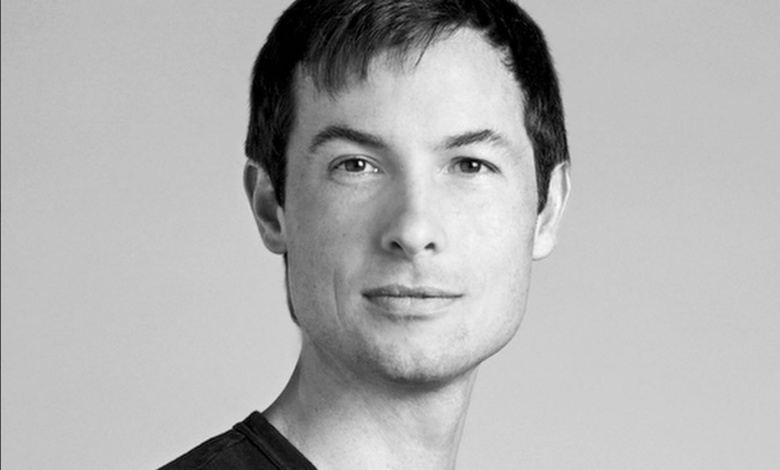
Reed Jobs has a personable demeanor; he’s talkative, humble, and enjoys using video game references when discussing his work. While he’s the son of the late Steve Jobs, he prefers to focus on his current ventures, particularly a new oncology-centered investment firm named Yosemite, which he founded in 2023. Jobs is eager to expand Yosemite’s presence in the biotech space, driven by the rapid advancements combining AI with drug discovery and trial processes.
One of the projects he’s particularly excited about is Azalea, which emerged from funding for Jennifer Doudna’s lab and is currently in clinical trials. Another interesting initiative is Quarry, created with entrepreneur Craig Crews, focusing on a unique treatment method that physically moves harmful proteins next to cellular breakdown systems rather than trying to inhibit them directly.
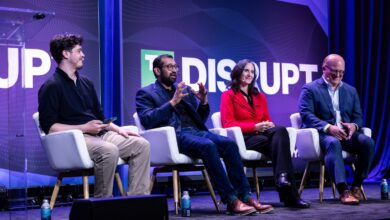
After nearly three years since our last conversation at TechCrunch Disrupt, Yosemite has grown to a team of 17. The impending loss of patent protections on several major drugs presents new opportunities, while AI has transitioned from a novel interest to a fundamental aspect of Yosemite’s strategy. We spoke to Jobs about the current climate in biotech and the firm’s latest developments.
This interview has been abbreviated for clarity.
TC: Earlier this year, you reported the closure of your second fund aiming for $350 million. How is Yosemite faring?
RJ: We’re incredibly active right now. We’ve gained significant traction and welcomed numerous key partners. Yosemite is distinct in two major ways: we focus solely on oncology, comprising 40% of the biotech landscape, and we create our own companies. We believe impactful cancer solutions won’t simply emerge from existing pharma; we need to innovate from the ground up using new insights. Our philanthropic approach allows us to lower risks when testing concepts originating in university labs—two out of our initial twenty companies came from such grants.
What portion of that $350 million is allocated to your startups versus external ventures?
Approximately one-third is directed toward our own initiatives, whether born from our ideas or collaborative efforts with academics from institutions like Yale, Berkeley, and Stanford. The remaining funds support existing companies that we’re interested in. Additionally, 2.5% of the fund’s assets go toward a donor-advised fund, offering unconditional grant support alongside $1 million annually from our management fees.
Although early in the process, how do you convey your performance potential to potential investors compared to other life sciences VC firms?
Although it’s still early, Yosemite is well-positioned to pioneer new medicinal fields ahead of others. My team has developed breakthrough technologies in areas like epigenetic gene editing—altering gene expression without changing the DNA sequence—and efficient delivery of gene editing tools to specific cells. If you’re aiming to be first in discovering new medical paths, that’s where we excel.
In the past, you expressed concerns regarding investor conservatism in biotech. How has that landscape changed?
It has indeed shifted. When I launched Yosemite, the biotech index was significantly down from its highs in 2021, and pharma wasn’t actively acquiring. Now, with improved interest rates and pharma facing historical patent expirations, we are seeing significant acquisitions and exits, such as Eli Lilly’s $7 billion purchase of Kelonia. We’ve also witnessed promising advancements in treatments for pancreatic cancer, significantly increasing survival rates.
You previously shared concerns about proposed cuts to NIH funding. Is the situation still a concern?
While there remains pressure from the federal government, the immediate threat isn’t as severe as before. Last year, there was an unprecedented proposal for a 40% NIH budget cut, which was entirely rejected by Congress. This year, a 12% cut was suggested again but is likely to meet the same fate. NIH funding has typically received more than 90% approval, and in my view, we should be increasing it significantly, as its real value has decreased over the past decade due to inflation.
In what ways is AI currently transforming healthcare delivery?
Many American hospitals are surprisingly outdated in their technology, often relying on obsolete methods. For instance, AI can optimize call centers like 911 triage systems, which are costly to operate. There’s also a vast potential for AI in electronic health records, radiology, and pathology, but its most exciting application might be in clinical trials. The cost of a Phase 3 trial can reach up to $260 million, with only a third achieving success. AI has the potential to transform patient recruitment by using synthetic control arms, significantly reducing the patient load needed and speeding up trial processes.
Is AI in drug discovery overhyped?
I see it as a major advancement that streamlines many tedious tasks rather than necessarily improving quality, but it does do things at unprecedented speeds with consistent results. AI is also uncovering areas that were previously difficult to target, expanding our capabilities to access previously undruggable proteins.
Which previously insurmountable targets are your companies pursuing?
The target we’re most focused on is p53, a crucial tumor suppressor gene. We’re addressing it through three separate companies and various strategies. Mutations of p53 are common in many cancers, as nearly all cancers will disable this gene to survive. Our goal is to either reactivate it or combat its mutated forms—essentially attacking one of cancer’s weak points.
Can you elaborate on Tune Therapeutics?
Tune Therapeutics has established itself as a leader in epigenetic editing, specifically targeting hepatitis B, which affects millions globally and is a key contributor to liver cancer. The technology allows us to strategically add or remove methyl groups at specific sites in the liver. This selective adjustment has implications for how we target and silence the virus, similar to mechanisms observed in a fraction of people who can naturally clear the virus.
Histosonics seems like a unique venture for Yosemite; why the interest in a device company?
You’re right; devices are not our typical focus, but Histosonics is making strides with histotripsy technology for liver tumors. This non-invasive method uses ultrasound-like techniques to destroy tissues with precision, particularly for pancreatic cancers that often spread to the liver. We believe it could become a significant therapeutic option in this area.
How many companies are currently in your portfolio, and have there been any failures?
We have close to 25 companies across both funds. Two didn’t pan out due to scientific challenges, which we expect to encounter at this stage.
What advice do you offer founders considering a large investment from big pharma?
While pharma can be a very useful partner, it can also limit future options. It’s essential for founders to keep an eye on shifting priorities, as pharma companies can alter their focus based on different circumstances, including financial outcomes from prior projects.
How can aspiring founders approach you for funding?
We maintain an open-door policy. When evaluating proposals, we focus on the substance of ideas rather than the credentials of the proposer. We review all modalities, including small molecules and digital health initiatives, and any innovation that could benefit cancer patients is of interest to us.
How important is storytelling for biotech founders compared to other industries?
Regrettably, storytelling is as crucial in biotech as in any field. Companies with excellent science can falter due to poor communication. Often, the founder isn’t the same as the CEO, allowing for a division of responsibilities where one focuses on the science and the other manages operations and storytelling effectively.
Reflecting on three years at Yosemite, what has surprised you the most?
The emergence of Eli Lilly as the first trillion-dollar pharmaceutical company due to GLP-1s has been astonishing. We’re also witnessing early indications that these drugs could have protective effects against neurodegenerative diseases and cancer, which is encouraging. This renewed focus gives hope that numerous long-elusive oncogenes might finally be addressed. I had not anticipated such rapid progress at Yosemite, which has been both frightening and invigorating.
Lastly, what are your thoughts on the longevity sector?
Although longevity holds personal significance for me, I feel the scientific community grapples with rigorously understanding the concept. Different experts provide various perspectives, yet there lacks a cohesive understanding of aging comparable to unified theories in physics. I believe optimizing individual aging processes is crucial for healthcare, but I remain skeptical about how to turn longevity into a standardized business model.