Overview
- SSHDs, which combine a traditional HDD with a small NAND flash cache for improved speed, ultimately fell short of expectations.
- Declining SSD prices led to the phased-out SSHDs in the marketplace.
- Although there is nostalgia for SSHDs, a resurgence seems improbable.
More than ten years ago, SSDs began their price decline, making them an attractive storage option for consumer computers, delivering speeds far superior to those of traditional HDDs.
Despite this, SSDs remained more expensive than HDDs, leading manufacturers to introduce SSHDs, a hybrid solution that never quite fulfilled its potential.
SSHDs: Failed Expectations
A Familiar Tech Narrative
Solid State Drives (SSDs) utilize rapid flash storage for data, and many users likely own one as they have become the standard for both desktop and laptop systems. The ultra-fast NVMe M.2 SSDs have gained popularity, while the older SATA SSDs still serve a role in budget or legacy setups.
Prior to the SSD era, HDDs (Hard Disk Drives) dominated data storage. These drives store data on spinning magnetic platters, offering significant cost advantages per gigabyte compared to SSDs but at the expense of speed—basic NVMe SSDs are 20 to 30 times quicker.
Due to their economic value, HDDs remain popular for large file storage—such as photographs and videos—where speed isn’t crucial. They also tend to be reliable, with the possibility of data recovery even post-failure, which is why many people still use HDDs in Network-Attached Storage (NAS) systems.
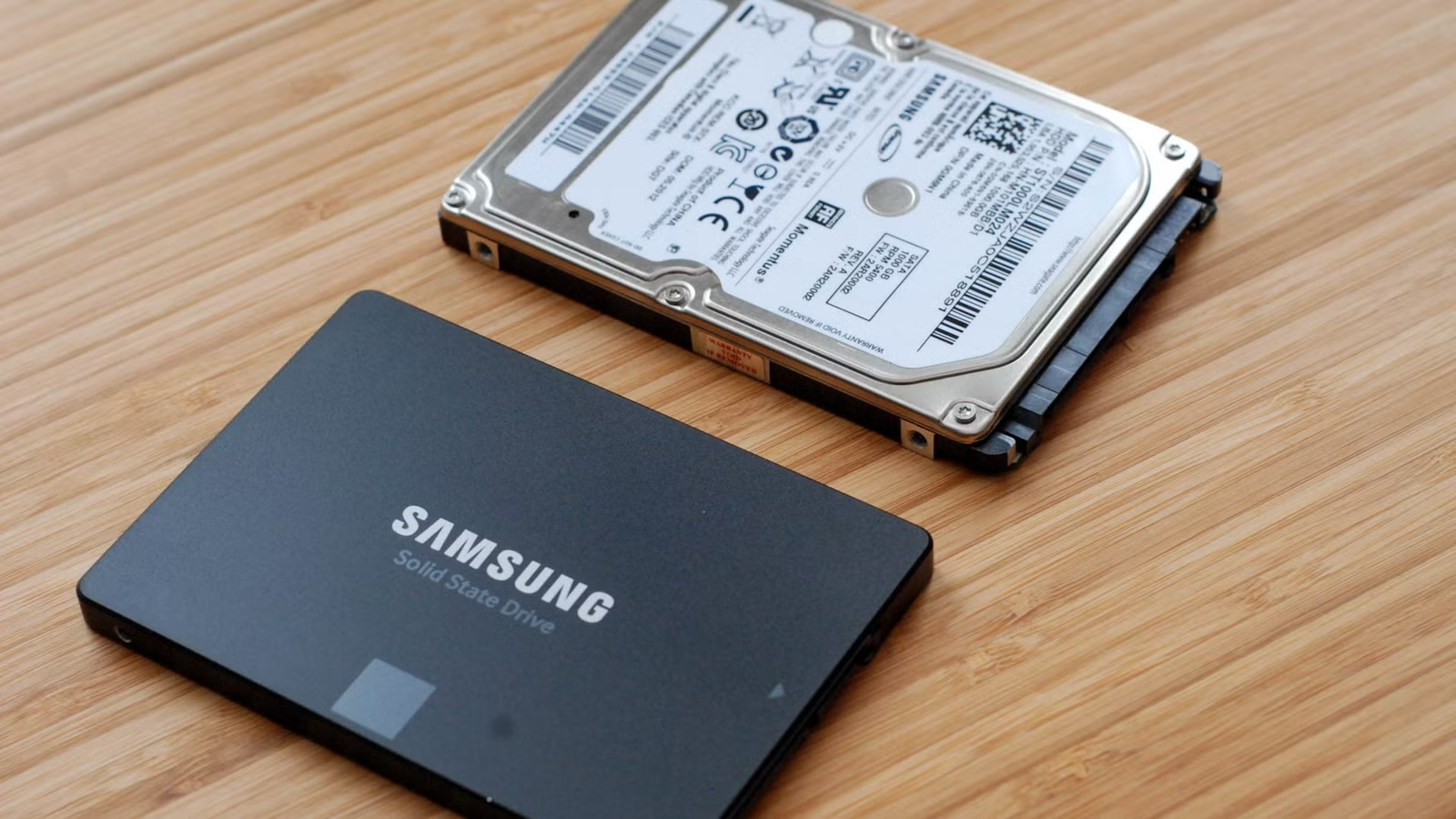
For a brief period, a hybrid storage solution known as the SSHD (Solid-State Hybrid Drive) emerged. This drive combined a traditional HDD with a small amount of integrated NAND flash memory to act as a cache for frequently accessed files.
The SSHD aimed to improve data access times using algorithms to manage this cache dynamically, ideally providing faster boot and application load times compared to standard HDDs. However, it often failed to deliver the anticipated performance, as the flash memory would frequently be overwritten, resulting in speeds mainly reflective of HDD performance except in specific scenarios.
Rather than offering the best features of both worlds, the SSHD generally provided the disadvantages of both formats: a slow HDD augmented by intermittent bursts of faster performance.
Affordable SSDs Outpaced SSHDs
The Disappearance of Affordable SSDs
As SATA SSDs began to gain traction in the consumer market during the late 2000s and early 2010s, their prices were still relatively high for the average user. Consequently, SSHDs offered an alternative that allowed users to enjoy slightly faster performance without the hefty cost of an SSD.
However, as years passed, prices for SSDs plummeted, rendering the SSHD less appealing. It became common to see budget-friendly SSD options that made it worthwhile to purchase at least a small capacity SSD for essential operations, combined with a traditional HDD for bulk storage.
By 2016, SSDs reached a price point accessible even to high-school students, allowing many to acquire a used 120GB SATA SSD for roughly $50—enough to house the operating system and key applications.
The continual price drops of SSDs meant they evolved into dependable replacements for outdated HDDs, especially for gamers seeking shorter load times.
By the late 2010s and early 2020s, almost all modern laptops, gaming PCs, and consoles like the Xbox Series and PlayStation 5 featured not just SSDs, but the faster NVMe variants as well.
With SSDs now affordable for the general public, there is simply no need for SSHDs, leading to their quiet exit from the market.
Unmet Potential
A Fond Memory?
Despite the SSHD’s eventual failure, I still find a sense of nostalgia for the concept itself.
Today, despite the declining cost of flash storage, file sizes continue to grow. A single video game can easily occupy over 100GB. When adding in photos, videos, and high-quality music files, it’s easy to fill a 2TB NVMe drive fairly quickly.
Is There Hope for SSHDs?
If SSHDs were to return with true power and affordability, I would certainly consider purchasing one. Unfortunately, such a revival seems improbable, but hope remains.