Nvidia Aims to Reduce Data Center Water Consumption, Yet It Doesn’t Resolve AI’s Water Challenges

Nvidia has unveiled a groundbreaking warm-water cooling system designed to significantly cut water usage in data centers, claiming it can nearly eliminate all water consumption within these facilities, according to a company executive.
Josh Parker, Nvidia’s chief sustainability officer, recently indicated that the issues surrounding water consumption in data centers are largely resolved.
However, this represents only part of the picture. As long as artificial intelligence (AI) data centers rely on fossil fuels for energy—a decision many tech firms are opting for—the water conservation benefits could be limited to the confines of the data center.
The fundamental concern lies in Nvidia’s approach to measuring water use in data centers. The company essentially defines a perimeter around the facility, counting only the water within that boundary while disregarding outside sources.
To its credit, Nvidia’s technology seems to fulfill its promise at the facility level. Its recirculating coolant system is designed to be filled once and reused throughout the facility’s lifetime, eliminating the need for additional water for cooling. In optimal climates, this could result in a complete cessation of on-site water use.
TechCrunch has reached out to Nvidia for clarification on these matters and plans to update the article upon receiving a response.
The drawback, however, is that water consumption associated with energy production and chip manufacturing can significantly amplify the overall water footprint of a facility. As a result, Nvidia’s innovation addresses merely a fraction—approximately one-quarter to one-third—of the total water usage in AI data centers.
The new system introduces coolant at a temperature of 45˚ C (113˚ F). While this is quite warm for humans, it is manageable for computer components. After circulating through the servers, the coolant exits at 55˚ C (131˚ F), effectively removing a considerable amount of heat from the system.
At these temperatures, exterior air in many climates can efficiently cool the system using passive radiators, potentially eliminating the need for evaporative cooling techniques or, in some cases, fans. A data center operating without active fans or chillers could lead to lower water usage, enhanced efficiency, and reduced noise levels.
Nonetheless, every data center requires a stable electricity supply, and numerous power generation methods are significant consumers of water.
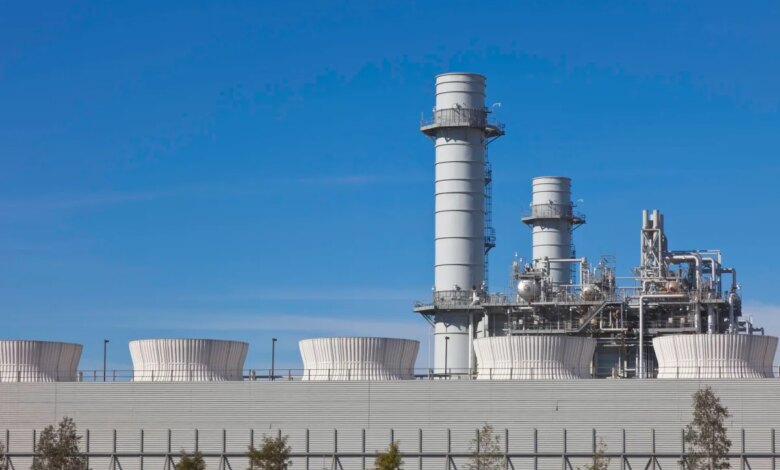
Fossil fuel power plants rank among the largest water users in the U.S., consuming approximately 2.7 billion gallons daily, predominantly for evaporative cooling purposes. A recent study indicates that natural gas plants utilize 1.17 liters of water for each kilowatt-hour they generate, and coal plants are even more intensive, using 2.2 liters per kilowatt-hour. Fossil fuel sources currently provide around half of the energy consumed by data centers.
Hydropower facilities contribute about 10% of the electricity used by data centers but also incur water loss through evaporation from their reservoirs, averaging 6.8 liters per kilowatt-hour generated. Geothermal energy, which is gaining traction among tech companies, exhibits a broad range of water usage dependent on technology specifics. Some innovative geothermal ventures, like Fervo, have committed to utilizing primarily “degraded” water that would otherwise remain untapped.
In contrast, wind and solar energy have minimal water footprints, utilizing only around 0.01 liters and 0.03 liters per kilowatt-hour, respectively. These figures take into account water requirements for the manufacturing and cleaning of solar panels.
While renewable energy sources are increasingly contributing to new electricity capacity, projections indicate that natural gas and coal will account for over 40% of the additional electricity needed to support data center growth through 2030. Without significant changes to this trend, data centers are likely to continue consuming substantial water resources, irrespective of Nvidia’s advancements within their premises.