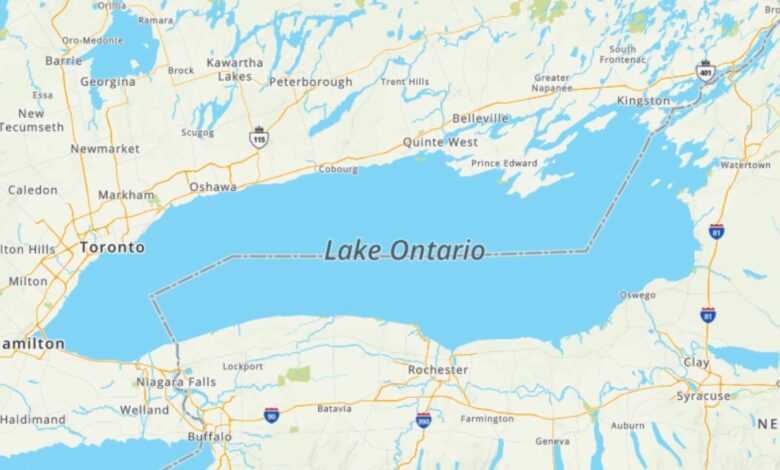
MapQuest is experiencing a surprising resurgence. On Tuesday, the longtime mapping service, previously thought to be fading into obscurity, soared to the top position in the U.S. App Store, climbing from eighth place just a day before.
This spike in downloads was largely driven by MapQuest’s decision to retain the name “Lake Ontario” rather than comply with President Trump’s executive order suggesting it be renamed “Lake America” as part of his trade agenda.
Following the executive order issued on August 27, MapQuest took to X to announce it would not alter the lake’s name, contrasting with Google Maps and Apple Maps, which chose to comply. Consequently, the app’s ranking in the U.S. App Store began to rise sharply as users downloaded it to support the company’s firm stance.
MapQuest’s position rose dramatically, moving from No. 128 on August 28 to No. 92 the next day, and later reaching No. 3 by August 31. By Tuesday, it had ascended to the number one position across all apps on the U.S. App Store.
Since the issuance of the executive order, the app has been downloaded approximately 632,000 times across the U.S., according to market analytics firm Sensor Tower. MapQuest has indicated that, including Canada, their total installs have exceeded 1.5 million.
Moreover, many of these new users are actively engaging with the app rather than just making casual downloads.
“It’s been remarkable to see that our users are not only downloading our app—they are reaching out to us to suggest features and report issues via social media and app reviews,” stated Doug Berger, MapQuest’s General Manager, in an email. “Our team is dedicated to implementing these requests to enhance user experience,” he added.
The rapid growth has been striking for MapQuest. According to Sensor Tower, more than half (56%) of its U.S. downloads for the year occurred between August 27 and September 1. In this timeframe, daily downloads skyrocketed by 123% and increased more than fiftyfold compared to the same period last year.
MapQuest’s decision has resonated with users significantly, particularly as it stands out against much larger tech companies.
Google explained its choice to rename the lake by mentioning it complies with updates from official government sources like the Geographic Names Information System (GNIS). Although Apple has not commented, it likely adheres to similar guidelines.
As a smaller player in the tech landscape, MapQuest holds the flexibility to take bold stances away from conventional norms.
This isn’t the first instance of its kind; MapQuest has maintained the original name for the Gulf of Mexico instead of adopting “Gulf of America.” Additionally, the company has created a playful online tool allowing users to whimsically rename Lake Ontario and share these creative titles on social platforms.
Once a dominant force in mapping technology, MapQuest has lost ground to Google Maps over the years. Now owned by System1 after its acquisition from Verizon in 2019, which previously purchased MapQuest’s original parent company, AOL, in 2015.