India’s Payments Leader Envisions AI as a Key Driver in the Next Wave of Digital Transaction Evolution

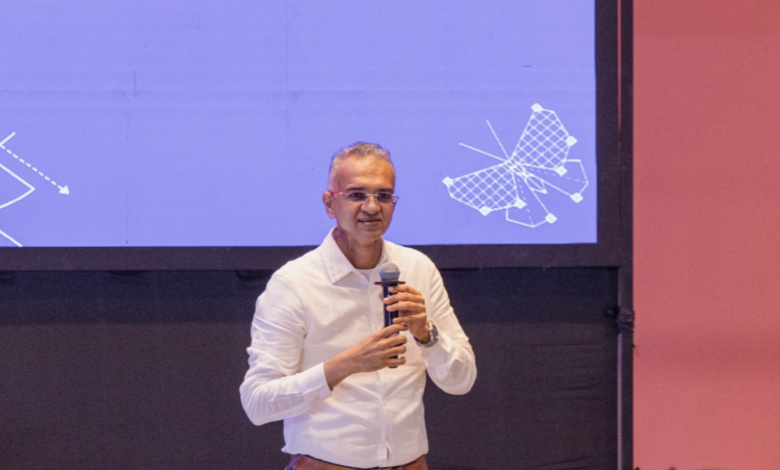
India’s digital payment landscape has seen substantial growth, with the Unified Payment Interface (UPI) recording over 750 million daily transactions. To achieve the ambitious target of surpassing a billion transactions daily, Dilip Asbe, Managing Director and CEO of the National Payments Corporation of India (NPCI), which manages UPI, believes that artificial intelligence (AI) will play a crucial role in facilitating user growth, preventing fraud, and enhancing credit access.
In a recent dialogue with TechCrunch during the Mumbai Tech Week (MTW) 2026, Asbe expressed confidence that AI could help onboard the next half a billion users, with collaboration from NPCI, the Reserve Bank of India, and the government being vital.
“AI will be utilized extensively as we develop the next phase of UPI, which encompasses attracting new users. It is essential to leverage AI for safeguarding our current users, detecting fraud, and identifying mule accounts. Additionally, AI should provide credit access to all users and merchants with digital footprints,” he stated. “AI ought to enhance voice and multilingual services to simplify the onboarding process.”
There has been significant discussion about the importance of voice interfaces in India for interaction with businesses and systems. Asbe pointed out that while it is still early in this area, voice recognition models need refinement. NPCI introduced a voice-assisted interaction system in 2023, but its adoption is still limited. With appropriate use cases, voice technology could become integral to the payment ecosystem.
AI in Finance and Regulations
In the United States, both startups and established enterprises are competing to integrate AI into financial services. Companies like Coinbase and Robinhood now allow automated trading on behalf of users, while OpenAI offers financial advice based on personal account data uploaded into ChatGPT. NPCI has showcased certain demo applications related to agent-driven commerce and payment systems, although broader implementation has not yet occurred.
The CEO of NPCI believes that India can also embrace AI-enhanced finance through strong regulations and frameworks. He emphasized the need for user protections and risk mitigation, ensuring that in cases of issues, the system can refer back to the instructions and consent provided by the user to the agent.
Beyond utilizing existing models, Asbe sees potential in developing smaller language models tailored to the Indian financial landscape.
“We think these models will stand out based on the data sets they utilize,” he noted. “Our ecosystem boasts a rich data set. I see a large opportunity for Indian entities—banks, fintech firms, and other players—to create specialized small language models that are precise and deterministic.”
In the previous year, NPCI introduced FIMI, aimed at addressing user disputes. Asbe mentioned it currently assists over a million users in tasks such as canceling mandates and resolving issues, and it is expanding quickly.
UPI Competition
NPCI has consistently encouraged healthy competition among UPI applications, but statistics indicate that PhonePe, owned by Walmart, and Google Pay command more than 80% of the market share. The regulator’s plan to limit an app’s market share to 30% is set to come into effect on December 31, 2026, unless deferred again.
During their discussion, Asbe noted that UPI apps have minimal switching costs and share most core features. He acknowledged that PhonePe and Google have invested heavily to secure their market positions. He believes that if new apps can identify viable business models within the fintech sphere, their market share will increase.
“I see several factors contributing to the concentration risk we are facing, and a significant reason is the lack of viable commercial models. Once we begin to see feasible commercial models emerge within the ecosystem, I am confident that newer players will start investing significantly,” Asbe commented.
In 2024, the payment organization spun off its BHIM UPI app to enhance competitiveness and usage growth. Although its transaction volume has increased, its overall market share remains around 1%. Asbe stated that while there is no concrete market share target for BHIM, NPCI aims to position it as a secure and sovereign alternative to other applications.
India stands as one of the largest digital economies, and global investors will closely monitor the regulatory environment to invest in emerging fintech solutions, enhancing market competitiveness.