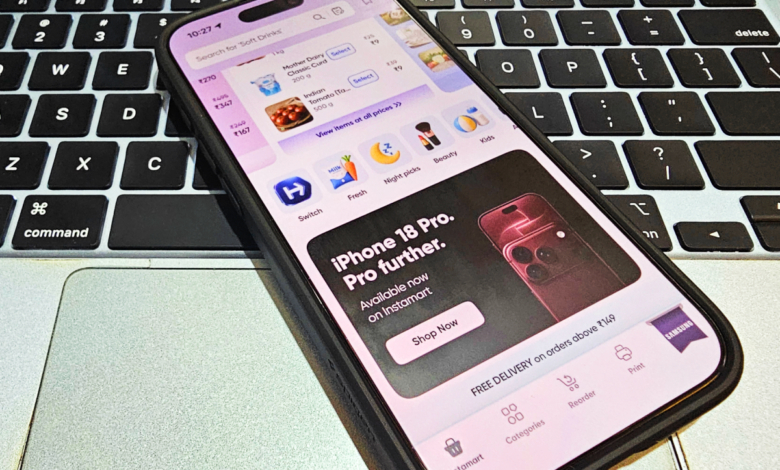
In India, some customers were able to bring home the latest iPhone 18 Pro or iPhone 18 Pro Max without waiting in line or enduring long delivery times. Instead, they utilized quick-commerce applications to have the device delivered to their homes in around 10 minutes.
Platforms like Blinkit, Zepto, Swiggy’s Instamart, and BigBasket—known primarily for speedy delivery of groceries and other essentials—started offering these new Pro models as soon as they launched on Friday. The iPhones are also available through Apple’s traditional sales avenues, including physical retail locations and online marketplaces.
The concept of delivering new iPhones through rapid delivery apps is not entirely novel in India. Quick-commerce services have previously launched Apple devices on release days as they continue expanding their offerings from groceries to electronics, beauty products, and fashion items.
The market for these speedy deliveries is expanding quickly. As reported by Redseer Strategy Consultants, India’s quick-commerce sector generated approximately $9 billion in the first half of 2026, with monthly users skyrocketing from 8 million three years ago to over 60 million today. Analysts from Google and Deloitte project that the sector could reach $50 billion by 2030, with non-food items like electronics, fashion, and beauty making up 45% of consumer spending.
The initial demand for the new iPhones was evident on launch day, with BigBasket reporting over 300 sales of the iPhone 18 Pro and Pro Max within the first hour. Instamart indicated that Bengaluru topped the charts for iPhone 18 Pro-series orders on its platform, closely followed by Delhi. Among its offerings, the Burgundy 256 GB iPhone 18 Pro emerged as the most sought-after variant, making up nearly one-third of sales.
However, shortly after their release, the availability of the new models became inconsistent. Some quick-commerce platforms noted that the iPhone 18 Pro models were sold out in specific areas, while they remained available for delivery in other regions, including Delhi and Bengaluru.
Tarun Pathak, a research director at Counterpoint Research, mentioned that the launch-day deliveries demonstrated the potential of quick-commerce as a viable channel for high-end smartphones in India’s major metropolitan areas, despite overall sales volumes being lower than total iPhone sales.
Pathak noted that fulfilling high-value smartphone orders offers an “early proof of concept.” He emphasized that a crucial consideration will be whether the excitement around the launch can lead to consistent smartphone sales through quick-commerce channels.
Navkendar Singh, an associate vice president at IDC, highlighted India’s unique position in the global quick-commerce landscape, particularly for high-value goods. He indicated that frequent use of these platforms for everyday shopping fosters consumer trust, particularly with official collaborations between brands and platforms boosting confidence in purchasing expensive items through these services.
For high-demand products like the iPhone, the appeal is also linked to “instant gratification,” Singh explained, allowing consumers to skip lines and avoid waiting days for an online order. Nonetheless, he cautioned that quick commerce has not yet become a substantial factor for smartphone sales, mainly serving as a “launch-day marketing phenomenon” that generates significant buzz around product releases.