I Pitted ChatGPT, Claude, and Gemini Against Each Other to Find the Ultimate Smartphone—and the Results Surprised Me!

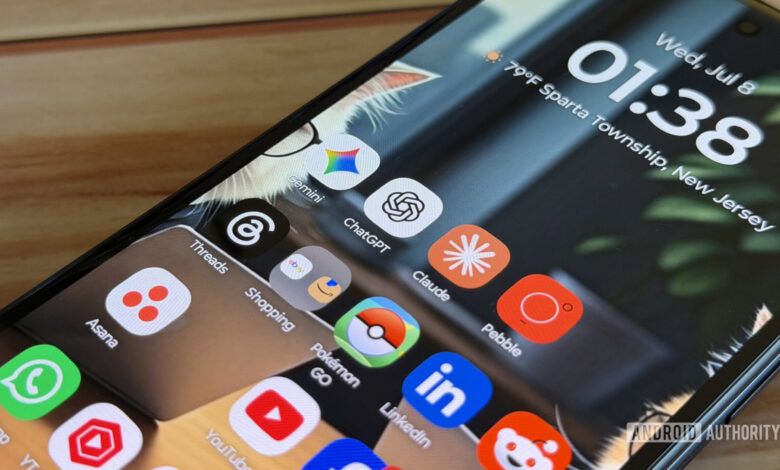
More individuals are increasingly relying on AI for their everyday decision-making, including purchasing advice. As someone whose career revolves around reviewing and comparing smartphones, I became curious about how well leading large language models would perform in my field. I aimed to see if these models could synthesize reviews and data to generate helpful recommendations for consumers.
Although the process was more complex than I anticipated—especially considering the financial stakes involved—my exploration yielded unexpected results. I tasked ChatGPT, Claude, and Gemini with selecting the optimal smartphone for the average consumer, and the outcomes were quite revealing.
Do you utilize AI for purchasing decisions?
512 votes
ChatGPT Provided the Most Insight
Among the major AI platforms, I found ChatGPT to be the most beneficial. It has been instrumental in assisting me with my new website by guiding me through WordPress and DNS configurations. I’m also learning Linux through it, one command at a time. While I appreciate its capabilities, I never considered it a tool for purchasing advice.
To avoid bias, I crafted a straightforward prompt. I wanted no influence from my personal views or past articles, so I posed the same question to each model:
Please select the best smartphone for most users. Exclude any biases from my opinions or materials. Consider factors like cost, software support, performance, general user habits, consumer reviews, and overall sentiment. Provide a top choice with explanations, as well as a top three with reasons.
ChatGPT-5.5 responded promptly, confidently choosing the Google Pixel 10 as the best option for everyday consumers, backed by logical explanations that cut through the typical hype found in discussions.
The three primary reasons for selecting the Pixel 10 included its camera quality, software efficiency, and battery longevity. ChatGPT noted that it delivers flagship-level camera performance suitable for casual users, eliminating the need for pro-level photography skills. The price point is another significant advantage, allowing savings while attaining a high-quality flagship experience—an essential factor in 2026.
Honorable mentions included the Apple iPhone 17 Pro Max and the Samsung Galaxy S26, with ChatGPT acknowledging that while the iPhone is well-suited for mainstream customers, the Pixel edged ahead in delivering an overall balanced experience without a hefty price tag.
ChatGPT’s practical approach was refreshing, especially as it noted that most users do not need high-end features like extreme zoom cameras or massive displays.
Claude Offered a Differing Perspective
While I haven’t extensively used Claude, I’ve received positive feedback from others who do. After running the same prompt through Claude, it quickly determined that the standard iPhone 17 was the best choice for most people, citing reasons similar to those highlighted by ChatGPT, such as affordability, excellent software support, and reliable performance.
Claude leaned on existing reviews heavily, and its conclusions echoed sentiments from various articles. Nevertheless, it maintained its original stance. Though the iPhone 17 isn’t a groundbreaking choice, I found it interesting that Claude also pointed to the Pixel 10 and uniquely recommended the OnePlus 15 as a viable buyer choice. This stood out, especially given the brand’s retreat from the U.S. market.
Claude justified the OnePlus 15 as it highlighted value—a crucial consideration. Despite the company’s recent decisions, it’s hard to argue against the OnePlus 15 as a competitive flagship model at a lower price compared to the Pixel 10 Pro XL and Galaxy S26 Ultra.
Gemini Struggled to Decide
Engaging with Gemini 3.5 Flash was entertaining. Initially, it mistakenly recommended the Pixel 9 Pro XL as the top choice and the Galaxy S25 as an honorable mention. Upon clarifying that it was 2026, Gemini updated its recommendations.
Similar to Claude, Gemini eventually identified the iPhone 17 as the best overall smartphone. Unlike Claude’s data-driven reasoning, Gemini seemed to lean into the brand hype. It didn’t resonate as robustly as the feedback from ChatGPT and Claude.
I challenged Gemini, asking if, stripped of any hype, it would still select the iPhone 17. It conceded that while the iPhone 17 has its merits, it revised its recommendation to the Pixel 10, citing the longer software support as a cost-benefit factor, which was a solid explanation.
Remarkably, Gemini was the only model to mention the Pixel 10a as a suitable alternative, emphasizing that most smartphone users mainly engage in web browsing, social media, and communication—making it unnecessary to spend over $500 on flagship models.
AI is Helpful, But Human Judgment is Essential
This experiment showed me that while AI can assist, these models aren’t yet ready to be sole advisors for purchasing decisions. Larger language models serve as excellent sounding boards, but it’s essential for users to actively engage and challenge the AI’s justifications.
In conclusion, if I had to pick a standout, I’d award the title to ChatGPT. Its evaluations closely matched the advice I would provide to most purchasers. While the Pixel 10 may not be flashy, it remains a highly practical choice for the average consumer.
Google Pixel 10
New zoom camera • Long-term updates • Packed with Google AI features
Baseline excellence.
The Google Pixel 10 features a 6.3-inch display, high-speed storage options, considerable RAM, and the Tensor G5 chip for seamless mobile computing. Its triple-camera system includes specialized ultrawide and telephoto lenses, alongside a 50MP main sensor.
Thank you for being part of our community. Please review our Comment Policy before contributing.