Hennessey Transforms the World’s Fastest Spy Plane into a $2.5 Million Hypercar Marvel

On October 14, 1947, U.S. Air Force Captain Chuck Yeager made history by piloting the Bell X-1 and surpassing the speed of sound over the California desert, marking the first time a human has flown faster than Mach 1. Fast forward less than 20 years, Lockheed’s Skunk Works produced the SR-71, a reconnaissance aircraft designed to operate at speeds exceeding three times the sound barrier.
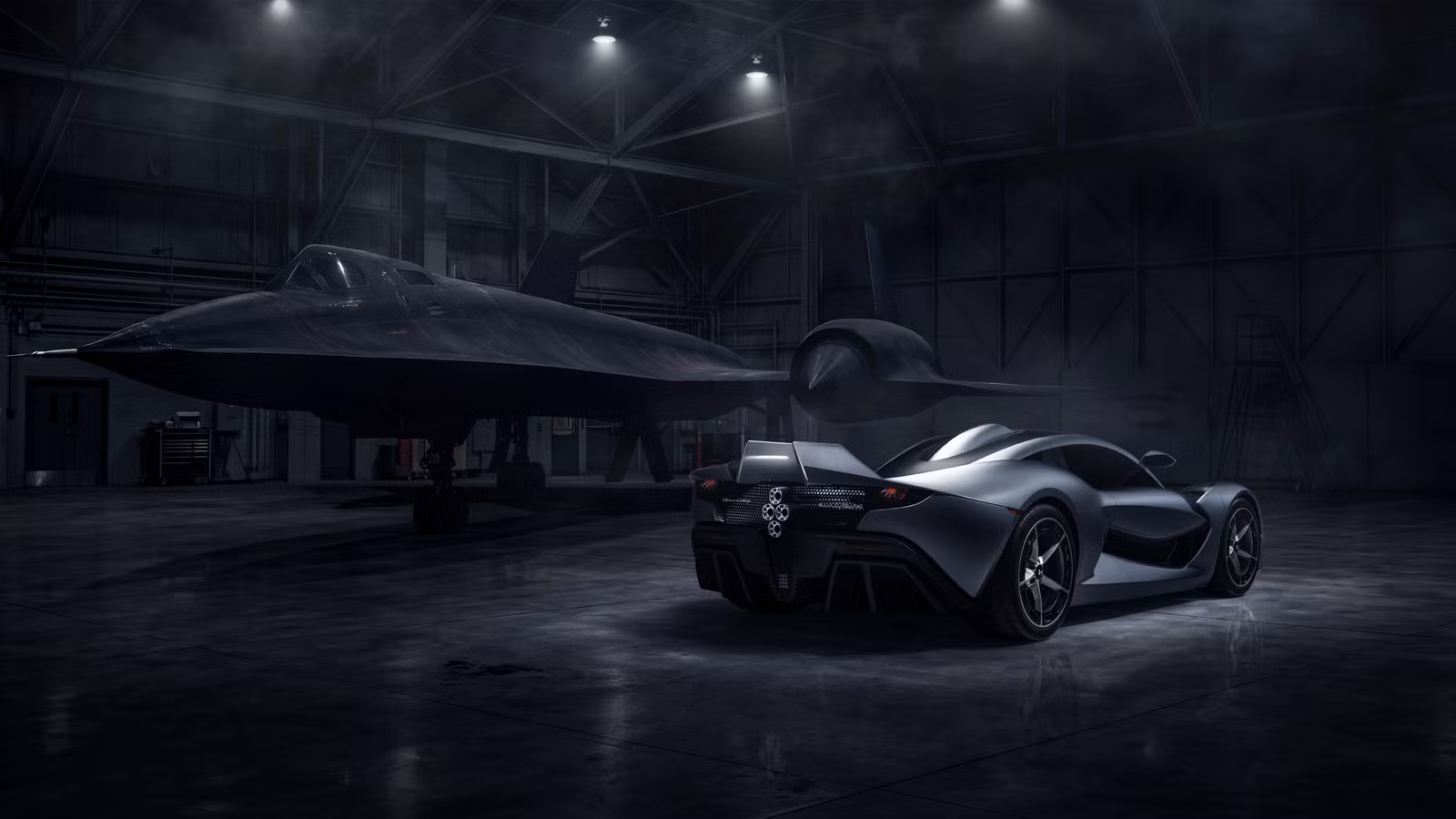
In a nod to both the X-1 and the SR-71, Hennessey Special Vehicles has unveiled its latest hypercar, the Blackbird. This innovative vehicle, named after the legendary SR-71, features a naturally aspirated engine and a manual transmission.
“The Blackbird represents a new direction for Hennessey,” stated John Hennessey, the company’s founder and CEO. “It’s our third hypercar, designed to be both unexpected and exactly what our customers have been waiting for.”
Naturally Aspirated Powerhouse
Unleashing raw power: 800 to 850 horsepower
While competitors like the Bugatti and Rimac rely on electric motors and batteries for performance, the Blackbird embraces traditional engineering with a physical ignition key, manual transmission, and a classic naturally aspirated V8 engine.
Under the hood, the Blackbird houses a 6.2-liter V8, engineered in collaboration with Ilmor Engineering, known for its successful race car engines. Hennessey aims for an output of 800 to 850 horsepower, alongside a remarkable capability of exceeding 9,000 rpm, expected to make it the highest-revving and most powerful naturally aspirated V8 in any production car.
With goals of a 0-60 mph time of just 2.5 seconds and a top speed of 220 mph, the Blackbird’s lightweight design, supported by a bespoke carbon tub and body, aims to weigh under 3,000 pounds. The engine power flows directly to the rear wheels via a six-speed gated manual gearbox with an exposed shift linkage, eliminating any turbochargers or hybrid systems.
“From the start, our vision for the Blackbird was to create an analog experience, full of beauty and excitement at every turn,” said Hennessey. “We aimed to forge an unrivaled emotional connection between driver and the machine.”
Aerospace-Inspired Aesthetics
Design elements influenced by aviation
Drawing from the aerodynamic form of the SR-71 and its refined surfaces, Hennessey designed the Blackbird with a sleek silhouette and a distinctive body-side chine line—the primary edge reflecting the tightly contoured structure of the SR-71.
Innovative rear vertical stabilizers activate automatically at 71 mph, adjustable to a maximum of 71 degrees, a creative homage to the aircraft’s designation (drivers can also engage them manually at any speed).
The Blackbird’s unique diamond-shaped quad exhaust pays tribute to the Bell X-1, which Yeager famously piloted, now showcased at the National Air and Space Museum. This signature diamond design theme continues in the headlights and inside the cabin, complemented by Formula One-inspired side pods and winglets that reflect elements from both racing and aviation.
Inside the Blackbird, a large analog tachometer takes center stage, foregoing modern digital displays and steering wheel buttons entirely. While there is no integrated infotainment system, drivers can use their own devices through Apple CarPlay and Android Auto via a dedicated holder.
An optional Sky Glass roof, designed asymmetrically like the SR-71’s canopy, and additional glass features enhance the cabin’s illumination, aligning with Hennessey’s aim for the Blackbird to remain timelessly appealing.
“Beauty isn’t accidental; it’s deliberate,” noted Nathan Malinick, Hennessey’s Director of Design. “Every design choice for the Blackbird, inside and out, was made to create an extraordinary touring hypercar that harmonizes elegance with power, captivating from the first glance.”
Investment and Deliveries
Hennessey plans to produce only 71 units of the Blackbird, each priced starting at $2.5 million, exclusive of taxes. Notably, more than two-thirds of the production has already been reserved prior to its public reveal at The Quail event in California on August 14.
Customer deliveries are anticipated between 2029 and 2030, following the conclusion of Venom F5 production, slated for completion around 2028. The Blackbird boasts additional interior space compared to the Venom F5, includes gullwing doors, ample storage options, and standard features like an adaptive suspension system, traction control, and anti-lock brakes, with Michelin Pilot Sport Cup 2 tires available in multiple wheel designs.