HaloBraid Secures $7M from Seven Seven Six to Revolutionize Salon Visits and Eliminate Six-Hour Appointments

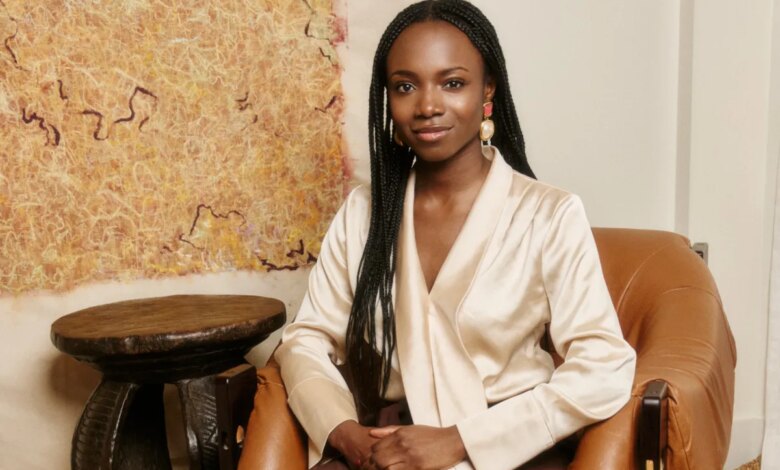
The terms “Box,” “Boho,” and “Knotless” resonate with many Black women, as they refer to braided hairstyles—a longstanding cultural tradition. Braiding remains a significant ritual, with many women dedicating up to twelve hours in salons to have intricate patterns crafted in their hair.
However, this lengthy process is a challenge. Yinka Ogunbiyi, recalling her experience during the COVID-19 lockdown in London, shared that when she attempted to braid her own hair, it took her four days to complete the task.
Ogunbiyi, who holds a Master’s in Engineering from Harvard alongside an MBA, previously established a smart cooking appliance company. She began viewing hair braiding as a technical challenge to address.
After extensive research, she unveiled HaloBraid, a robotics startup designed to enhance the efficiency of hair braiding in salons. The company is set to release its first device later this year, which acts as a supportive tool for hairstylists. They have secured $7 million in seed funding led by Alexis Ohanian’s firm, Seven Seven Six.
While specifics of the device remain undisclosed due to pending patents, Ogunbiyi explained that the process begins with a stylist initiating the braid before transitioning to HaloBraid, which can swiftly complete the remainder. The device is designed to be gentle on the hair and effective for both knotless and box braids.
Research conducted by Ogunbiyi indicates that around 8 billion hours are collectively spent on hair braiding annually. Her survey of 2,000 individuals revealed that 95% would opt for braiding more frequently if the process was quicker. Furthermore, hairstylists often endure long hours, risking conditions like carpal tunnel syndrome and arthritis.
Ohanian recognizes the potential market for a product that streamlines braiding processes. He is married to Serena Williams, noted for her braided styles, and has two daughters who also sport braids. He highlighted the lengthy braiding sessions, mentioning how his oldest daughter enjoys the ritual initially but becomes fatigued by the ninth hour.
Ohanian pointed out that while tools for hair styling have advanced, particularly with brands like Dyson, technology pertaining to textured hair care remains underdeveloped. He believes there is a strong demand in this area.
Other stakeholders in the seed funding round include AlleyCorp and Bling Capital. The investment will be allocated toward product development, manufacturing, and building partnerships with salons.
In the realm of hair-braiding devices, HaloBraid faces minimal competition; its main rival is Braidiant. Ogunbiyi notes that innovating in this field has been challenging due to the complexities involved in working with hair, which she describes as one of the most challenging materials to manipulate. Her team has integrated approaches from various disciplines, such as material science and inkjet printing, to create their product.
With new funding and a confirmed market interest, the startup now gears up for its official launch. Ogunbiyi mentioned that her team, consisting of about 15 members, is already considering future products, including one designed to swiftly undo braids, a process that can be as time-consuming as creating them.
“While HaloBraid is our inaugural product, our broader goal is to revolutionize textured hair care, making it faster, simpler, more comfortable, and ultimately more enjoyable,” she stated.