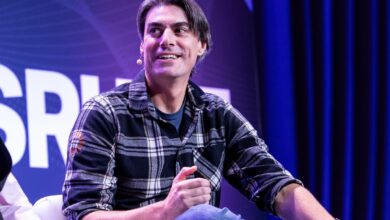
Grindr Aims to Become the Ultimate All-in-One App for Gay Men, But Investors Remain Skeptical About Its Potential Success

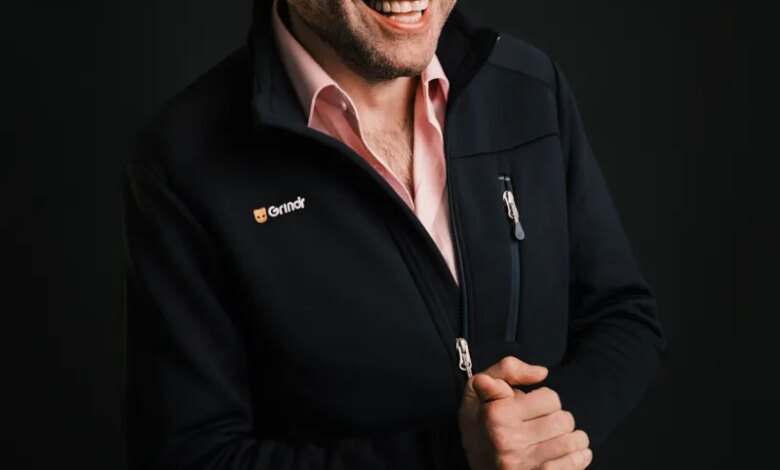
When George Arison took the reins at Grindr in 2022, he stepped into a company that had transitioned from Chinese ownership through a forced divestiture to a private-equity save. Despite being profitable, Grindr lacked a concrete product and a clear business strategy. Now, after four years, a SPAC listing, and a contentious return-to-office order, Grindr has become a compelling growth narrative. This year, revenue is projected to nearly triple, expected to rise from $195 million in 2022 to over $540 million, with adjusted EBITDA margins exceeding 40%.
This impressive growth is primarily due to existing customers spending more, rather than significant user base expansion. In the second quarter of the year, the platform reported 1.4 million paying users, accounting for 9% of its total user base. However, the average revenue per user has seen substantial growth compared to 2022, and Arison is keenly focused on identifying future growth opportunities. Part of this strategy is to evolve Grindr into a “gayborhood in your pocket” — a comprehensive platform that addresses not only dating and hookups but also healthcare (from ED treatment to HIV prevention and connecting users with LGBTQ+ healthcare professionals) and travel (helping users discover community wherever they are). This follows the broader trend in consumer tech toward “everything apps.”
Additionally, Arison is introducing a subscription model later this year, the premium “EDGE” tier, which has raised eyebrows among some users questioning its value.
Arison, who previously founded Shift Technologies, a used-car marketplace that went public through a SPAC in 2020, is also actively seeking media attention to argue that institutional investors are undervaluing Grindr’s stock simply because it is a gay dating application. In a recent Zoom meeting, he mentioned an investor who presented a financial model that included a “Grindr discount,” slashing the fair value estimate by 25%.
Counter to this perspective, analysts at Morgan Stanley, Goldman Sachs, and Raymond James have increased their price targets for Grindr’s stock this year. Morgan Stanley upgraded its rating to “overweight” in July, factoring in the EDGE tier and Grindr’s push into telehealth — events that have contributed to a 33% rise in the stock price over the last six months. Nonetheless, the perceived stock discount remains — it currently trades at about 11 times 2027 EBITDA, roughly a 35% discount compared to its competitors, leaving many questioning the rationale.
Arison, warmly engaging with a hint of his Georgian roots in his speech, was open to discussing these points in a Q&A tailored for clarity.
What were your top priorities when you joined Grindr in 2022?
I focused on three main areas. First was team building. During the peak COVID period, many individuals were hired under relaxed productivity expectations, often only contributing three to four productive hours daily. In the summer of 2023, we instituted a two-day office work week, a move that sparked significant media coverage and employee backlash, resulting in a reduction to about 70 employees. As of now, around 25 of those original staff still work here, and we operate with a lean workforce of 175 in the U.S. and a team in Colombia, aiming for $540 million in revenue this year.
Second, we aimed to boost revenue by developing products that users would actually invest in — successfully increasing the pay conversion rate from below 6% to over 9%, and nearly doubling ARPU. Finally, we worked on establishing a long-term vision: the “gayborhood in your pocket” concept, along with its associated healthcare and travel initiatives.
Can you elaborate on Grindr’s engineering culture and team size?
We currently have about 94 to 95 technical staff members. A CEO from a larger tech company once suggested that AI would enable me to achieve in a more efficient manner what I initially thought would require 300-350 people — and he was right. Our team is accomplishing work equivalent to that of roughly 350 individuals with about 100. Approximately 80% of our code is now AI-generated, which has led to a 2.5x increase in engineering productivity over the last year.
What can you tell us about the testing of the AI-driven premium EDGE tier?
The EDGE tier is currently in testing; it has not been officially launched yet, but some users have access through this testing phase. It is designed to sit above our existing XTRA ($23.99) and Unlimited ($44.99) subscription levels. We’re not marketing AI itself; we are offering features that utilize AI to enhance user matching based on behavioral insights and consent, leading to more effective connections than a bare-bones profile could provide. Initial retention rates for these features have been promising.
The pricing you might have seen was part of our testing, as we assessed various price points to gauge market elasticity, rather than a finalized rate. We expect EDGE to launch by the end of this year or early next, at which point we will determine its positioning. We envision EDGE as a premium flagship tier, akin to a Tesla Model X or S, while its underlying capabilities gradually integrate into our broader offerings.
You’ve mentioned using AI to recommend matches beyond someone’s local area. What evidence supports the effectiveness of these long-distance matches?
Even in a city like San Francisco, which has one of the highest concentrations of gay individuals in the country, the total number is still only around 50,000 to 60,000. This limited pool makes it challenging for gay men to find meaningful relationships. Therefore, leveraging AI to remove geographic limitations might help users find suitable matches in places like St. Louis that align with their preferences, based on genuine behavior rather than just profile claims.
Regarding relationship outcomes, we consciously avoid tracking post-connection developments. However, we do know that Grindr is recognized as a primary platform for gay men to connect, and the preferences of younger generations often differ from those of older ones: about 50% of gay men under 35 express interest in long-term, committed relationships, with 25% desiring children — significantly different from the attitudes of earlier generations. Many cite difficulty finding partners as a primary reason for being single. While I can’t guarantee that our solutions will resolve that issue, trying new approaches is necessary and worthwhile.
There are several avenues for expanding beyond just a dating app. What are your healthcare initiatives, and are you developing these offerings in-house or partnering with external providers?
We initiated our healthcare services with cash-pay products under a line we termed Woodwork, which includes ED medications, GLP-1s, and peptides. The simplicity of starting with cash-pay services made it our first step, and we recently launched an AI bot that facilitates transactions directly within the app. The second area focuses on HIV prevention and treatment, where we’ve pledged to provide 10 million people with information on accessing PrEP, both in the U.S. through our in-app health center and internationally.
Our third focus involves clinical care, particularly connecting users with LGBTQ+ healthcare professionals through telehealth — a long-term project that isn’t currently in development but could significantly contribute to Grindr’s revenue in the future.
Currently, advertising revenue and other non-subscription income are only a minor portion of your business.
At present, subscriptions make up about 83% of our revenue, a decrease from around 86% in 2022. Still, the growth in subscription revenue indicates a larger overall revenue base. My goal is for Grindr to evolve into a company with robust subscription and advertising revenue, as well as significant healthcare and travel segments, with these latter two areas still in developmental stages.
Although you mentioned a “Grindr discount” exists for your stock based on the company’s nature, the stock has seen notable increases lately. Morgan Stanley has upgraded its rating, and it currently trades at a premium compared to Match Group. Isn’t this a sign the market is moving past that discount?
I hope we’re now being recognized as a growth-driven company. We’ve consistently experienced revenue growth over 25% for 16 consecutive quarters since I took charge, which should support that perception. However, the stigma remains; we’ve encountered consulting firms declining to collaborate with us due to reputational concerns, and one bank even refused our funding during the Silicon Valley Bank crisis, whereas major financial institutions like Goldman and Morgan Stanley have remained supportive. I believe much of this stems from Grindr being a gay dating platform rather than dating in general being controversial — no one raises such issues regarding Tinder, which has a “free tonight” button prominently displayed. Nonetheless, it’s clear that the market’s perception of us has improved.