Embracing Setbacks: Insights from Amazon Devices Head Panos Panay on Resilience and Growth

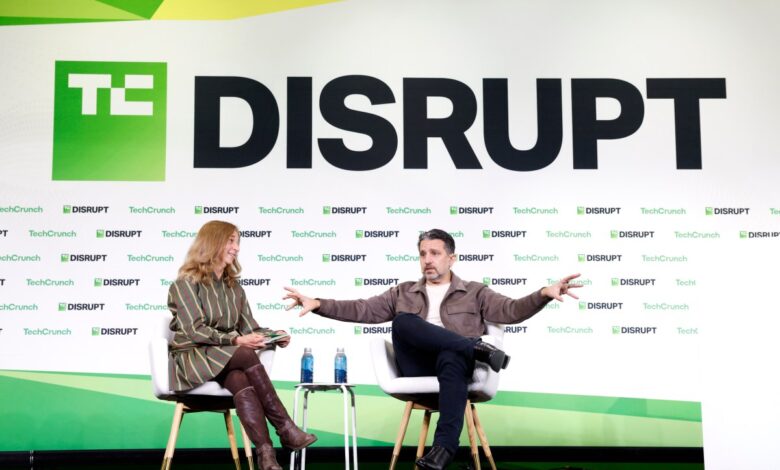
Panos Panay, an executive at Amazon, has delivered a crucial insight for entrepreneurs: experiencing failure is not only unavoidable but also essential for developing a successful product.
Speaking at TechCrunch Disrupt in San Francisco, Panay, who serves as Amazon’s Senior Vice President of Devices, Alexa, and Leo, reflected on his lengthy tenure at Microsoft, where he faced a notable setback during his 19 years there.
“You must be willing to fail — in fact, you should seek out failure,” said Panay. “If you haven’t encountered failure, it’s likely that you haven’t challenged yourself enough. The key is to extract lessons from those failures. Confront them, and learn from the experience.”
Panay reassured attendees that it is possible to bounce back from various types of failures, even the most severe ones. He recounted his experience at Microsoft with the Surface RT, the company’s initial tablet launch, which he deemed a significant failure, costing the company nearly $1 billion in losses.
“I once found myself on the cover of a major newspaper labeled as a failure,” he recalled. “However, acknowledging that failure was straightforward. The real challenge lies in whether one learns from it and comprehends what went wrong. What insights did you gain? The failure itself was just a moment; the decisions made in the two years leading up to it, whether regarding incomplete software or improper inventory management, were pivotal.”
He stressed that founders should aim to understand the causes behind their failures, refrain from making excuses, and ultimately accept the outcomes.
“Here’s the flip side,” he added. “If you want to succeed, embrace that failure, but maintain your vision. That’s essential. The Surface line has thrived. Cling to your vision and persist.”
Panay highlighted the significance of unwavering commitment to a vision, learning from experiences, and taking prompt action. He believes that by facing failure and adapting based on those lessons, start-up founders can advance more efficiently, even in the face of new challenges.
“It all revolves around a fundamental question: have you learned?” he stated. “Were you absorbing lessons throughout the process? If you did, then you just need to adjust your direction slightly. More often than not, it’s not a drastic change, just a minor course correction. Use what you’ve learned to adapt your vision and move forward. Many people tend to hold onto their ideas for too long because they haven’t fully accepted their failures.”