Discover 5 Fuel-Efficient Compact Cars Offering 35 MPG Without Hybrids—And at Lower Prices!

For those who want to save at the gas station, hybrid vehicles are frequently seen as the optimal choice. Car manufacturers are continuously enhancing their electric offerings, leading many consumers to believe that good fuel economy necessitates some degree of battery support.
However, this notion isn’t entirely accurate. Several budget-friendly compact cars provide exceptional fuel efficiency without relying on hybrid technology. By leveraging lightweight structures, efficient engines, and sleek designs, these vehicles are achieving fuel economy levels that were once considered unachievable for standard gasoline models.
For buyers looking to minimize both initial expenditures and ongoing fuel costs, these cars offer an attractive option. They demonstrate that hybrid tech isn’t strictly necessary to make the most of every gallon, positioning themselves as some of the best value choices available in 2026.
To provide you with the latest and most reliable information, this article is based on data gathered from various manufacturer websites and reliable entities, including the EPA. Models are ranked according to their maximum EPA-rated combined fuel economy, from least to most efficient.
5
2026 Kia K4
Max fuel economy: 33 MPG combined
Leading this list is the Kia K4, an economical option for car buyers in 2026. Introduced last year as a successor to the Forte, the K4 shares many parts with its predecessor. Available in both sedan and wagon-like hatchback configurations, it offers a surprisingly comfortable ride.
Performance and efficiency
Most K4 models are equipped with a naturally aspirated four-cylinder engine that produces 147 horsepower. Front-wheel drive and a continuously variable transmission (CVT) are standard. While the driving experience isn’t particularly thrilling, it offers a smooth and comfortable journey. Those preferring more power can opt for the GT-Line Turbo, which boosts output to 190 horsepower but sacrifices fuel economy at 28 MPG combined. Notably, sedan variants outperform hatchbacks in efficiency.
Pros
- Attractive design for its price point
- Modern and sleek interior
- Rich in standard features
Cons
- Handling is relatively uninspiring
- Base engine performance feels sluggish
- GT-Line Turbo underperforms compared to Hyundai Elantra N-Line
4
2026 Volkswagen Jetta
Max fuel economy: 35 MPG combined
The Jetta is somewhat of a hidden treasure, offering more driving excitement than many of its competitors, even if it isn’t as fashionable. Its understated design belies an engaging driving dynamic, allowing it to remain fuel-efficient while being less expensive than many rivals.
Performance and efficiency
The Jetta’s turbocharged 1.5-liter four-cylinder engine delivers 158 horsepower and an impressive 184 lb-ft of torque. It may not be the fastest, but provides a lively performance compared to other compact cars. Excellent steering and chassis enhance the driving experience, although larger wheels can slightly diminish fuel efficiency.
Pros
- More affordable than key competitors
- Surprisingly spacious interior
- Excellent driving character
Cons
- The automatic transmission can feel a bit clunky
- Infotainment controls need improvement
- Interior materials feel budget-friendly
3
2026 Hyundai Elantra
Max fuel economy: 35 MPG combined
The Hyundai Elantra continues to impress in 2026, offering a stylish design along with numerous standard features while remaining competitively priced compared to its peers.
Performance and efficiency
|
Engine |
2.0-liter four-cylinder |
|---|---|
|
Transmission |
CVT |
|
Horsepower |
147 HP |
|
Torque |
132 LB-FT |
|
Driveline |
FWD |
|
Fuel economy (City/Highway/Combined) |
31 MPG/40 MPG/35 MPG |
The Elantra comes standard with a 147-horsepower four-cylinder engine, engineered for a smooth ride rather than spirited performance. For those seeking excitement, the N-Line offers a turbocharged engine option, enhancing power to 201 horsepower, though it yields a lower fuel economy of 31 MPG combined.
Pros
- Impressive N-Line performance
- Higher-quality ride experience
- Well-equipped with features
Cons
- Base models can feel uninspired
- Infotainment tech could use improvements
- Some interior plastics feel cheap
2
2026 Toyota Corolla
Max fuel economy: 35 MPG combined
Performance and efficiency
The Corolla comes with a relatively simple four-cylinder engine, which underscores its low running expenses. It can comfortably achieve up to 35 miles per gallon combined, although the driving experience may feel less refined compared to rivals.
Pros
- Strong safety feature offerings
- Highly regarded for reliability
- Economical in terms of ownership expenses
Cons
- Engine can sound rough under acceleration
- Driving experience is bland
- Limited cargo space, even in hatchback form
1
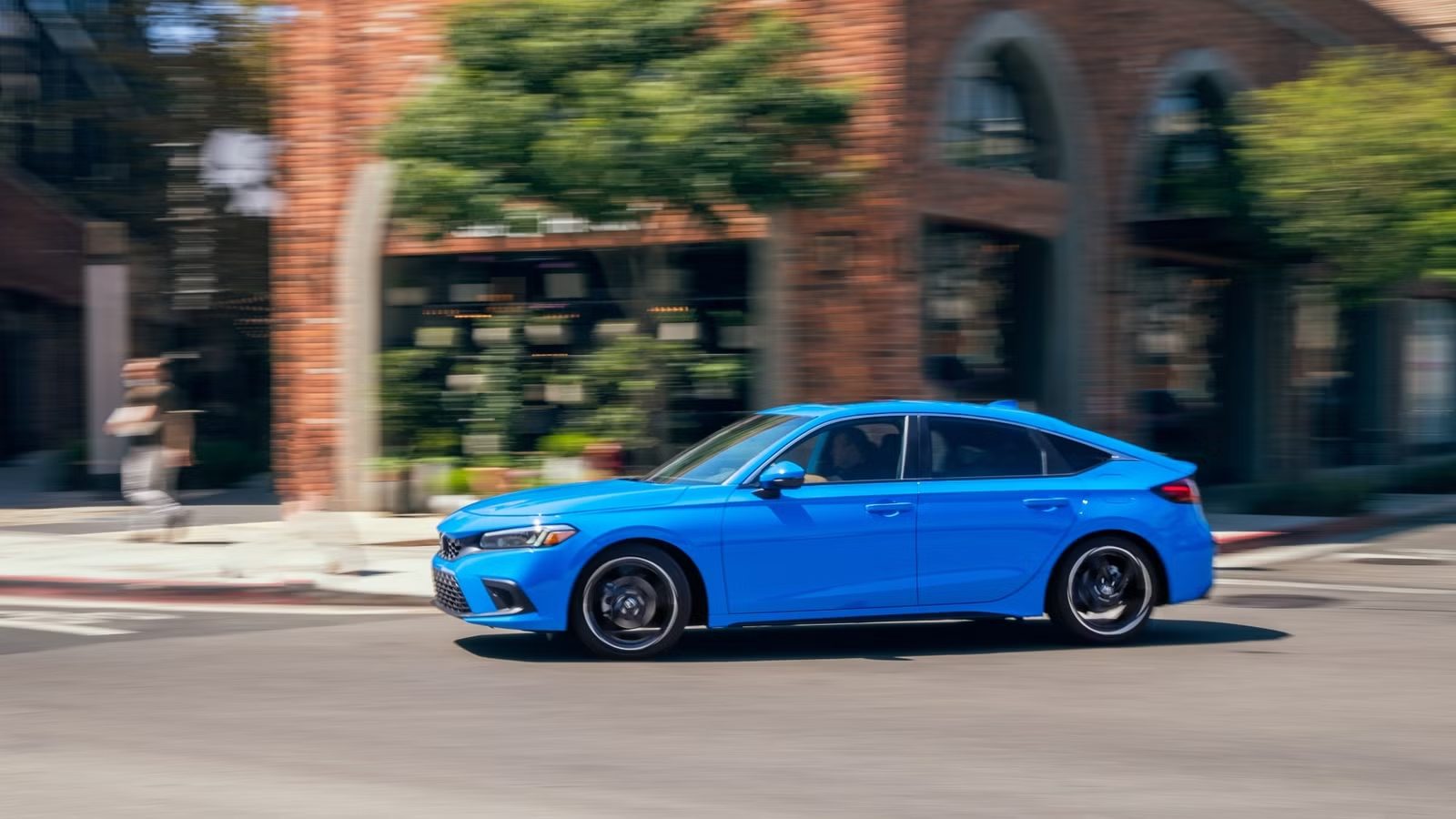
2026 Honda Civic
Max fuel economy: 36 MPG combined
Holding the top spot for efficiency, the Honda Civic combines value and performance, showcasing a perfect blend of comfort and great driving dynamics while being loaded with modern technology.
Performance and efficiency
Every version of the 2026 Honda Civic features a four-cylinder engine delivering 150 horsepower, paired with a CVT. While more power would be desirable, this setup allows for excellent fuel economy at up to 36 miles per gallon combined.
Pros
- Appealing looks
- High-quality build for the price
- Engaging driving experience
Cons
- Acceleration can feel sluggish
- No all-wheel drive option available
- The base infotainment screen is relatively small
You don’t need a hybrid to hypermile
While hybrids are often perceived as the easiest route to fuel savings, many budget-friendly non-hybrid vehicles are equally effective in reducing costs. The highlighted models reflect this, offering low purchase prices alongside remarkable fuel economy, allowing consumers to minimize both their monthly payments and fuel expenses.