Apple Files Lawsuit Against OpenAI for Alleged Misappropriation of Trade Secrets

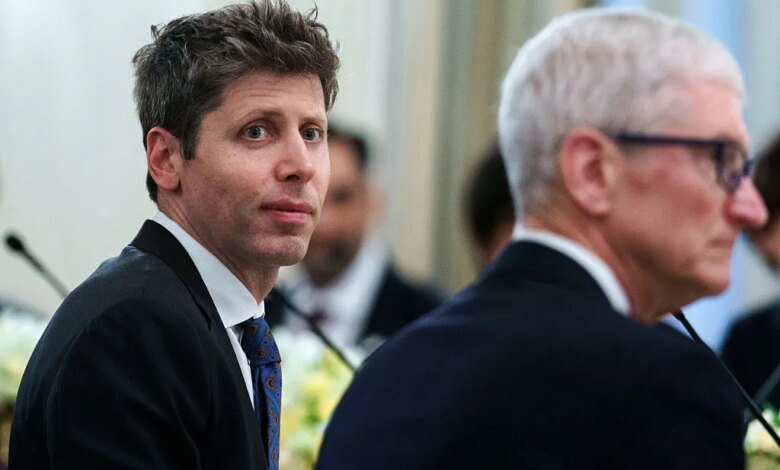
Apple initiated legal action against OpenAI on Friday, claiming the theft of trade secrets and violation of contracts.
The tech giant asserts that this wrongdoing reflects a pattern of theft involving former Apple employees now at OpenAI, allegedly orchestrated by top executives, including Chief Hardware Officer Tang Tan.
The lawsuit, filed in the U.S. District Court for the Northern District of California, accuses Tan of misusing Apple’s confidential project codenames during recruitment efforts, instructing candidates to bring Apple hardware components to interviews, coaching departing employees on evading security protocols, and soliciting information about unreleased Apple products.
Prior to his tenure at OpenAI, Tan had a long career at Apple, serving for 24 years, including most recently as Vice President of Product Design for the iPhone and Apple Watch.
These allegations surface amid speculation that OpenAI is working on a new hardware device that could rival the iPhone. Notably, industry analyst Ming-Chi Kuo indicated in April that this device might be a smartphone leveraging AI agents over traditional applications, posing a significant challenge to Apple’s hardware business.
Last year, OpenAI acquired the device startup io, led by Apple’s former chief designer Jony Ive, for $6.5 billion to enhance its hardware initiatives. While io was mentioned in the legal documents, Ive himself was not implicated.
The complaint also mentions Chang Liu, a former Apple senior systems electrical engineer, who allegedly failed to return a company-issued laptop after transitioning to OpenAI in 2026, utilizing it to download confidential Apple technical documents.
Apple asserts that these documents contained sensitive data about unreleased technologies, features, and products, including technical specifications and engineering presentations.
Liu is further accused of disseminating Apple’s confidential materials to colleagues seeking employment at OpenAI, offering guidance on what to prepare ahead of their job interviews.
In February, Apple communicated its concerns to OpenAI but claimed it received no reply, as stated in the court filing.
The complaint posits that these former employees’ actions are part of OpenAI’s strategy to extract confidential information from Apple, with instances of requesting Apple personnel to bring designs and prototypes to interviews, as well as answering queries regarding component selection and vendor processes.
Apple’s ongoing investigation purportedly found that OpenAI and its associates have run into Apple’s confidential information while developing their hardware product, including a proprietary metal finishing technique that OpenAI allegedly misrepresented to a partner as having Apple’s approval.
Like many tech firms, Apple typically investigates trade secret theft by reviewing communications on company-owned devices and analyzing server logs. By pursuing the lawsuit, Apple aims to uncover the full scale of the alleged actions through legal discovery.
In the complaint, Apple is requesting the court to prevent OpenAI from using or disclosing its trade secrets, demand the return of any sensitive materials, and ensure the preservation of evidence pertinent to the case.
“This situation is merely the beginning. Apple lacks insight into the ongoing activities at OpenAI, where such misconduct appears to be commonplace, especially at the leadership level,” the filing emphasized. “Consequently, OpenAI’s fledgling hardware venture is built on an unstable foundation, compromised by an unlawful dependence on misappropriated trade secrets.”
In a statement, Apple reiterated its commitment to protecting its innovations and intellectual property:
“At Apple, our teams are consistently creating cutting-edge technologies to deliver the best products and services globally. Safeguarding our work and intellectual property is of utmost importance. Recently, substantial evidence has suggested that individuals at OpenAI unlawfully appropriated Apple’s confidential information regarding our unreleased technologies, processes, and products. We will continue to vigorously protect our teams’ innovations and take all necessary steps to do so.”
OpenAI has been approached for comments regarding the lawsuit.
This story is still unfolding and will be updated accordingly.




