Amidst the excitement surrounding Apple’s introduction of a touchscreen MacBook Pro, another notable feature is the incorporation of OLED technology, referred to by Apple as PROLED XDR. While Apple is known for coining elaborate marketing terms, the designation “PRO” seems well-deserved in this instance.
The latest MacBook Pro models are designed specifically for creatives like photographers, artists, and video editors, who are likely to invest in a premium touchscreen display. Apple didn’t simply add a touch function to an OLED screen; it has crafted what promises to be one of the finest professional laptop displays available, boasting impressive brightness, contrast, and color fidelity, along with a display engine that adjusts to the aging of each pixel.
For these new iterations, Apple has utilized tandem OLED technology, initially seen in the M4 iPad Pro, which layers multiple organic components into a single panel. Based on visuals shared in Apple’s announcements, it seems to employ a triangular pixel layout instead of the more common striped RGB OLED setup, which is known to produce sharper text (we’re seeking further confirmation from Apple on this detail).
Tandem OLED technology provides several advantages, including enhanced HDR brightness, reduced burn-in risks, and an extended display lifespan. Additionally, these panels are brighter and exhibit greater color accuracy from various angles while still delivering the strong contrast associated with OLED screens.
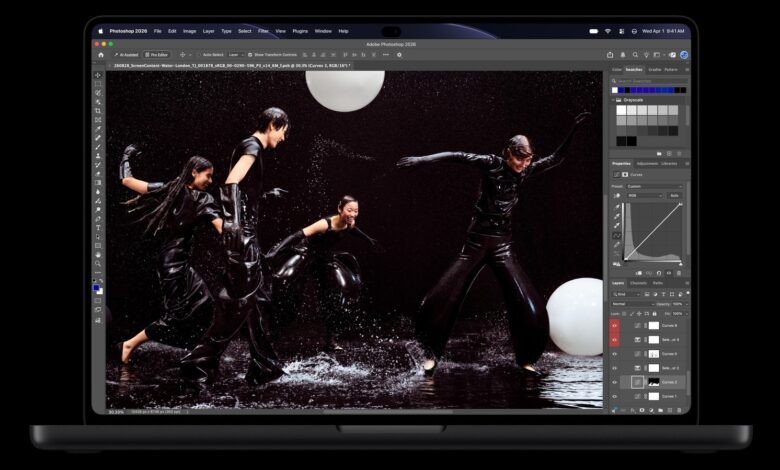
According to Apple, the new MacBook Pros featuring PROLED XDR can achieve peak HDR levels of up to 2,000 nits, surpassing the 1,600 nits peak of current Mini LED models. This brightness is particularly impressive for an OLED display and potentially rivals or exceeds any other OLED laptops currently available. Apple also claims an industry-leading contrast ratio of 10,000,000:1, significantly higher than prior MacBook Pro versions.
The PROLED XDR screens excel in color accuracy as well. Apple asserts that these models cover both the P3 (HDR) and Adobe RGB color spaces with substantially broader coverage in the green and cyan areas. They also support 80% of the Rec.2020 color gamut for HDR video editing and color grading, which is an exceptional achievement for a laptop display.
Apple
The company highlights its “state-of-the-art factory calibration” that ensures luminance, white point, and color gamut meet specific standards, making the display suitable for applications in filmmaking, design, and even medical imaging. An advanced display engine fine-tunes each pixel’s color and brightness “at the sub-millisecond level,” adapting to various factors such as content type, temperature, and environment. This technology also mitigates a common OLED drawback by adjusting for pixel aging based on usage.
The updated laptops feature Apple’s 120Hz ProMotion display for enhanced refresh rates during gaming or content creation. For those who often work outdoors or in bright settings, Apple offers a nano-texture option that is meticulously etched into the protective glass to minimize glare.
Although the new MacBook Pros with PROLED XDR touch displays come with a higher starting price of $400, they may not justify the cost for the casual user. However, for content creators and professionals, the advanced technology integrated into these displays may prove to be quite appealing.