inDrive Sets Sights on 2027 Robotaxi Trials in Central Asia in Partnership with Pony.ai and Nvidia

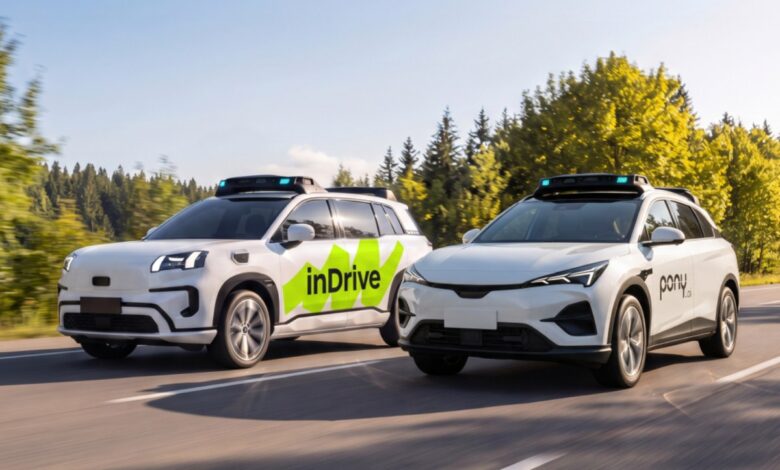
The ride-hailing service inDrive, recognized for its fare negotiation feature, is partnering with the Chinese autonomous vehicle company Pony.ai and Nvidia to pilot robotaxis in Kazakhstan starting in 2027.
On Friday, the three entities announced they have signed a memorandum of understanding to integrate Pony.ai’s robotaxis into inDrive’s platform, highlighting the increasing global interest in autonomous driving technology.
According to inDrive’s Chief Technology Officer Yuri Misnik, testing will commence in Kazakhstan’s capital city, Astana, during the first half of 2027. Initially, the tests will include a safety operator, with plans to progress towards fully autonomous rides.
As part of the collaboration, Pony.ai is set to supply its Gen-7 robotaxis, which inDrive will feature on its app for operations in Kazakhstan. Nvidia will contribute its AI technology, including the Hyperion platform and the Halos safety system.
This initiative comes as ride-hailing companies are making strides in the robotaxi market. Earlier this month, Uber unveiled plans to test Pony.ai’s robotaxis in London, alongside supervised autonomous rides in partnership with the UK-based startup Wayve. Uber is also exploring collaborations with various robotaxi companies across other regions, including the Middle East.
inDrive, which has focused on providing affordable transportation, aims to extend this commitment towards autonomous ride-hailing as it enters a competitive market already influenced by players like Uber.
“Our strategy is intentionally capital-efficient,” stated Misnik. “We collaborate with diverse partners in various markets, harnessing their strengths together with our expertise to enhance the customer experience.”
Nvidia explained that its Hyperion platform could significantly reduce the costs associated with developing robotaxis by offering a pre-built array of sensors and technology, instead of requiring individual companies to create and integrate these systems. The company also provides its Alpamayo model to aid in generating synthetic data and testing autonomous systems in varied scenarios.
“These cost efficiencies are particularly crucial in emerging markets, where ride-hailing is already reasonably priced, and autonomous services must remain competitive,” said Ali Kani, Nvidia’s automotive vice president.
This announcement coincides with Nvidia CEO Jensen Huang’s visit to Kazakhstan.
The initiative represents Pony.ai’s efforts to expand its reach beyond China. The company intends to operate over 3,500 robotaxis in more than 20 cities globally by late 2026, up from around 1,975 vehicles in service at the end of June.
Recently, Kazakhstan declared its plan to initiate autonomous taxi operations in 2027, starting with trials in Astana and two additional cities. New regulations have been established to allow testing of autonomous vehicles on specific public roads.
Astana’s severe winters could serve as a valuable testing ground for robotaxis. With approximately 1.7 million residents, the city experiences extended periods of snow and ice, presenting unique challenges for autonomous driving systems.
“Launching in this environment will provide a critical opportunity to assess autonomous driving technology under severe winter conditions,” said inDrive founder and CEO Arsen Tomsky. “Achievement in Astana could yield insights applicable to other areas facing similar climatic challenges.”
Kazakhstan is not the only region where inDrive is examining robotaxi possibilities. In December, the company established a separate agreement with Saudi Arabia’s AI Driver to investigate the deployment of autonomous vehicles utilizing WeRide’s technology, beginning with Riyadh. The companies had aimed for a pilot project in early 2026, although the status of testing has yet to be confirmed.
“We are also considering several other markets for future implementations,” noted Misnik. “A collaborative and supportive regulatory environment is essential for successful and safe testing on roads.”
inDrive operates in over 1,200 cities across 47 countries and has diversified its services to include delivery, intercity transportation, and financial solutions.