Benchmark Acknowledges AI’s Role in Undermining the Venture Pact on Rival Investments

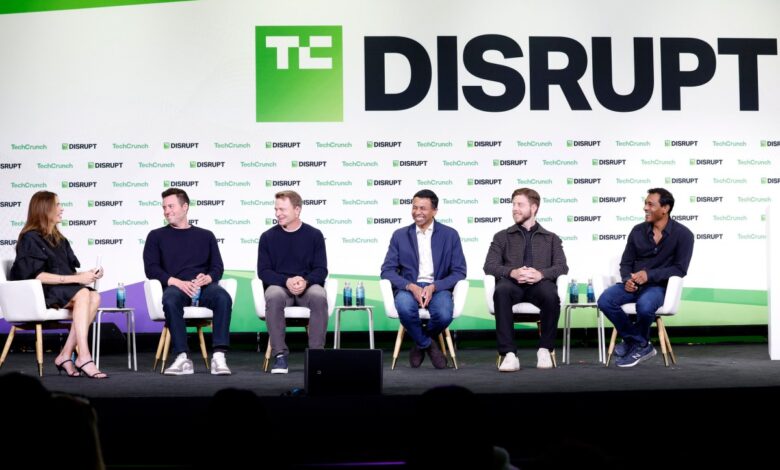
For many years, it was a general understanding in venture capital that firms would not invest in competing companies simultaneously. However, during a recent discussion at TechCrunch Disrupt, partners at Benchmark acknowledged the pressures the AI industry is placing on this traditional approach.
This shift has been anticipated over time. Major AI companies like OpenAI and Anthropic now have numerous investors in common. Recently, a controversy arose when Factory, a startup creating an AI software agent, announced the dismissal of board observer Chris Degnan due to alleged unethical behavior related to its rival company, Cognition, known for its Devin coding tool. Factory’s CEO claimed that Degnan had been exploring a position with Cognition while having sensitive access to their board discussions. Degnan defended himself, stating he had already resigned and rejected any accusations of sharing confidential information. Shortly thereafter, he publicly accepted the role of chief revenue officer at Cognition. Prominent investor Vinod Khosla supported Degnan on social media, criticizing Factory’s CEO and dismissing Factory as a lesser competitor, despite his firm backing both companies.
Even Benchmark, a firm known for its long-term commitments to early-stage founders, acknowledged that the previous agreement against funding competing companies is becoming less reliable. When asked about maintaining this boundary as companies grow into similar markets, Benchmark’s partners framed these conflicts as a necessity rather than a choice.
“The stark reality is that every company is rapidly evolving,” noted Eric Vishria. He remarked that businesses are shifting focus, leading to potential conflicts, which is simply a part of the current landscape.
Vishria emphasized Benchmark’s dedication to each founder and the confidentiality of information it gathers, suggesting that venture capitalists likely have limited influence to begin with: “We are not experts in product or technology.” Referring indirectly to the Factory-Cognition situation, Vishria stated that Benchmark had been fortunate to avoid such direct altercations. He acknowledged that while exclusivity remains “really important” at the early stage Benchmark prefers, the dynamics are undoubtedly changing.
Chetan Puttagunta highlighted that AI is exacerbating the issue. He pointed out that as the cost of software development plummets, founders are increasingly ambitious and eager to stake claims across broader markets, which will likely lead to more overlaps in the future.
He differentiated between a direct competitor from the beginning, which he labeled “a straightforward scenario,” and a company that ventures into another’s domain over time. “That happens,” he acknowledged.
Peter Fenton characterized the challenge as “kryptonite” for the firm, calling it their toughest hurdle. He explained there is a spectrum concerning how investors engage with their firms. On one side is the co-founder who avoids any involvement with competing entities, while on the other is a public-market investor who can invest in rivals without personal implications. According to Fenton, Benchmark leans closer to the co-founder end, prioritizing transparency. “There should be no surprises afterward,” he insisted. If conflicts arise, founders should not feel underappreciated, he remarked.
While Benchmark isn’t proclaiming the end of their agreements against backing rivals, the acknowledgment of forthcoming conflicts may prompt founders to question how many other investors will be as forthright.
When you purchase through links in our articles, we may earn a small commission. This doesn’t affect our editorial independence.