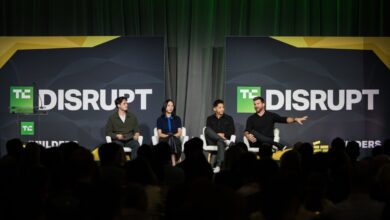
This week, I discussed the challenging landscape of consumer AI, yet some experts perceive it as a chance for growth.
Olivia Moore, a partner at Andreessen Horowitz who specializes in consumer AI, recently published a report focusing on the top 100 consumer AI applications. While ChatGPT remains the dominant player, emerging companies like Suno and ElevenLabs are proving their resilience. Interestingly, her report highlights several consumer sectors that have not yet embraced AI.
Moore identifies significant opportunities within consumer AI, especially if the industry can explore revenue avenues beyond subscriptions and API fees. I had an informative conversation with her regarding the unique financial dynamics of consumer AI and the nascent phase of this sector.
The following interview has been shortened and clarified.
The timing of your report on consumer AI is intriguing, particularly given OpenAI’s recent shift back to enterprise-focused initiatives. This has led to some skepticism about the revenue potential for consumer AI. Are you more hopeful about its future?
I share your observation about OpenAI refocusing on enterprise solutions. However, I view this not as a complete shift but rather an expansion of their offerings in the consumer space. While I appreciate their consumer efforts, it’s evident that most AI revenue so far has come from subscriptions and token use, which tend to favor the enterprise and prosumer markets.
How might consumer AI address its revenue challenges? The State of Markets report noted that only 2.2% of U.S. households are currently paying for AI. Should we worry this number needs to increase for the market to thrive?
I’m not sure we should focus solely on increasing user payments. I would prefer to return to a model that allows consumers to access services without directly spending their own money. In Silicon Valley, it’s easy for high-income individuals to advocate for paid services, but many consumers would prefer free access supported by ads, allowing them the option to opt for a subscription if they choose to eliminate ads.
There’s also the issue of the high marginal costs associated with AI services compared to traditional internet services like Facebook or Google. Do you see any prospects for reducing these costs through open-source solutions or lighter models?
Yes, we are starting to see advancements in this area. For instance, ChatGPT has introduced a cost-effective plan at $8 per month, likely utilizing more affordable models. Not every task demands cutting-edge intelligence, which paves the way for cheaper alternatives in consumer applications. We’re hearing an increasing number of startups exploring open-source models, indicating a shift in strategy.
Currently, the users generating revenue are often involved in coding and technical automation, where advanced intelligence is essential. As more consumer-focused applications emerge, aiming for models that are not strictly the product itself, we can expect to see more cost-effective solutions being adopted.
It’s unusual to find discussions of technical automation in consumer offerings, highlighting AI’s unique traits. Are we beginning to blur the lines between consumer and enterprise markets?
I explored this concept in an article titled “The Great Expansion” about a year ago. Before the rise of AI, companies like Canva remained focused on consumer markets for many years before venturing into enterprise solutions. Now, companies such as Gamma, ElevenLabs, and Cursor are beginning as consumer-oriented businesses and quickly transitioning into predominantly enterprise-focused entities within a year and a half.
Most consumer AI applications we recognize today, I would argue, are actually serving a prosumer audience. This becomes evident in the revenue breakdown, which highlights three primary categories where power users are spending money: application development (e.g., Lovable, Replit, and Fal), AI-driven marketing tools (e.g., Higgsfield, HeyGen), and work management services (e.g., Manus, Fireflies AI, and Granola). While consumers initially pay for these, they don’t align with traditional consumer definitions prior to the AI boom.
Additionally, there are numerous unexplored categories such as social networking, dating, marketplaces, retail, travel, finance, and health. The absence of any entrants in our top 100 list from these sectors is quite surprising. This is what I believe we need to see evolve in the coming months.
So, are we yet to experience the full potential of consumer AI?
It’s still very much in its early stages.