Tushar Mehta
Add us on Google:
Qualcomm’s Snapdragon 8 series stands out as the premier line of smartphone processors, known for their exceptional performance, rapid connectivity, advanced camera functionality, and robust AI capabilities. The series saw significant expansion in 2026, especially with the introduction of the Snapdragon 8 Elite Gen 6 series.
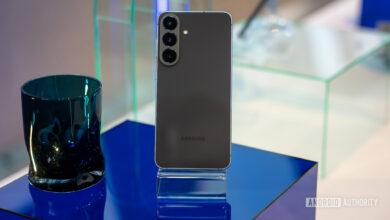
After the launch of the Snapdragon 8 Elite Gen 5 and Snapdragon 8 Gen 5 in late 2025, two additional chips surfaced: the Snapdragon 8 Elite Gen 5 for Galaxy and the Snapdragon 8 Elite Gen 5V. Our tests using the Samsung Galaxy S26 Ultra, POCO F9 Ultra, POCO F9 Pro, and OnePlus 15R have provided clearer insights into their performance.
The findings are quite compelling.
Differences Among the Snapdragon 8 Gen 5 Chips

Nick Fernandez
The Snapdragon 8 Elite Gen 5 chip found in the POCO F9 Ultra is regarded as the best option available for many Android manufacturers. It features an octa-core 4.6GHz Oryon CPU along with an advanced Adreno GPU with three compute slices. In contrast, the Snapdragon 8 Elite Gen 5 designed for the Galaxy S26 Ultra amends this by allowing CPU speeds to reach 4.74GHz, although it is generally limited to Samsung devices. Occasionally, Qualcomm does supply a few overclocked versions to other manufacturers later in the year under the “Leading Version” label.
The Snapdragon 8 Elite Gen 5V in the POCO F9 Pro is a slightly diminished variation, comprising two compute slices in its GPU, hinting at lesser peak efficiency. However, it maintains the same 4.6GHz CPU and 3nm design as the more advanced version.
At the lower end is the Snapdragon 8 Gen 5 used in the OnePlus 15R, which notably lacks the “Elite” title. Its CPU is akin to that of the Elite variant, but it peaks at just 3.8 GHz. Additionally, its Adreno GPU only features two slices and misses out on the superior memory linked with the Elite version, indicating a significant graphical limitation when compared on paper.
CPU Performance: Galaxy Leads the Way
Hadlee Simons
Predictably, the Galaxy S26 Ultra secured first place in both single-core and multi-core CPU performance in our GeekBench 6 analysis. Its Snapdragon 8 Elite Gen 5 for Galaxy chip includes Prime CPU cores that outstrip the speeds of its competitors’ chips by roughly 140MHz. The lead is slight in single-core assessments but expands in multi-core benchmarks thanks to Samsung’s higher clocked cores.
As expected, the OnePlus 15R finished last in both categories of the GeekBench 6 evaluations, primarily due to the lower clock speeds characteristic of the Snapdragon 8 Gen 5.
In contrast, the POCO F9 Pro, featuring the Snapdragon 8 Elite Gen 5V, surprisingly came in third, trailing behind. Despite Qualcomm’s claims of similar specifications with the more advanced model, it seems the Pro may either have a smaller cache or less aggressive software tuning than its counterparts.
GPU Testing: Fast Performance vs. Cool Operation
GPU stress testing does not always reflect real-world scenarios. Mobile devices often show considerable differences in power management settings and cooling systems. Nevertheless, benchmarks reveal aspects of performance sustainability.
The Wild Life Stress and Extreme Stress Tests indicate similar results. The POCO F9 Pro exhibited the most stability, maintaining 76-77% under both conditions. The POCO F9 Ultra followed with 69-70%, while the Galaxy S26 Ultra displayed only 53-54% stability. Although the POCO F9 Pro began behind the Galaxy in both assessments, it managed to outperform by the end. The OnePlus 15R, although last, still stabilized at 64-65%, implying it maintained less performance loss compared to Samsung.
Notably, the temperature levels varied greatly among devices. The POCO F9 Ultra reached the highest average and peak temperatures at 44-45°C and 52°C, respectively. The POCO F9 Pro recorded similar results, averaging 43°C and reaching a peak of 50°C. In contrast, the Galaxy S26 Ultra operated cooler with average temperatures around 41°C and peak temperatures at 44°C. This suggests that Samsung is more inclined to reduce performance to achieve lower temperatures.
The standout performer in terms of thermal management was the OnePlus 15R, which maintained average temperatures of 34-35°C and peaked at 41°C. Its temperatures are considerably lower than those of the POCO devices, although its performance under load is still behind that of the POCO models.
No Clear Winner
Hadlee Simons
It is important to recognize that the performance of each chip may vary widely due to differences in hardware cooling systems and software calibration. This means that other devices equipped with these chips could yield different outcomes. Nonetheless, we can draw several conclusions from our evaluations.
Which device would you opt for based solely on our analysis?
18 votes
In terms of CPU capabilities, the Snapdragon 8 Elite Gen 5 for Galaxy stands as the premier chip from the Snapdragon 8 Gen 5 series, while the OnePlus 15R with its non-Elite variant ranks at the bottom. All variants are powerful enough to ensure smooth operation, but the Galaxy chip’s enhanced performance could be a boon for demanding tasks such as video editing, intensive gaming, or running challenging AI models.
Selecting a clear GPU winner is more complex. POCO’s models excel in performance sustainability, though they also generate the highest levels of heat. In contrast, Samsung’s device trails in performance consistency, yet runs cooler than the alternatives.
The OnePlus 15R occupies a middle ground, showing decent stability but lacking the performance clout of its competitors. Its lower temperatures make it appealing for extended gaming sessions on popular Android titles or mid-range emulation scenarios.
We appreciate your engagement with our content. Please review our Community Guidelines prior to commenting.