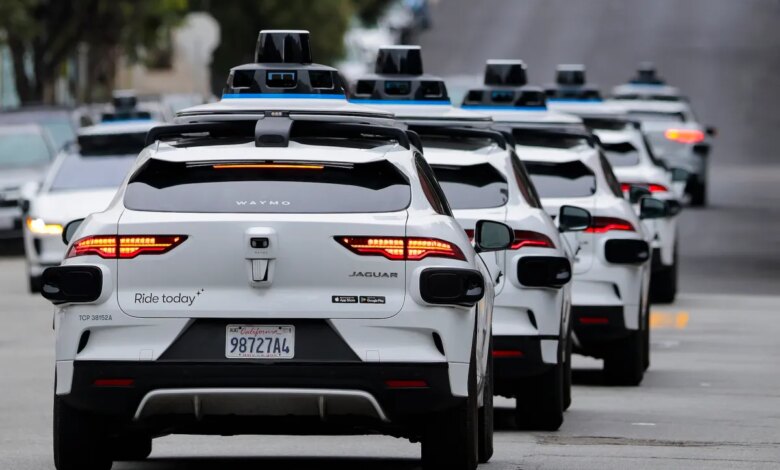
Under a new California law, companies developing autonomous vehicle (AV) technology, such as Tesla, Waymo, and Zoox, must offer local support to emergency responders if their robotaxis malfunction. If a vehicle obstructs police or firefighters for over 30 minutes, these companies may face penalties.
Signed by Governor Gavin Newsom, Senate Bill 1246 outlines several regulations aimed at enhancing safety and response times for AVs when they encounter issues. The legislation also establishes accountability measures for companies that fail to comply.
The law comes in response to several notable incidents in California where robotaxis caused traffic disruptions, intruded upon crime scenes, or hindered emergency personnel.
Many of these scenarios involved Waymo, the leading robotaxi service in the United States, operating a fleet of approximately 4,000 autonomous vehicles nationwide, with around 1,200 in the San Francisco Bay Area alone. A recent investigation highlighted instances where Waymo depended on first responders to manually manage its vehicles when technical issues arose.
These occurrences led lawmakers at both the state and federal levels to advocate for more stringent regulations, particularly concerning how robotaxis interact with emergency responders. The National Highway Traffic Safety Administration (NHTSA) has formally urged AV developers to devise effective solutions to these challenges.
This new legislation attempts to mitigate those concerns within California.
“California supports the development of autonomous vehicles, but innovation cannot compromise public safety. In cases where an autonomous vehicle crashes or obstructs an emergency situation, there must be clear accountability,” stated state Senator Dave Cortese, the bill’s originator.
Per the law, AV companies are permitted to use only remote operators based in the U.S. who possess valid U.S. driver’s licenses. This is intended to tackle concerns regarding how these companies manage remote operations when issues arise with their vehicles.
The concept of “remote operations” has been broadly interpreted and there is limited transparency regarding the practices used by AV companies. However, the term “remote drivers” specifically refers to personnel who can directly operate the vehicle from a remote location. Tesla is currently the sole company to mention having such remote operators for its robotaxis.
Conversely, Waymo has indicated that while it employs remote assistance, the self-driving system remains primarily in control, with human staff available to offer guidance or send commands as necessary. Waymo maintains a global network for remote support, partially based in the Philippines, along with command centers in Arizona and Michigan. Zoox has confirmed that its remote operations teams are located within the U.S.
Additionally, the law mandates that AV companies inform local jurisdictions about the status and location of their vehicles during widespread failures and provide “local incident technicians” to assist with accidents or blockages. Fines may be imposed if a vehicle obstructs emergency personnel for over 30 minutes.
Waymo and Zoox have expressed their intention to adhere to the new regulations.
“We appreciate the modifications to the bill, ensuring that autonomous vehicle operators can still effectively serve Californians,” commented a spokesperson for Waymo via email. “Waymo is dedicated to enhancing road safety in California while continually improving our services.”
The law is set to take effect in July 2028, with the California Department of Motor Vehicles responsible for establishing guidelines for certain aspects of the legislation, including required response times.