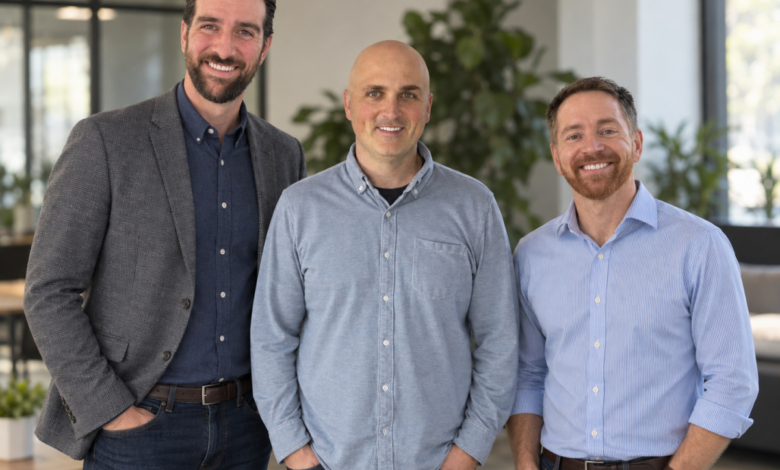
Atomic, a supply chain startup, emerged from stealth last year, with founders leveraging their experience from Tesla to enhance inventory management and improve client profitability.
The core function of Atomic revolves around determining the optimal amount of inventory a company should maintain and its location by simulating various scenarios. This approach was inspired by a critical moment at Tesla during the 2018 Model 3 production surge when traditional planning methods fell short in addressing rapid changes.
Since Atomic co-founders Michael Rossiter and Neal Suidan began sharing their vision, the transformation has become evident for clients, including major tech players like DoorDash and HelloFresh. Financially, the impact is significant, with Atomic’s annual recurring revenue increasing fivefold since the start of the year, as noted by Jon McNeill, a former Tesla president and founder of DVx Ventures, where Atomic developed its concept.
This growth facilitated Atomic securing a $12.5 million Series A funding round, raising its total funding to over $15 million. Klass Capital led the new funding round, alongside Madrona Venture Group. Additionally, Atomic has appointed former Tesla planning director Jeff Goodrich as its Chief Technology Officer and third co-founder.
“Managing a supply chain resembles navigating an infinite optimization landscape; you’re constantly assessing numerous decision-making possibilities, which frequently change,” said Rossiter, Atomic’s CEO, in an exclusive conversation. “AI plays a crucial role in identifying the most effective routes through this complex scenario.”
“The company has transitioned from working with pilot customers to engaging with significant players like DoorDash,” McNeill remarked in an interview. “The product has matured from an optimization tool that provides recommendations to a fully autonomous platform that makes decisions independently, with DoorDash managing approximately 90% of its purchasing across various locations.”
For clients in the food sector like DoorDash, Atomic’s software minimizes waste and spoilage. Each industry brings unique challenges, according to Rossiter.
“Atomic’s strength lies in its adaptability to various supply chain models, allowing our AI to customize its solutions accordingly,” he explained. “We are currently deepening our engagements in consumer packaged goods, mobility, and manufacturing sectors, tracing back to our roots at Tesla.”
Investor interest in the Series A funding was partly driven by Atomic’s ability to quickly onboard new customers and make the software user-friendly, Rossiter noted.
“We challenged them to streamline onboarding to ensure it’s a seamless experience for customers,” McNeill mentioned. Suidan, Atomic’s chief product officer, tackled this task effectively by enhancing Atomic’s AI to discern “decision rules” of client teams, even when these rules had not been explicitly documented.
“Clients began asking for the AI to make these decisions to save them time,” McNeill continued. “Executives recognized that swift decision-making is a competitive advantage. Tesla emphasized this principle, with Elon Musk highlighting that decision speed differentiates us from competitors, as it builds on itself. In contrast, companies like Ford or Toyota often take a month just to make their first decision.”
Rossiter expressed enthusiasm for transitioning clients from spreadsheet-based supply chain management to advanced software capable of facilitating planning decisions. He noted that while CFOs often lead such evolutions within their organizations, it is rarer to see similar shifts in operational settings.
“Financial data always receives precedence, but operational data frequently does not,” he remarked.