My experience with an iPhone after three years of use and a “consumed” battery.
An ongoing concern dating back to 2017 involved users noticing their iPhones sluggishly operating as battery health declined. Apple eventually clarified this was intentional to avoid unexpected shutdowns in devices with aging batteries. In response, the company instituted a Battery Health feature along with an option to bypass performance management.
Recently, the iPhone 15 series introduced the ability to view battery cycle counts. A charge cycle is defined as using the total capacity of the battery, though it doesn’t require a single uninterrupted use. For instance, if a phone drops from 100% to 50% and is then recharged back to 100%, one complete cycle occurs when the battery level again hits 50%.
Increased cycle counts correlate with battery degradation, and Apple asserts that older models retain about 80% capacity after 500 charge cycles. With the iPhone 15 and newer, this statistic doubles, as their batteries are rated for 1,000 cycles before dropping below 80% capacity.
My iPhone 15 Pro Max recently reached the 1,000 cycle mark and currently reports an 81% battery health. While it’s yet to trigger a “battery service warning,” I’ve begun to feel the effects of nearly three years of use. Initially, the device performed like a champion, often lasting two days with more than 12 hours of screen-on time. Nowadays, I frequently find myself needing a charger by the evening.
Recent iOS Updates Have Exacerbated Battery Issues

The iPhone 15 series debuted with iOS 17. As a person accustomed to Android, transitioning to the iPhone was a breath of fresh air due to its reliability. However, this reliability diminished with iOS 18, as many users pointed out issues with performance and battery longevity. Features leveraging Apple’s intelligence seemed to drain the battery even faster.
Apple addressed many of these bugs, but the release of iOS 26 brought new challenges. Initial beta versions struggled, yet I held onto hope for enhancements in the final version. Unfortunately, for an entire year, iOS 26 continued to hinder performance and battery life. My priority shifted from maintaining battery health to simply wanting a smoother software experience.
Realizing the poor performance of iOS 26, Apple focused on optimizations with the release of iOS 27. Improvements included quicker app launches, faster photo loading, and accelerated AirDrop transfers. The first beta version I tried revealed noticeable enhancements compared to any stable release of iOS 26. Now, my iPhone 15 Pro Max functions as if it’s brand new.
Even though I still need to charge it multiple times a day, and the time it takes to charge from 80% to 100% is frustrating, the software is finally much better.
Durability of the Device Remains Impressive
There’s a humorous consensus in tech circles about the iPhone’s appearance remaining largely unchanged over the years. Nonetheless, each iteration, including the 2023 iPhone 15 Pro, has seen material changes, such as the shift from stainless steel to titanium, resulting in a lighter device. Conversely, Apple reverted to a unibody aluminum design for the iPhone 17 Pro, citing enhanced thermal management.
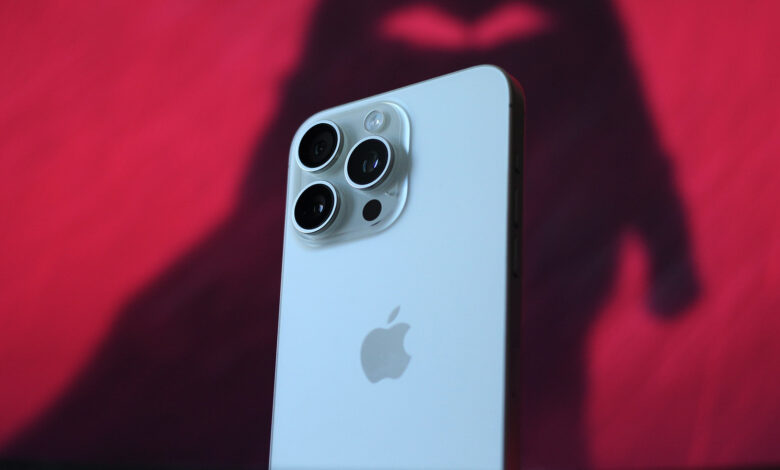
The latest Pro models do have improved cooling, yet reports indicate they’re more prone to scratches and dents than previous versions. New users have noted scratches appearing within days. In contrast, my iPhone 15 Pro Max is relatively unscathed, with only minor screen scratches while the body remains mostly flawless, despite not always using a case.
Overall, the hardware has held up admirably. The triple-camera system still captures exceptional images and videos, the buttons maintain their responsiveness, and the audio quality remains outstanding. Features like the Dynamic Island have also adapted seamlessly into the iOS experience.
Additionally, the support of Siri AI on the iPhone 15 Pro models enhances the smartphone yet further. A battery replacement could likely extend my device’s life even further, especially now that the software is functioning optimally.