By Author Name
Follow us for updates:
The Samsung Galaxy and Google Pixel lines consistently attract significant media attention and interest from Android enthusiasts. This is due to their superior software support, exclusive features, and their status as the largest Android brands in North America.
Although Samsung and Google have numerous unique offerings, they are not the only brands with appealing features. Here are some functionalities that both companies could improve upon or incorporate into their devices, which many users would like to see.
Which features would you prefer to see on Pixel or Galaxy devices?
81 votes
Ultra-Fast Charging

By Author Name
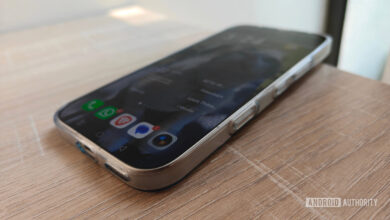
Fast charging is widely available, but its definition varies. In the US, brands are generally more conservative, with Samsung’s Galaxy S26 Ultra supporting 60W charging, while the Pixel 11 Pro tops out at 45W.
Under these conditions, Samsung’s device can charge fully in about an hour, whereas the Pixel takes nearly two hours. Interestingly, these speeds represent an improvement for both brands, as they had previously maintained lower rates for an extended period compared to competitors.
Standard fast charging is common now, but ultra-fast options outpace them significantly.
Finding phones with speeds above 30-60W in the US is challenging, though some exceptions exist. For instance, the recently discontinued OnePlus 15 can fully charge in approximately 40 minutes due to its 80W capability. Meanwhile, brands like HUAWEI, Xiaomi, and OPPO offer devices exceeding 120W in other markets.
This technology is less frequently advertised in the US due to proprietary standards and added stress on battery life. However, advancements have made these supercharging technologies more efficient and gentler on battery longevity compared to earlier versions.
Traditional IR Blasters

By Author Name
If you remember the earlier days of Android, you likely recall that IR blasters were common. I had a mid-range Android phone equipped with one, which was quite handy for when the remote control went missing.
As of 2026, most devices featuring IR blasters are either imports or lower-end models, with a few flagship options available. The OnePlus 15 in the US stands out as an exception. In Europe, devices like the Xiaomi 17 are also out there.
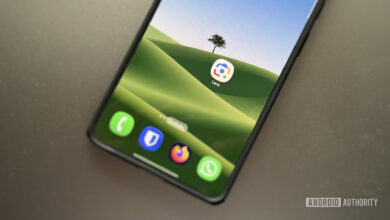
IR blasters may be rare today, but they are still useful. They can control older TVs, sound systems, and even some air conditioning units that utilize IR. In a world of newer electronics, you might not need one, but for many, it remains a beneficial feature. Combining an IR blaster with an app like Google TV eliminates the need for a physical remote entirely.
Xiaomi’s Second Space and Other UI Features

By Author Name
While most Android apps cater to single users, switching between accounts can be tedious. App cloning is one potential solution, though Samsung’s execution has strict limitations.
Samsung provides two cloning options: Secure Folder for almost any app and Dual Messenger specifically for certain social media apps. However, the limitations stem from security protocols, isolating cloned apps and often delaying notifications.
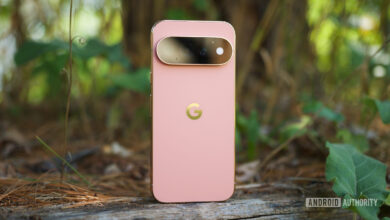
Samsung allows you to clone an app, but Xiaomi enables the creation of an entirely separate user profile.
Xiaomi’s Second Space creates an alternate user profile at the OS level, allowing users to customize a separate lock screen and home space with distinct apps and settings. Notifications remain hidden from the main profile, ensuring privacy for sensitive apps, while providing seamless communication with system apps.
For users wishing Android had multiple desktop environments like modern computers, Xiaomi’s Second Space is an excellent feature.
Motorola’s Moto Actions

By Author Name
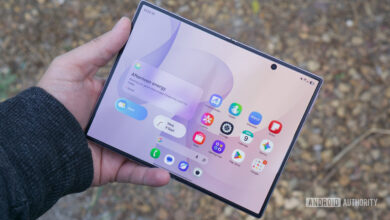
Gesture controls aren’t new, but Moto Actions push the boundaries by utilizing hardware sensors to pick up movements instead of relying solely on software recognition. This allows for unique gestures like twisting to start the camera or chopping motion to turn on the flashlight.
Several gestures are optimized for one-handed operation, and you can perform many of these actions without waking the display, making using the device much quicker.
Nothing’s Glyph Interface

By Author Name
Recently, Google rolled out the HiLight LED indicator, designed for Gemini interactions and to provide minimal notifications. Unfortunately, this feature feels underdeveloped and pales in comparison to the Glyph indicator present on Nothing devices.
Unlike Google’s focus on Gemini, the Glyph system aims to reduce screen reliance by using its LED display for notifications. It can showcase alerts related to apps and contacts, with newer models allowing personalized icons. The system includes caller ID, camera countdown, and even playful features like games.
While not for everyone, the Glyph interface is an innovative feature unmatched by other Android devices. Its thoughtful design stands in stark contrast to Google’s HiLight.
These five features represent just a fraction of what’s missing in Pixel and Galaxy devices. Are there any significant features you think should be included? Share your thoughts in the comments below.
Thank you for participating in our community. Please review our guidelines before commenting.