Welcome back to TechCrunch Mobility, your destination for insights on the future of transportation and the increasing impact of AI in this field. Subscribe for free to receive updates directly in your inbox — just click TechCrunch Mobility!
Advocates for self-driving car technology have consistently claimed that autonomous vehicles, including robotaxis, will help lower accident rates and enhance roadway safety. Some data supports this theory. However, the journey to developing such technologies has not been without its challenges for the workers involved in these companies.
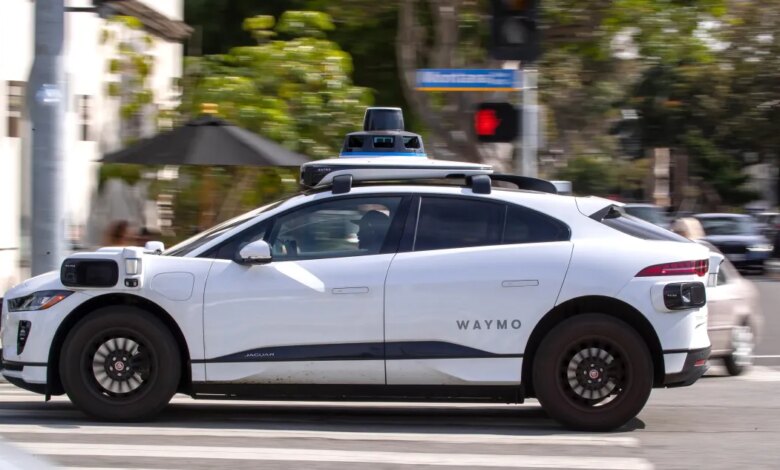
Sean O’Kane, a senior reporter on special projects, investigated reports submitted to the Occupational Safety and Health Administration (OSHA), revealing that test drivers for companies like Waymo and Zoox experienced over twenty injuries between 2024 and 2025 due to abrupt braking or other sudden vehicle movements. In certain instances, these employees faced lengthy recoveries from injuries such as whiplash caused by the sudden stops of autonomous vehicles.
For more details, explore his comprehensive article featuring perspectives from both current and former employees.
One key point worth considering: Is this issue confined solely to Waymo and Zoox? The answer is likely no. It is probable that drivers working for other autonomous vehicle developers are also incurring injuries, but the organizations they collaborate with might be exempt from OSHA’s reporting statutes.
Have information or insights related to this story? Reach out to Kirsten Korosec or Sean O’Kane via email.
Recent Transactions
I’ve been covering Gatik, the autonomous vehicle firm recognized for its self-driving box trucks, since it emerged from its initial phase in 2019. Back then, its future seemed uncertain as many AV companies struggled to make progress.
However, Gatik has made a successful transition from research and development to limited commercial operations, delivering goods between distribution centers and retail outlets like Walmart. With a recent funding boost of $200 million, led by Qatar Investment Authority and Koch Disruptive Technologies, the company aims to expand its reach. Notable investors include Millennium Management, ARK Invest, and Intact Private Capital.
This marks Gatik’s largest funding round to date, but their ongoing multi-year partnership with PepsiCo, announced in June and linked to $600 million in guaranteed revenue, could be an even more significant milestone.
Other notable financing news includes:
Airbound, an Indian startup focused on autonomous drones, secured $37 million in a Series A funding round led by Greenoaks, along with contributions from DoorDash, Lachy Groom, Lightspeed, and Humba Ventures.
Mubadala Capital, the investment branch of Mubadala Investment Company, has agreed to purchase a majority stake in Arrive Logistics, a truckload brokerage firm based in Austin.
Regent Craft, a company from Rhode Island that develops electric seagliders, raised $120 million in a Series B financing round co-led by Mare Liberum and AE Ventures. They also secured $120 million in debt financing from Erebor Bank, founded by Anduril Industries’ Palmer Luckey. Regent, which has recently established a 255,000-square-foot factory for seagliders, seems to be strategically moving deeper into the defense sector.
Vista Global Holding, a private aviation group from the UAE, is reportedly considering a European IPO that might raise over $1 billion.
Key Insights and Other News

A recent YouGov survey indicates that a greater number of Americans oppose police license plate recognition systems than support them. What are your thoughts on this matter? Feel free to share your views.
Any, a Belgium-based electric two-wheeler startup, is focusing on cargo space innovation.
General Motors is currently under increased scrutiny from U.S. safety regulators in light of multiple incidents, including over twenty crashes or fires, and at least six injuries related to brake issues in its electric vehicles.
Ford announced the appointment of Dave Carroll as the new president of its energy division. Carroll, who previously worked at ENGIE North America, will take over from longtime executive Lisa Drake.
Rivian CFO Claire McDonough has announced her resignation, effective at the end of October. Her departure occurs at a pivotal time for Rivian, as it navigates significant initiatives, including a robotaxi partnership with Uber and ramping up the production of its R2 SUV.
Uber is rolling out a new live video feature to allow parents to monitor their children during rides.
Waymo shared insights from its experience after covering over 200 million miles on autonomous journeys. The initial takeaway—highlighting the necessity of multimodal sensors—contrasts sharply with the Tesla strategy, which relies solely on cameras. Waymo also emphasized the growing significance of vision language models.
Additionally, Waymo is expanding its operations internationally, announcing plans to enter the Munich market in Germany.
Final Thoughts
To clarify a point from last week, Waymo discussed its custom silicon chip designed for the immense data processing needs of its self-driving technology. Their blog stated, “While these ASICs yield over 1,000 TOPS of ML performance dedicated to front-end processing and ML models, we optimize across the full stack to enhance performance, especially in the low-batch scenarios we often encounter.”
This led me and others to interpret that a singular chip could produce 1,000 trillion operations per second. I had compared it to Nvidia’s Drive AGX Thor processor, indicating similar capabilities.
However, a keen reader raised some questions, prompting me to reach out to Waymo for clarification. A representative explained that the performance metrics refer to the entire system rather than an individual chip, marking an important distinction.
When you buy through links in our posts, we may receive a small commission, which does not influence our editorial independence.