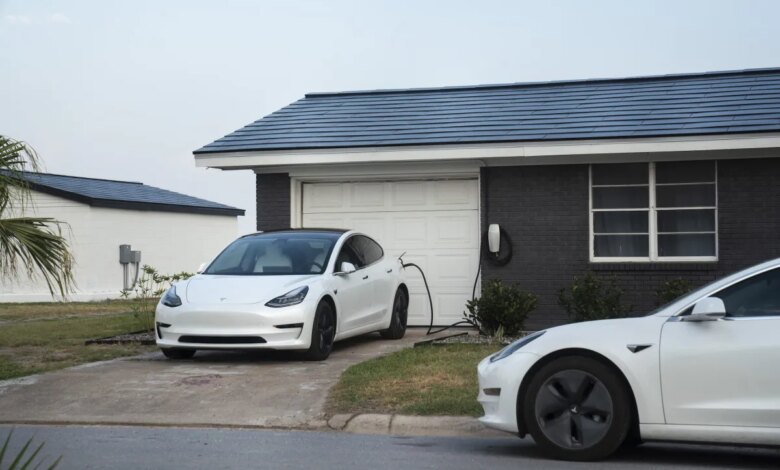
Almost ten years ago, Tesla launched its solar roof, designed to mimic stylish shingles, elegant terra-cotta tiles, or sophisticated slate slabs while functioning as a mini-power plant.
Now, however, the solar roof appears to be discontinued. Tesla has removed all public references to the product from its website. Reports confirm that the previous solar roof page now leads to a general solar information page, and support links have also been redirected. News of the product’s absence was initially reported by Electrek.
Nonetheless, there may still be remnants of the project. Two solar installers indicated their companies continue to provide the solar roof, although one mentioned that availability could vary based on the project schedule. This hints at Tesla potentially trying to sell off leftover stock.
The duration for which the solar roof might still be available depends on the existing inventory. Tesla aimed for ambitious milestones of 1,000 installations weekly, but after years of adjustments, only achieved between 20 and 40 installations per week by 2022.
The solar roof’s prospects were dim from the start. Marketed as a luxury item, it only became costlier over time. Tesla’s promotional efforts compared the solar roof’s price with the combined costs of traditional solar solutions and roof replacement. This comparison was appealing, especially for those averse to conventional solar panel aesthetics. However, even with replacements included, many reports noted installation quotes upwards of $200,000.
Although the cost of silicon technology decreased over the years, the solar roof was an outlier. Standard solar panels dropped in price due to mass production of universally compatible solar cells. While the solar roof used these standard cells, its tiles were custom-made, requiring Tesla to create and procure specialized manufacturing tools. Consequently, when sales fell short of expectations, the cost of each unit exponentially increased.
The physical properties of the product also posed challenges. Solar systems exposed to direct sunlight are prone to heat issues, and there were instances where components not related to the solar cells experienced warping, with roof insulation melting. Even more concerning was the underperformance in generating electricity, which didn’t align with Tesla’s claims.
Identifying the reasons behind this underproduction is complex, but heat could be a significant factor. Typically, solar panels function more efficiently at lower temperatures, with voltage decreasing by about 0.5% per degree Celsius increase. Traditional solar panels manage this by spacing gaps for airflow against the roof. Tesla employed a similar strategy with its solar roof, but the gaps were less substantial, likely resulting in excessive heat that diminished cell efficiency.
With Tesla now steering customers towards its conventional solar panels, does this signal the end for integrated solar roofing solutions?
Not necessarily. Companies like GAF and Merlin Solar still aim to capture their share of this market. Additionally, there may continue to be interest from consumers with specific design preferences.
Nonetheless, Tesla’s exit from the solar roof arena could pose a setback for the concept overall. If a leading company like Tesla struggles to make it viable, what does that imply for others? This could serve as a critique of the idea itself or perhaps open the door for an ambitious entrepreneur eager to challenge the status quo established by Elon Musk.