Revolutionizing Recall Repairs: How Cars Are Now Self-Resolving Issues Overnight

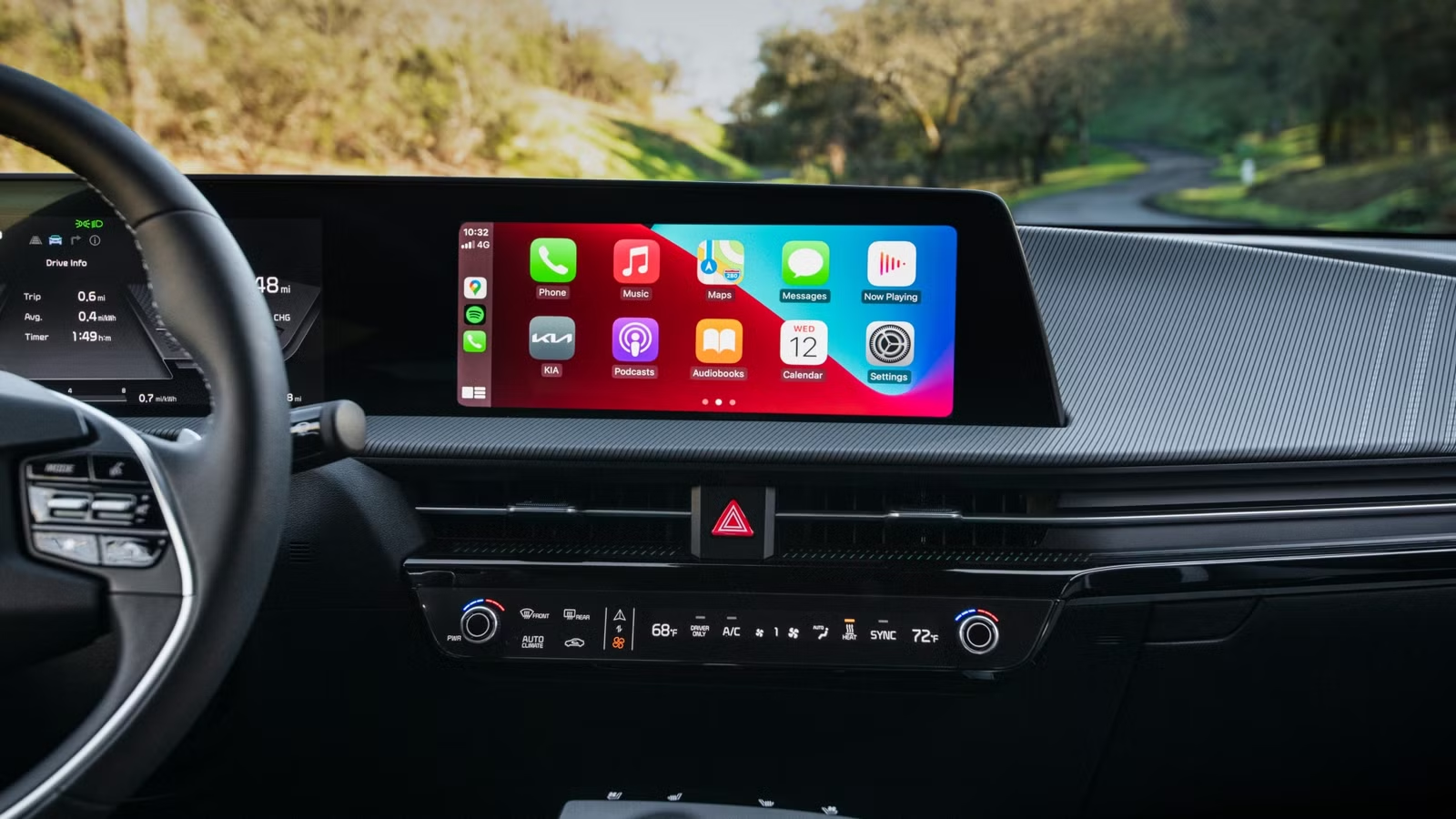
Approximately a decade ago, the idea of receiving a software update for a car—similar to what we experience with smartphones—was relatively uncommon. Only Tesla owners seemed to discuss such updates. In 2018, Consumer Reports tested the Tesla Model 3, observing that its braking distance from 60 mph was 152 feet, notably longer than that of a Ford F-150. In response, Tesla launched a wireless update to the vehicle’s anti-lock braking system, reducing the stopping distance to 133 feet without requiring any physical repairs.
Nowadays, vehicles can automatically update their software while parked overnight, allowing drivers to skip the dealership visit altogether.
According to research from Berg Insight, a firm monitoring the connected car market, 83% of new automobiles sold globally by 2025 are expected to come with built-in cellular connectivity, a slight increase from 79% the previous year. In North America, this figure rises to 94% of new vehicles sold with the capacity to receive over-the-air (OTA) updates.
How “over-the-air” updates affect your vehicle
Expansion of OTA Updates
OTA refers to the term “over-the-air,” which encompasses updates that a vehicle downloads and installs using its cellular connection or a paired Wi-Fi network, bypassing the need for dealer visits or USB drives. Instead, manufacturers issue software updates that automatically download in the background while the vehicle is stationary. Some updates complete within minutes, while others may require the vehicle to remain parked overnight.
These OTA updates can include a variety of enhancements, ranging from user interface improvements on the infotainment system to significant changes in vehicle performance. Given that the majority of contemporary vehicles leverage onboard computers to control functions like steering and acceleration, these critical systems can often be updated wirelessly. An examination of secure OTA practices confirms that critical safety systems such as braking and battery management can now be remotely updated.
An example of this is Kia’s January 2026 OTA update for its EV9 models, which addressed an issue with false warning lights. Owners with a Kia Connect account received this fix in about nine minutes, avoiding the need for a dealership visit.
Similarly, Ford’s BlueCruise hands-free driving system received an upgrade in 2026. This is not categorized as a recall but rather as an enhancement. The update, which was distributed to numerous eligible 2024 F-150s, improved functionality, allowing drivers to maintain hands-free driving longer, even around curves that previously required manual control.
All Ford and Lincoln vehicles sold in North America now support these OTA updates.
Handling Recalls without Visiting a Dealership
Importance of Routine Maintenance
The National Highway Traffic Safety Administration’s (NHTSA) 2024 recall report reveals an increasing trend of vehicles repaired through OTA updates instead of traditional dealership fixes. Notable automakers like Faraday Future, Stellantis, Ford, GM, and Honda were reported as leaders in utilizing OTA for addressing recalls. In the following year’s report, Aston Martin and BMW emerged at the forefront in the use of these updates for recall remedies.
Greg Brannon, AAA’s automotive engineering director, noted that OTA updates are revolutionizing the recall process by making it cheaper and less complicated for vehicle owners.
Nonetheless, regardless of how advanced OTA updates become, they cannot eliminate the need for routine maintenance. Essential components like tires and brakes still require inspection by a qualified technician at regular intervals. Software updates cannot substitute for physical repairs or the replacement of aged fluids such as coolant and transmission fluids.
Although the prevalence of OTA updates is expected to grow, physical mechanical issues will always require traditional automotive expertise for diagnosis and repair.
Checking Your Car’s OTA Update Capability
Begin with Infotainment Settings
- Ford and Lincoln: Access the SYNC or Digital Experience screen, navigate to Settings, then System Updates. The Ford app and owner dashboard can also display the latest updates.
- Hyundai: Within the infotainment Settings menu, check About or System Information to view the current software version. Vehicles with an active Bluelink subscription can receive eligible updates wirelessly.
- Toyota: Tap Settings from the infotainment screen, then navigate to System Info and Software Update for the current version and any pending updates.
For most manufacturers, accompanying apps notify users when updates are ready and confirm once installations are complete. Many companies also send email notices to owners who do not use apps.
Implications for Future Car Buyers
What began as an exclusive feature for Tesla has become commonplace in most new vehicles, but it also prompts discussions about the dealership model and consumer trust.
According to Baker Tilly, a firm specializing in auto industry regulation, remote repairs are diminishing the volume of service work that dealerships have historically depended on. Additionally, automakers are introducing subscription features that mirror software update delivery methods. Dealerships argue they should receive a portion of this recurring revenue as they continue to sell and service vehicles.
At the same time, vehicles capable of receiving OTA updates for beneficial changes could also be exposed to cybersecurity threats, raising concerns about consumer trust and transparency.
As OTA technology evolves and vehicles increasingly rely on software, consumers should remain vigilant about this changing landscape, which may impact future car prices. Buyers will need to consider not just whether a car is connected, but also how many years of updates the manufacturer offers and which systems are included. As time progresses, it will be crucial for consumers to ask technology-savvy questions while shopping for their next vehicle.