Photo by Dhruv Bhutani
Establishing a network-attached storage (NAS) system is one of the most rewarding technological enhancements for managing digital data. Whether you’re looking to move away from costly cloud storage options, stream personal media collections via Plex, or create a self-managed alternative to Google Photos, a NAS provides greater control over your data and enables the operation of numerous additional services.
However, purchasing a NAS unit necessitates careful consideration. With a plethora of choices available, factors such as the speed of the processor, the number of drive bays for future upgrades, or user-friendly software become crucial. The software aspect may be more vital than it seems, as you’re essentially investing in a software ecosystem that can dictate data accessibility, backup, and security for many years.
If you’re on the lookout for a new NAS, here’s an overview of leading manufacturers, highlighting their strengths and weaknesses in terms of software maturity, hardware quality, and long-term dependability.
1. Synology

Photo by Dhruv Bhutani
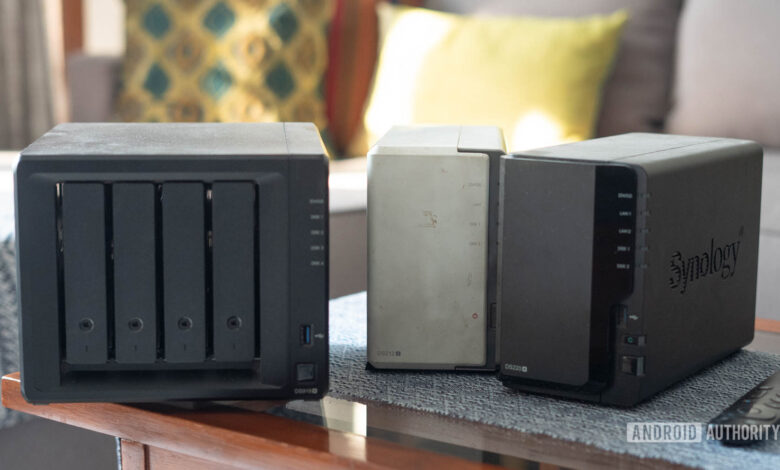
Despite some recent controversies, Synology remains the top choice in the consumer storage sphere. Other brands might offer faster processors or better connectivity options, but Synology retains its leading status due to its unparalleled software experience. Its DiskStation Manager is engineered to mimic a desktop OS, providing immediate familiarity.
The hallmark of Synology is its seamless user experience. The OS is intuitive, complemented by a wide variety of applications for tasks such as photo backups, file management, and music streaming. Third-party options like Plex or Navidrome can also be integrated.
Configuring off-site backups using Hyper Backup or syncing personal files with Drive is uncomplicated, even without advanced networking skills. Regular updates and long-term support suffuse even older models. I can attest to this with my 15 years of experience using Synology devices.
However, the trade-offs lie in hardware specs and pricing. Synology has been slow to transition to faster Ethernet standards in its mid-range models, and its processors are outdated. If superior hardware performance is what you seek, Synology may not meet your expectations. Nevertheless, for those desiring a reliable private cloud solution, Synology remains an excellent overall selection.
2. UGREEN

As a relatively new entrant, UGREEN has made significant strides with its range of NAS boxes. They distinguish themselves through attractive aluminum designs, fast Intel processors, and competitive pricing with standard networking options.
While they provide robust hardware, UGREEN’s software, UGOS Pro, is still evolving and does not yet rival Synology’s offerings. It offers a user-friendly interface and useful mobile apps but lacks the extensive app ecosystem seen in more established brands. However, for users familiar with Docker, UGREEN represents a compelling hardware choice.
3. QNAP

QNAP has been in the NAS market for a significant time, catering mainly to tech enthusiasts and small businesses. Their boxes balance UGREEN’s extensive features with Synology’s usability.
Boasting exceptional performance and extensive customization, QNAP thrives in demanding environments. Its QTS operating system offers advanced networking options and virtualization support, making it ideal for high-performance tasks.
Nonetheless, QNAP may not be advisable for beginners as its complexity can be overwhelming. Security vulnerabilities have also hindered its reliability, so caution is necessary when configuring these systems.
4. Asustor

Asustor has gained traction among consumers by offering a balanced combination of features and pricing. They’ve also innovated by integrating HDMI outputs into many models, facilitating direct connections to televisions.
The ADM operating system is straightforward yet lacks the finesse of Synology or the deep functionality of QNAP. For budget-conscious users seeking compact solutions with unique features, Asustor is worth considering.
5. TerraMaster

For those new to NAS or simply needing basic file-sharing capabilities, TerraMaster offers cost-effective solutions that often surpass pricier brands. However, while their hardware is generally satisfactory, software improvement is still required.
While TerraMaster is suitable for simpler needs, its software interface lacks the refinement seen in its competitors, particularly regarding mobile syncing and remote capabilities. For basic local backups or media streaming, it’s adequate, but third-party solutions might be necessary for optimal functionality.
Which NAS Brand Should You Choose?

Photo by Robert Triggs
Selecting the right NAS brand involves a balance between hardware and software preferences. There’s no one-size-fits-all solution, and choices may vary based on individual needs.
For many users, Synology’s software stability and robust app support make it the top choice, even if the hardware leaves room for improvement. Meanwhile, if cutting-edge specs are essential, UGREEN holds promise.
QNAP is ideal for power users seeking advanced features, while Asustor and TerraMaster provide budget-friendly options for those with simpler requirements.