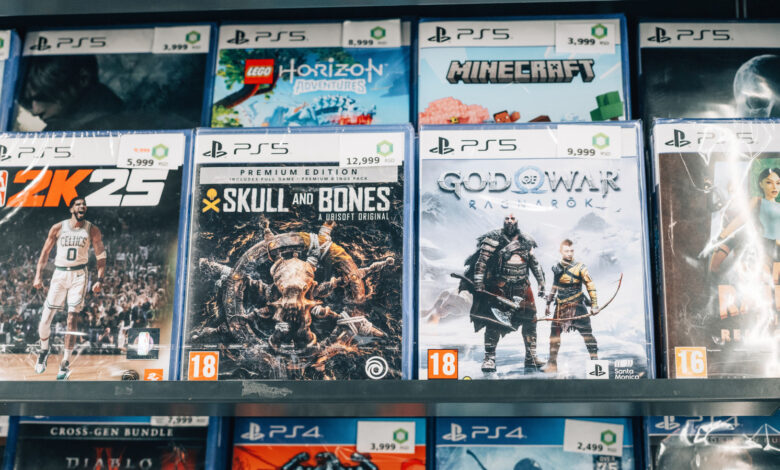
Is going disc-free a disadvantage?
Though the gaming world has not fully transitioned to digital formats, it has been steadily moving in that direction. Sony recently announced that it intends to stop producing PlayStation discs by 2028. Additionally, the PS5 Pro requires a separate disc drive, the Xbox Series S does not support discs, and the upcoming Nintendo Switch 2 will use game-key cards without embedded data.
While digital formats offer numerous benefits, the relevance of physical media remains significant. As companies guide us towards this new future, understanding the implications is crucial, especially as fewer physical options are available. Regardless of your preferred format, this shift is important to acknowledge.
This situation primarily impacts console gaming; PC gaming has been predominantly digital for quite some time. However, notable differences exist between the two, which will be elaborated upon later.
Advantages of an all-digital gaming landscape
An all-digital library offers several tangible benefits. One of the most significant is the elimination of the need to switch between discs or cartridges. For instance, swapping between a single-player game and a multiplayer shooter can be quite tedious. Carrying cartridges for the Nintendo Switch 2 can also add unnecessary bulk to your travel gear. Additionally, not having physical media means you save space and avoid the risk of losing or damaging items.
Digital gaming also enables “gamesharing,” where you can share your entire library with a friend. On platforms like Xbox and PlayStation, this means both users configure their consoles as “home systems,” allowing access to each other’s purchased games. For Nintendo systems, lending virtual game cards within your account is similarly easy.
The purchasing process for digital games is also more straightforward. You can buy games from online stores and start playing as soon as they download, without worrying about shipping delays. While these benefits have existed in digital games for years, the industry’s move away from physical titles has not enhanced them.
Challenges of a digital-only gaming world
With Nintendo Switch and Switch 2, digital downloads consume more storage, as cartridges contain the complete game. Five on consoles like PlayStation and Xbox, discs merely serve as keys to verify ownership, making the gameplay experience dependent on internet speed. A disc can simplify initial installations and updates, particularly for those with slower internet connections.
Refund policies for consoles present another major concern. PlayStation typically only offers refunds if downloading hasn’t commenced, while Nintendo enforces final sales. While Xbox has a more lenient policy, it’s still ambiguous. Conversely, platforms like Steam allow refunds for nearly any reason, as long as a request is made within two weeks and playtime is under two hours.
Implications for preservation and longevity
While individual experiences are vital, broader issues also need to be addressed. It’s crucial to understand that when you purchase a digital game, you’re buying a license rather than the game itself. This license can be revoked at the publisher’s discretion, often without warning. A notable case involved the removal of the demo for P.T., as it was rendered inaccessible once the game was taken down from the marketplace.
There are other instances where games or content have vanished due to licensing conflicts or corporate decisions. For example, Scott Pilgrim vs. the World: The Game was unsold for years until it returned in 2021. Furthermore, Sony announced the removal of hundreds of digital films from their service without offering refunds. In 2024, Ubisoft discontinued an online title, resulting in the loss of access for players without reimbursement.
These practices become particularly detrimental when digital options are the sole route available. Losing access to paid content with no recourse is incredibly frustrating. This transition to digital titles also has significant implications for game preservation, as entire games that were never released physically risk disappearing when support ceases.