In the realm of artificial intelligence, one contender seems to stand out among the rest.
RixAiArt/Shutterstock
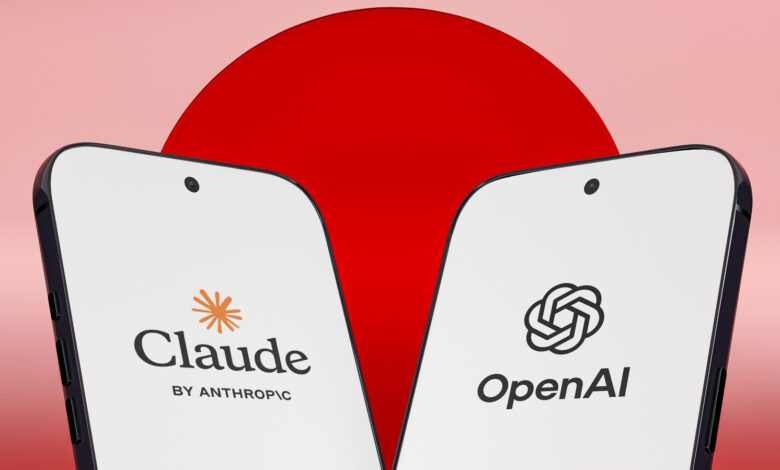
ChatGPT emerged as a popular choice for many users upon its release in 2022, quickly becoming a familiar name in large language models (LLMs). It initially faced little competition until Anthropic introduced Claude in March 2023. Since then, both platforms have worked diligently to enhance their models and features. However, given the overlapping capabilities — both having coding and workspace functionalities — selecting the right assistant can be challenging.
In daily use, the distinctions are minimal; both tools can assist with programming, quick information retrieval, document summarization, and organizing files, as well as a bit of creative writing if you’re feeling adventurous.
For tasks beyond these basics, you’ll have to consider which LLM suits your needs better.
Is Claude more accurate than ChatGPT?
Determining the accuracy of LLMs can be complex, as it heavily depends on the model in use and the specific prompt provided. In head-to-head comparisons of their leading models — Claude Fable 5 and GPT 5.6 Sol — Claude slightly outperforms with an accuracy score of 61% versus 59% for ChatGPT. Yet, this difference is so subtle that users might not notice it in everyday applications.
For many tasks, you’ll likely be interacting with mid-tier models. Claude’s is Sonnet 5, while ChatGPT’s is 5.6 Terra. Here, ChatGPT holds the upper hand, with a score of 46% compared to Claude’s 38%.
Another crucial element in accuracy is the tendency of these models to produce misleading information, or “hallucinations.” Ideally, an LLM should decline to answer if it lacks the information rather than fabricating a response. According to the AA-Omniscience Hallucination Rate benchmark, Claude outperforms ChatGPT significantly, with Claude at 55% and ChatGPT at 89%. The mid-tier comparison is just as stark: Claude Sonnet 5 at 37% and ChatGPT 5.6 Terra at 85%.
What can Claude do that ChatGPT cannot?
Ascannio/Shutterstock
User preferences differ when it comes to Claude versus ChatGPT. Recent data suggests that a significant portion of Claude’s usage — 42% for personal and 45% for work tasks — contrasts with ChatGPT, which sees around 70% of its use for non-work-related tasks.
Claude Cowork, released in January 2026, efficiently handles knowledge-based tasks, such as organizing files, and allows users to create skills that can be activated during chats. Its Claude Artifacts feature enables users to generate code snippets, web pages, and interactive visuals swiftly, and these can even be shared online.
While ChatGPT also supports skills, its application is limited to individual users in Codex, differing from Claude’s approach which integrates skills more broadly. Additionally, Claude’s Artifacts can utilize live data via connectors, while ChatGPT’s Sites are primarily intended for internal business use and lack this capability.
However, some of ChatGPT’s features, like its voice functionality, are more polished. It allows for spontaneous interruptions without losing context, and it offers a live video feature for real-time assistance. Moreover, ChatGPT includes a photorealistic image creation tool, unlike Claude, which focuses on diagrams and charts.
Is ChatGPT declining in quality in 2026?
Despite improvements in new ChatGPT models regarding AA-Omniscience metrics, many users are expressing dissatisfaction with their experience. This sentiment is valid, particularly as some previous versions demonstrated better performance in certain areas, especially in minimizing hallucination rates; where GPT-5.6 Sol reportedly has a rate of 89% compared to GPT-4o’s 38%.
OpenAI has also introduced ads in its free tiers, which contrasts with Anthropic’s approach of enhancing Claude’s free tier by eliminating ads. Given that OpenAI is struggling financially even with paid users, the introduction of ads suggests the experience may worsen for free users going forward.
User migration from ChatGPT to Claude can also be attributed to ethical concerns. After a deal between Anthropic and the US Department of War fell through in February 2026 due to the latter’s refusal to allow its models for military surveillance, many shifted to Claude after OpenAI announced a new partnership with the government, which was viewed less favorably.
ChatGPT and Claude are similarly priced
eq-tama/Shutterstock
Both Claude and ChatGPT offer free tiers that limit access to their mid-range models: Sonnet 5 for Claude and GPT-5.5 for ChatGPT, with the latter including ads.
Claude’s premium options consist of a $20/month Pro plan, a $100/month Max 5x plan (offering five times the Pro limits), and a $200/month Max 20x plan (twenty times the Pro limits). These paid tiers allow access to flagship models and Claude Code, with Pro users having token-based billing for the Fable 5 model. Users on the Max plans can utilize a portion of their weekly limits for Fable 5, with options to purchase additional credits.
ChatGPT’s pricing structure is also comparable, featuring $20/month, $100/month, and $200/month plans that correspond to increasing usage limits and flagship model access. While Codex usage is free, its constraints diminish its overall practicality. ChatGPT also offers an $8/month plan, which provides higher limits but still contains ads.