Dili Secures $21.7 Million to Integrate AI-Driven Compliance in Infrastructure Expansion

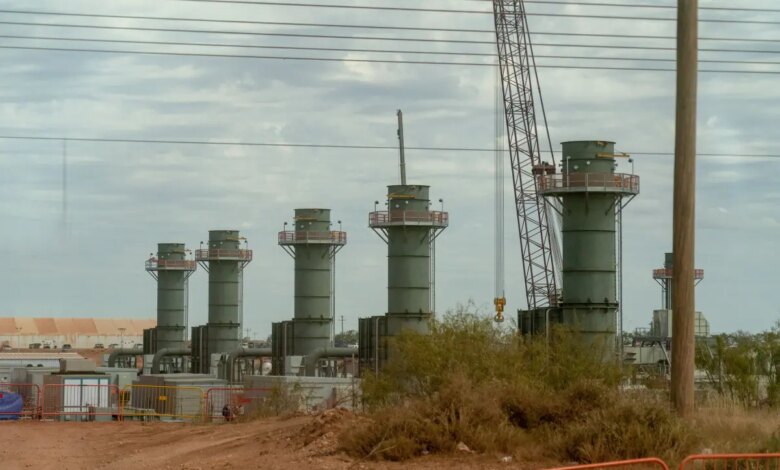
The advancement of AI technology requires enhancing data centers and power sources, and it seems these infrastructure endeavors will benefit from AI assistance.
On Thursday, Dili, a new company specializing in AI compliance, revealed it has secured $15 million in Series A funding, specifically aimed at supporting the emerging U.S. infrastructure initiatives. This latest funding round follows a previous seed round of $6.7 million, pushing the company’s total investment to $21.7 million.
The Series A funding was spearheaded by Khosla Ventures, with contributions from Allianz, Rebel Fund, Darren Bechtel of Brick and Mortar Ventures, and Garry Tan from Y Combinator. Dili was part of Y Combinator’s Summer 2023 cohort.
While the concept of “AI for compliance” is gaining traction among startups, Dili specifically addresses the intricate regulatory landscape of construction projects, particularly those receiving federal funding. Dili’s co-founder and CEO, Anand Chaturvedi, cited the Davis-Bacon Act as an example, which empowers the Department of Labor to establish prevailing wages for designated projects. Additional regulations, such as prevailing wage and apprenticeship rules, apply to clean energy initiatives funded by the Inflation Reduction Act, alongside various OSHA and EPA regulations tailored to the specific work involved.
Navigating these overlapping requirements can be challenging, and errors can incur significant financial penalties. “Non-compliance can lead to millions in fines for these projects,” Chaturvedi noted. “Thus, it’s vital to validate all information as it comes in, rather than merely sampling data.”
Given the high stakes, reliability is crucial for Dili’s approach. Chaturvedi is confident that the company’s system architecture will mitigate discrepancies typical of large language model (LLM) outputs in the final results. Current AI models are employed only within the data layer, serving to convert unstructured documents into structured data. Subsequently, a deterministic system organizes this data according to intricate yet stable compliance regulations. When functioning correctly, tasks that previously required a full day can now be completed in just minutes.
“Imagine the ability to review a company’s entire range of internal documents, vendor paperwork, ERP system data, and payroll records,” Chaturvedi remarked, “and then extract the specific information required for compliance or reporting.”
Dili is already applying this system effectively. According to Chaturvedi, Dili’s software is currently utilized in around 700 projects, which include manufacturing facilities and data centers.
Significantly, Chaturvedi mentioned that about half of the projects use Dili as an internal software solution, while the rest outsource compliance management to contractors. Dili is equipped to accommodate both types of arrangements, although Chaturvedi expects a gradual industry shift towards the in-house software model in the future.
“Software and AI will increasingly integrate into various professional services workflows, leading more companies to adopt these solutions internally,” Chaturvedi predicted. “The exciting aspect will be observing how the market evolves and the shifting needs of customers as AI advances.”