Thea Energy Secures $20 Million Federal Grant for Fusion Reactor Magnet Development

For hard-tech startups, manufacturing poses significant financial challenges. However, Thea Energy has received a boost thanks to a grant from the Department of Energy.
On Monday, Thea Energy announced it has secured a $20 million grant from ARPA-E aimed at aiding the production of its modular high-temperature superconducting (HTS) magnets.
HTS magnets are essential yet expensive components used in magnetic confinement reactors, which are one of the primary methods startups are exploring to develop commercial fusion energy. These reactors employ strong magnetic fields to contain and compress plasma, heating it to a point where the fuel can fuse and generate substantial energy.
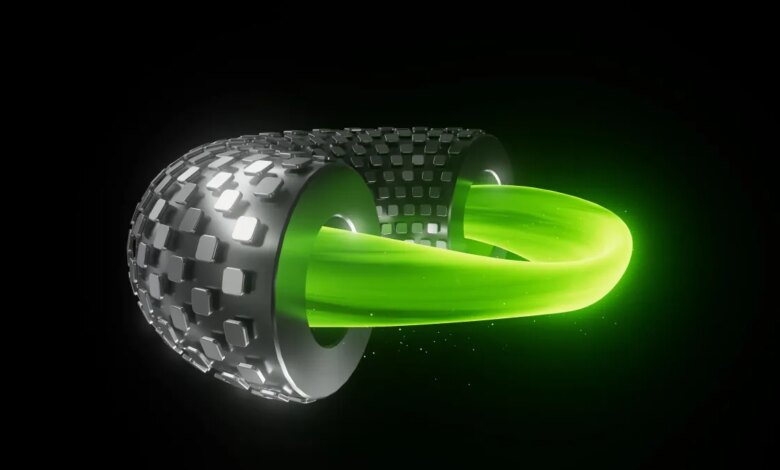
Thea’s reactor utilizes a design known as a stellarator. Stellarators have a twisted and compact shape that enhances plasma confinement. Traditional stellarators often rely on magnets shaped to replicate these complex forms, making them costly to produce.
To reduce manufacturing expenses, Thea employs a design strategy that minimizes variability. The 12 main magnets responsible for key operations are produced from just four distinct templates, while all over 300 smaller magnets used for plasma adjustments are uniform. These magnets are strategically placed around the reactor, much like pixels on a screen.
The smaller magnets are managed via sophisticated software, which permits increased tolerances during construction. This feature is expected to contribute to cost savings, according to Thea.
As one of the leading funded fusion startups, Thea has raised $100 million in May, following a $20 million Series A funding round in 2024. Similar to its competitors, Thea aims to develop a commercially viable fusion power plant by the mid-2040s.