NVIDIA Introduces the ‘Open Secure AI Alliance’ to Enhance Cybersecurity Efforts

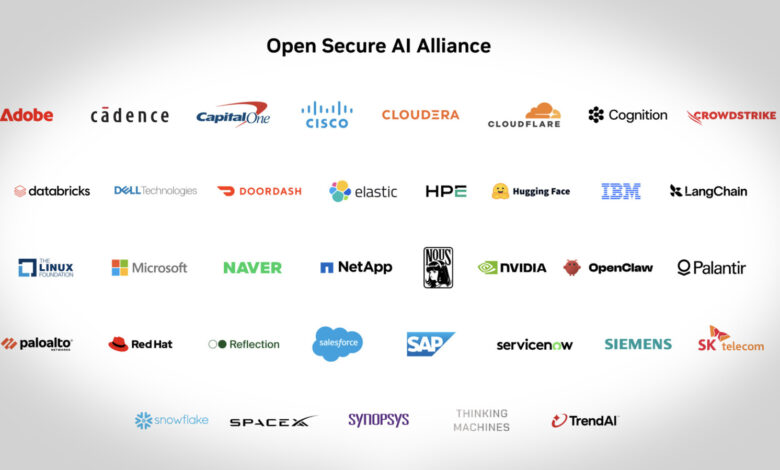
Founding members include major tech giants like NVIDIA, Microsoft, Dell, and SpaceX.
NVIDIA has united some of the leading technology firms to establish the Open Secure AI Alliance aimed at enhancing cybersecurity. The alliance includes 27 founding members such as Microsoft, SpaceX, Dell, The Linux Foundation, and NVIDIA. According to NVIDIA, this initiative will leverage the efforts of the Linux Foundation’s Akrites project and the OpenSSF community to identify and disclose vulnerabilities using open technologies.
The alliance emphasizes that, in order to effectively counter threats in the era of AI models like Anthropic’s Mythos 5, security researchers require access to both open and proprietary models. NVIDIA pointed to a recent incident where Hugging Face initially employed closed commercial frontier models to thwart an attack but was met with obstacles. After switching to open-source models, Hugging Face successfully mitigated the attack.
NVIDIA explained, “When closed AI tools were unable to differentiate between attackers and defenders, Hugging Face utilized the open-weight GLM 5.2 model on its infrastructure to analyze over 17,000 actions and contain the breach.”
NVIDIA and its collaborators are ready to contribute various components to the alliance. The company intends to provide open models, model weights, data, and new agent harnesses to accelerate the creation of innovative cybersecurity tools and techniques. HPE will contribute standards and methods to verify AI agents and services securely, while Hugging Face will introduce Safetensors, a safe format for storing AI model weights. Microsoft, SpaceXAI, IBM, and Red Hat are also set to provide open-source AI technologies.
Moreover, the alliance is urging governments to collaborate with companies on collective investments in open AI infrastructure. It argued that regulations should view open models as “defensive assets, not liabilities,” suggesting that broad restrictions on open frontier AI systems could weaken defense capabilities and concentrate power in the hands of a few proprietary players.
Recent reports indicate that the Trump administration is contemplating a broad ban on Chinese open-source AI models. These models have been gaining traction due to their cost-effectiveness compared to the proprietary offerings from companies like OpenAI and Anthropic. Notably, these two companies, along with other commercial AI entities such as Meta and Google, are not part of the newly formed alliance.