Robert Triggs
The rise of AI has had unexpected consequences, particularly in the storage industry. AI data centers are consuming vast amounts of memory chips, resulting in shortages that affect consumer products. This has led to stock issues as well as significant price increases for OEM storage solutions. As a consequence, having enough onboard storage has become a luxury many cannot afford.
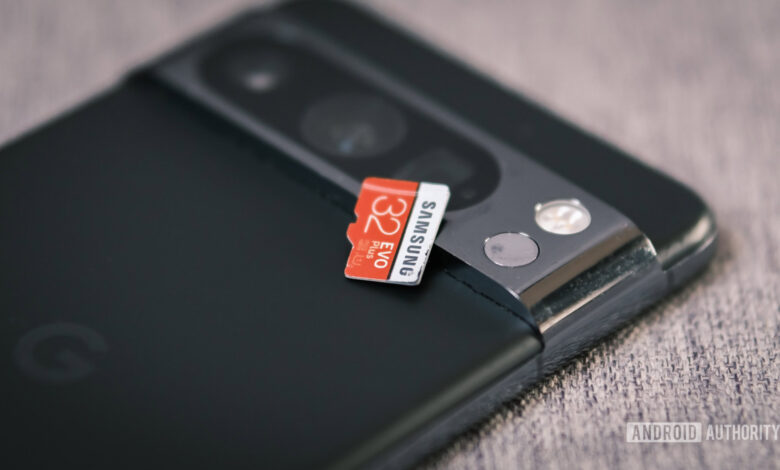
We’ve addressed this issue before, yet it seems to have been overlooked. A simple solution from the mid-2010s could alleviate many storage woes—microSD cards.
Would you prefer expandable storage over paying for higher onboard capacity?
10 votes
The storage price crisis is intensifying

Robert Triggs
Recently, Apple instituted considerable price hikes across all its devices, attributing them to a shortage of memory. This trend isn’t isolated to Apple; it’s a growing issue within the tech industry. Rumors suggest that Google might follow suit with its upcoming Pixel 11 models next month.
Historically, consumers have faced high costs for storage upgrades, often shelling out $100 or more for a minor bump from 128GB to 256GB. Although such expenses once seemed warranted due to higher speed and reliability of onboard storage over microSD cards, the current price increases are shifting this consideration.
Previously, valid reasons existed for eliminating the card slot, but the pricing dynamics are now changing.
For example, the iPhone 17 Pro Max’s 512GB option is priced at $1,400—$200 more than the base 256GB version. Similarly, the Galaxy S26 Ultra’s 512GB model is priced at an astonishing $1,500. These price upgrades appear more designed for profit than user convenience, essentially rendering these pathways as problematic, especially since equivalent microSD cards can be obtained for significantly less.
MicroSD cards are not immune to price increases
External storage options have also seen sharp price increases. Portable SSDs have seen costs skyrocket, often doubling or tripling. The Samsung T9 1TB portable SSD, once priced at $100, is now pegged at $250. MicroSD cards are similarly impacted.
A 512GB Lexar Blue microSD card is currently about $100, a stark contrast to its previous price of around $38. This represents nearly a 3x increase, yet expandable storage still offers more value compared to the restrictive options posed by smartphone manufacturers.
Expandable storage options still provide greater value compared to the locked upgrade tiers offered by phone makers.
This discussion is crucial as our storage needs rise. What once felt sufficient with 128GB now seems limited, as requirements grow. Android and iOS also locally store AI models, further consuming storage space, as exemplified by a recent voice dictation tool that required a hefty 6GB download.
As storage demands increase alongside prices, a middle ground that avoids excessive costs and provides ample capacity is essential. MicroSD cards fit this need perfectly.
Expandable storage is not a lost idea
Nick Fernandez
While many might think that microSD card slots have disappeared from smartphones, several budget and mid-range Android phones continue to support expandable storage. Devices from brands like Samsung, Motorola, and OnePlus allow users to hold up to 2TB of data. MicroSD slots are even present in tablets, including Samsung’s flagship Galaxy Tab S11 series. Unfortunately, this is not the case for high-end smartphones.
Only specialized devices, such as gaming phones or rugged models, typically feature microSD slots, while mainstream flagship models continue to force consumers into premium storage fees.
Focus on practicality
Robert Triggs
It’s vital to have multiple storage upgrade options rather than being locked into a single path based on initial purchase decisions. Users shouldn’t have to replace entire devices just due to storage constraints.
For those who view onboard storage as essential, they can certainly pay the steep price. However, for users looking to store extensive static data, more economical microSD options make sense.
I shouldn’t have to replace my phone just because I lack storage space.
In the past, the rationale against card slots had more legitimate advantages. However, with our evolving needs—such as storing 4K videos and local AI models—asking for more storage should not come at exorbitant costs. This is precisely why mainstream phones need to reinstate expandable storage more than ever.
Though I doubt major players like Google or Apple will reconsider their stance, there’s greater hope for brands like Samsung and Motorola, which have previously offered the flexibility currently needed. If they were to promote expandable storage as a significant advancement in the coming years, I wouldn’t mind, as long as they return the microSD card slot option.
Thank you for being a part of our community. Please review our guidelines before commenting.