IBM Stands Firm: AI Won’t Spell Doom for the Mainframe Despite Surprising Quarter

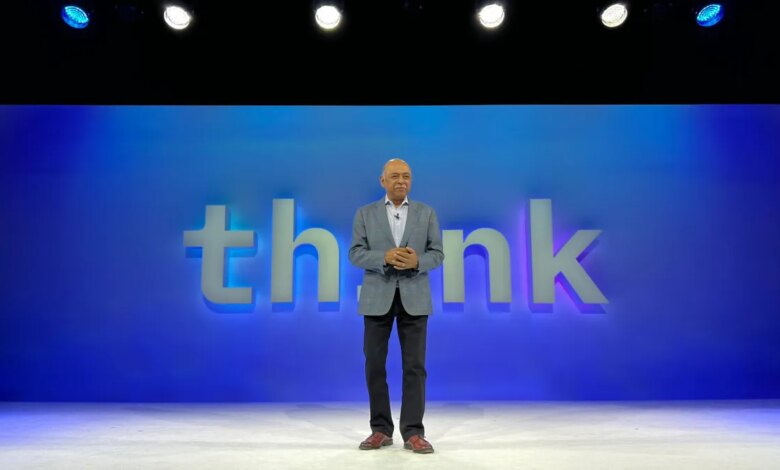
On Wednesday, IBM announced its quarterly earnings, confirming the anticipated negative outlook.
Despite being a 115-year-old company that produces impressive financial figures—$17.2 billion in revenue, $9.9 billion in gross profit, margins close to 58%, and $2.2 billion in net income for the quarter—IBM’s results did not meet Wall Street’s forecasts.
The discrepancy was so significant that CEO Arvind Krishna and the board made the rare decision to alert investors beforehand, stating that the earnings were “worse than our expectations,” effectively giving a preview of the disappointing results.
Last week, Krishna issued a “letter to investors” outlining preliminary outcomes, which highlighted poor revenue in the crucial “infrastructure” sector and indicated that profit margins would take a hit. This announcement led to an immediate 25% drop in the company’s stock price, marking its largest one-day decline ever. Prior to this, the stock had performed admirably under Krishna’s leadership over the past six years, buoyed by the surge in AI-driven data centers.
Furthermore, on Wednesday, IBM revised its annual growth expectations downward, indicating that this dismal quarter would have repercussions for the upcoming year. The main driver behind this downturn was a 42% decrease in the company’s mainframe business.
This situation is particularly concerning, as CFO Jim Kavanaugh explained during the quarterly conference call that IBM generates three times as much software revenue for every dollar made from mainframe hardware sales.
The CEO and CFO reassured investors during the call that this setback is likely to be temporary and expressed optimism about future recovery.
According to them, several customers who were expected to purchase new mainframes this quarter chose to hold off their purchases. This may seem like a small number of customers, but mainframes come with price tags ranging from hundreds of thousands to millions of dollars, along with maintenance contracts and associated software that also contribute significant revenue.
Interestingly, the very AI surge that had benefitted IBM also contributed to its struggles.
Christina noted that instead of investing in new mainframes, those clients redirected their budgets toward other hardware due to significant price hikes of 15% to 30% for data center equipment and PCs.
“Faced with those rising costs, clients chose to allocate their budgets to areas impacted by the dramatic price increases,” Krishna stated.
Other enterprise hardware manufacturers like Dell and HP have raised alarms about escalating component prices, particularly memory, driven by the AI expansion. Apple has echoed similar sentiments.
However, Krishna is confident that these clients will eventually return to buy new mainframes and associated software contracts. He noted that some have already commenced purchases in this quarter. “We have no indicators suggesting clients are abandoning the mainframe,” he affirmed.
Only time will tell. The technology sector has long been predicting the end of the mainframe, yet it appears resilient, potentially outlasting even the advances in AI.




