The Timeless Appeal of Infrared Technology: Why It Remains the Go-To for TV Remotes

Why Bluetooth Remotes Haven’t Fully Replaced Infrared Technology
The evolution of TV remotes showcases an intriguing journey. The very first model, known as Lazy Bones, was introduced by Zenith Radio Corporation in 1950, but it was tethered to the television via a long cable. In 1955, the “Flash-Matic” emerged as the first truly wireless remote, using a visible light beam to relay commands to photo cells on the front of the TV. By the 1980s, infrared (IR) remotes became the dominant choice and have remained popular for more than 40 years.
IR remotes function by emitting quick bursts of invisible light from an LED, which the TV’s infrared receiver decodes to execute the command. If you point your smartphone’s camera at the remote while pressing a button, you can see the LED flashing. Nowadays, many televisions come with Bluetooth remotes, offering features like voice control and gesture navigation, yet they typically still incorporate an infrared transmitter.
One of the primary reasons infrared technology remains widely used is its low cost, particularly after years of mass production. Additionally, with a plethora of TVs, soundbars, and entertainment devices designed around it, IR’s compatibility is unmatched. Transitioning away from a technology so closely associated with television would be impractical, especially now that IR and Bluetooth can function together in modern remotes.
Infrared Technology’s Role in TV Remotes

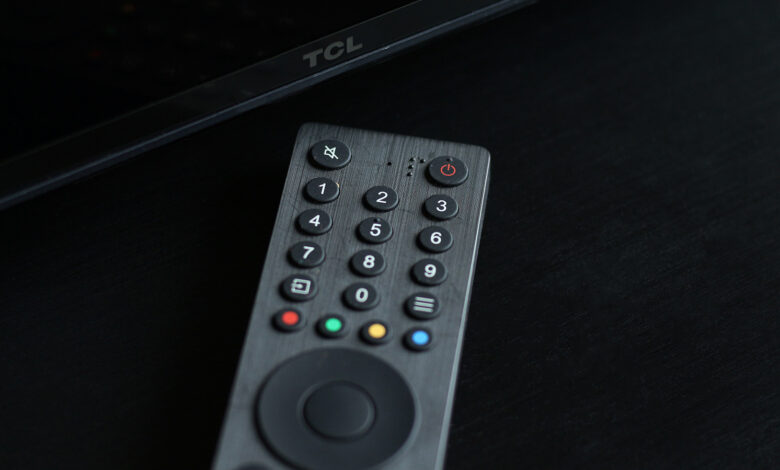
While a Bluetooth remote requires pairing to control the TV, the initial setup is often done using an infrared signal. This is crucial because, during the TV’s standby mode, Bluetooth may not be active. In testing with a TCL smart TV that includes a Bluetooth remote, I found that it used infrared solely to power the TV on and off. Other actions, like navigating menus or adjusting volume, were handled over Bluetooth. When I unpaired the remote, it defaulted to infrared for sending signals.
Bluetooth has the advantage of not needing a direct line of sight for communication. Hence, if you’re cozy under a blanket, you won’t need to stretch to change the volume. Although infrared-tech is efficient in terms of battery usage, Bluetooth is becoming the primary mode for remotes. Thus, while infrared may remain for initial pairing and as a backup option, your remote is typically operating via Bluetooth, which also allows your smartphone to be used as a remote control.