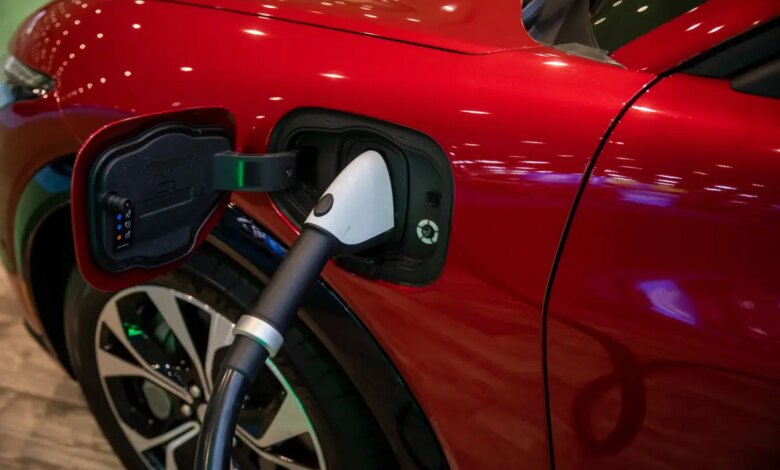
Concerns about charging are prominent among potential electric vehicle (EV) owners. Recent surveys indicate that more than half of respondents consider public charging infrastructure a significant issue.
These worries are well-founded. Historically, fast charging for EVs has been subpar. After an unfortunate road trip experience last year, I created an EV fast-charging “bill of rights,” proposing seven necessary improvements for charging networks to enhance the situation.
Fast forward a few years, and the landscape has changed dramatically.
During a recent road trip, I was pleasantly surprised by the notable advancements. Apart from a minor hiccup, the charging experience was nearly perfect.
An Almost Flawless Experience
This summer, my journey to Montreal spanned over 600 miles. Initially, we planned to take our Kia EV9, which boasts a nearly 300-mile range on a full charge. However, with the Kia in the shop for air conditioning repairs, we opted for our Audi e-tron, which can travel around 220 miles per charge. Despite the difference in range, the e-tron performed exceptionally well. While maximizing range is appealing, it was far from essential.
To locate charging stations, I utilized A Better Route Planner (ABRP), which optimizes charging stops based on various factors, from wind conditions to vehicle details. While a Bluetooth OBD reader can enhance precision by sending live data from the car, I found the app to be accurate on its own. According to ABRP, our initial charging stop would be at a Rivian station near Lebanon, New Hampshire, which made sense given Rivian’s ownership of the app.
My experience at the Lebanon charging station quickly confirmed the app’s recommendation. There were no queues, ample food options, a grocery store, and six fully operational 300-kilowatt chargers. Although I had prepared by downloading the Rivian app, it was unnecessary; the charger easily accepted my credit card and delivered over 140 kilowatts—close to the e-tron’s maximum capacity. We had a similarly smooth experience on our return trip.
Later, we stopped at a Circuit Électrique station just outside Montreal to charge for the week. This was the only issue during the trip: the card reader malfunctioned, necessitating a download of the Circuit Électrique app to add 20 Canadian dollars. Once that was sorted, everything went smoothly. In hindsight, charging may not have been necessary as we didn’t drive extensively during the week, but it provided a good break for the kids and a much-needed coffee for my wife.
Each charging session lasted about 20 minutes, seamlessly integrated with our meal or rest breaks. At no point did we have to wait for our vehicle. In total, the three charging stops consumed about as much time as our wait at the border upon returning to the U.S.
A Look Back: Previous Experiences
In contrast, my trip from three years ago was far less favorable. As a long-time driver of non-Tesla EVs, I was aware of the unpredictability of fast-charging stations, but I left feeling quite discouraged.
On that summer trip to Maine, I drove the same Audi e-tron for a round trip of approximately 350 miles, half the distance of the Montreal journey. The e-tron could have easily reached Maine on a single charge, but the hotel lacked EV charging facilities. To ensure a sufficient charge for the weekend and our return journey, we planned to stop for charging partway.
Despite using ABRP to filter out unreliable stations, the experience was frustrating. The first charger malfunctioned shortly after I connected, forcing a move to another unit. That initial charger never ended the session with my vehicle, causing a delay as I needed to contact customer support to initiate the second charger. At another location, the app inaccurately listed two operational plugs out of four, but only one was functional. Overall, I spent about seven hours driving and had to call customer service three separate times.
Imagine if refueling at gas stations were that unreliable?
Data Indicates Significant Improvements
Thankfully, the current state of EV charging infrastructure is markedly different. While my personal experiences from both 2023 and 2026 may be anecdotal, available data suggests they reflect a larger trend: fast charging in the U.S. has seen significant advancements.
As of July 2023, there were approximately 32,000 DC fast chargers across the nation, with many previously restricted to Tesla users. Tesla aimed to expand access in 2023, which has since become realized. Today, EV drivers can utilize the majority of Tesla’s charging network. Ongoing expansions from Tesla and other companies have more than doubled the number of DC fast chargers from 2023 levels.
Furthermore, the reliability of these chargers has greatly improved.
My nearly seamless trip aligns with broader trends. Since last year, charging reliability, as measured on Paren’s reliability index—which evaluates successful charging sessions and station downtime—has improved by nearly 10 points, rising from 85 to the mid-90s. Though Tesla’s network remains dominant, other networks are rapidly catching up. This competition is likely contributing to the enhanced charging experiences overall.
Despite some gaps in the network and occasional breakdowns, new chargers are being installed regularly, and repairs on out-of-service units are happening much faster than before.
While the system is not flawless, the progress in fast charging is genuinely impressive. Those still hesitant about EVs need to be informed about these advancements.