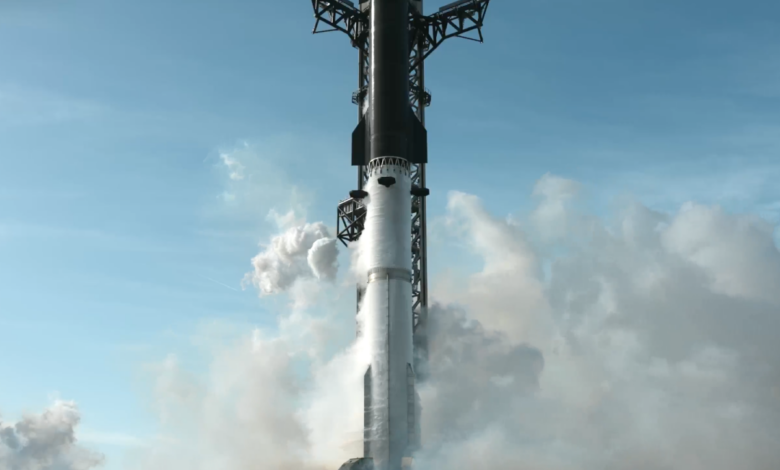
SpaceX unexpectedly canceled the second planned launch of its upgraded Starship rocket system on Thursday, just moments after igniting the booster at its facility in South Texas.
Elon Musk, the company’s CEO, announced on his platform X that “[s]ome of the engines didn’t start, prompting an automatic launch abort,” adding that SpaceX will replace two engines. He stated that the next launch attempt for Starship would not occur until the following week.
The aim was to send SpaceX’s first third-generation Starlink satellites into orbit, although these satellites are expected to disintegrate around 20 minutes post-launch, as Starship has yet to confirm it can reach Earth orbit.
This marks SpaceX’s first test launch of Starship following its public listing on June 12, which was the largest initial public offering ever, raising over $85 billion. This event briefly brought the company’s valuation in line with tech giants like Amazon and Microsoft, though its stock value has seen a steady decline since then.
On Thursday, SpaceX’s stock closed below the IPO price of $135, plunging over 4% in aftermarket trading after the launch was aborted.
SpaceX aimed to resume operations just weeks after the inaugural launch of Starship V3 in May, where results were mixed. The initial launch of the upgraded rocket was a significant achievement, allowing the deployment of several Starlink simulator satellites. However, the Super Heavy booster experienced a failure before it could attempt a simulated landing in the Gulf of Mexico, leading to a review mandated by the FAA. Earlier this week, the FAA cleared the company for another Starship flight after outlining several causes and fixes for the booster malfunction.
During the May mission, the upper stage of Starship also suffered the loss of an engine before successfully deploying the Starlink simulators. It managed a simulated landing over water without any issues.
SpaceX had high hopes for Thursday’s launch of the V3 Starlink satellites. The enhanced Starship and Starlink projects are crucial to SpaceX’s ambitious initiative to establish the feasibility of “orbital data centers” both technologically and financially. Starlink remains the primary source of revenue and the only profitable segment of SpaceX’s operations.
The launch attempt began smoothly, with the countdown uninterrupted until T-minus one minute. After a brief pause, the countdown resumed without incident.
As the countdown reached zero, the launchpad’s water deluge system activated, and the booster stage visibly ignited its engines, only for everything to halt suddenly. Visuals from SpaceX’s broadcast indicated that four of the new Raptor engines failed to ignite.
Currently, SpaceX must drain all propellant from both the Super Heavy booster and the upper stage before investigating what went wrong during Thursday’s attempt.
This story has been updated with additional information from Elon Musk.