
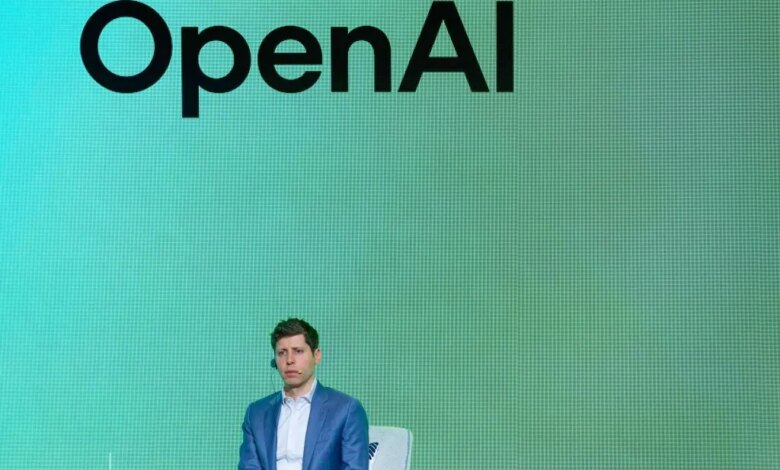
On Tuesday, OpenAI responded to accusations from Apple regarding a trade secret lawsuit, asserting that the claims lack foundation.
In a statement shared by journalist Ed Ludlow on X, OpenAI remarked, “We take these allegations seriously, but we are not aware of any evidence suggesting the case is valid. We support fair competition and the right for individuals to work wherever they choose, focusing on creating innovative technologies that benefit everyone.”
This response follows Apple’s recent lawsuit against the AI research organization, which contends that former Apple employees at OpenAI systematically attempted to acquire confidential information and intellectual property. Filed in the U.S. District Court for the Northern District of California, the 41-page lawsuit includes multiple allegations against OpenAI’s leadership team, notably Chief Hardware Officer Tang Tan, who previously spent 24 years at Apple in senior roles, such as vice president of product design for key devices.
This marks OpenAI’s first public comment on the legal matter. Shortly after the lawsuit’s filing, the company declared its disinterest in other firms’ technological advancements, stating to TechCrunch, “We have no interest in other companies’ trade secrets and remain dedicated to creating technology that empowers users globally.”
Apple asserts that its internal probe revealed instances where OpenAI and its affiliates exploited confidential information while developing their own hardware products.
Furthermore, reports, along with OpenAI’s recent acquisition of Jony Ive’s startup, indicate that OpenAI may be developing a device that could rival Apple’s offerings. Bloomberg reported that OpenAI is creating a mobile, screenless smart speaker, characterized by sources as a “humanlike AI companion” meant for home use.
This upcoming device reportedly lacks a display, incorporates moving mechanical parts, and is being designed with contributions from several former Apple engineers who previously worked on the iPhone and Mac.
TechCrunch has reached out to OpenAI for additional comments and will provide updates once a response is received.




